Air India Receives $1.1 Billion Lifeline Tied to Performance
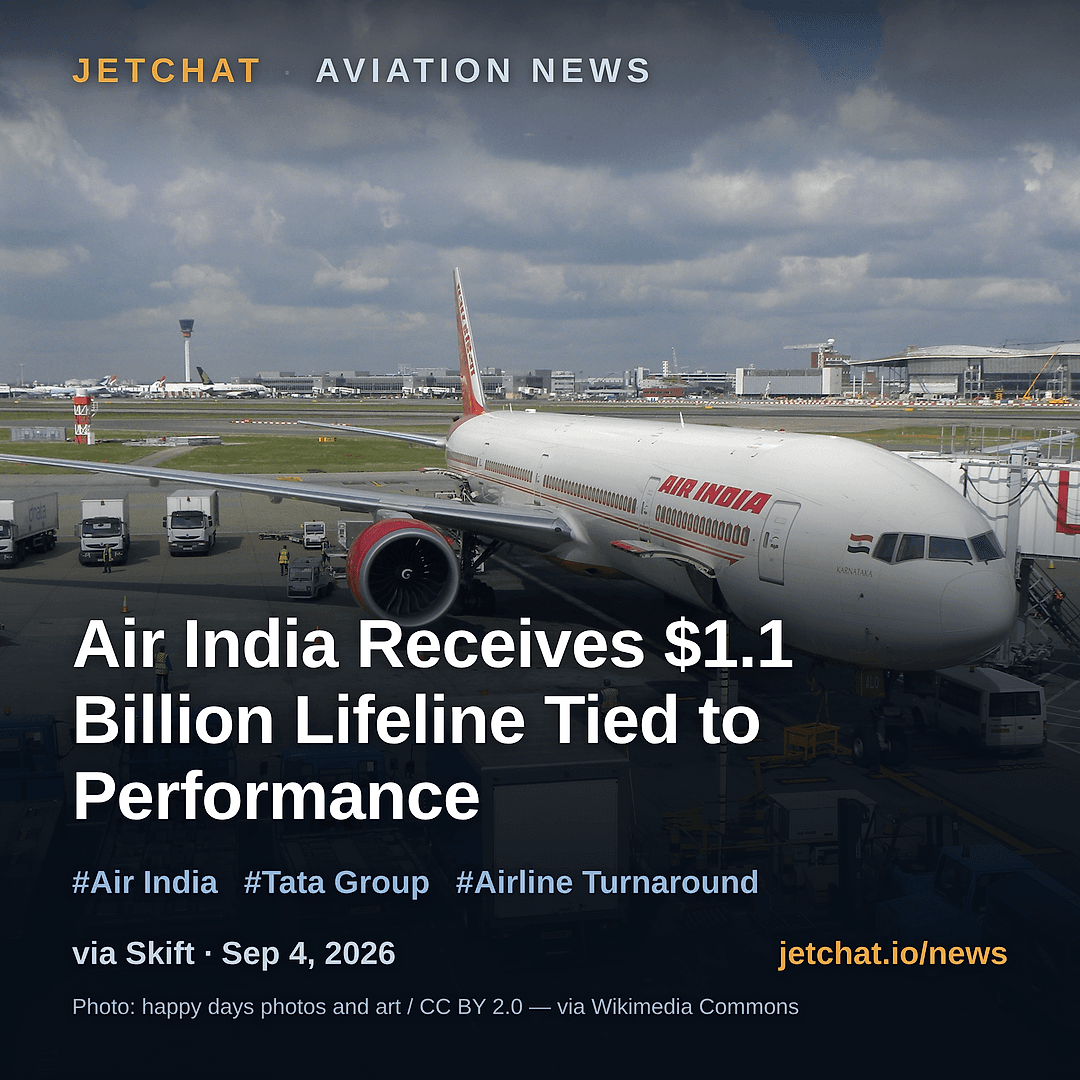
Photo: happy days photos and art / CC BY 2.0 — via Wikimedia Commons (CC BY 2.0) · source
Air India is reportedly receiving a $1.1 billion capital injection from its ownership group, but this financial support arrives with strict performance conditions. While the backers remain committed to revitalizing the historic carrier, they are signaling a clear demand for operational improvements and measurable results. For aspiring airline pilots, this massive investment indicates sustained hiring and fleet growth at the major international carrier, provided the company meets these newly imposed turnaround metrics.
Read the full take
The massive financial commitment to Air India underscores a critical transition phase for the flag carrier following its privatization. While a billion-dollar capital injection provides the necessary runway for continued fleet modernization and expansion, the attached stipulations represent a shift in ownership philosophy. Backers are moving past the initial rescue phase and demanding tangible operational efficiencies, improved passenger experiences, and a clear path to profitability. This financial strategy is vital for aviation professionals to watch because it dictates the pace of future route expansion and crew hiring. Air India has placed historic aircraft orders recently, requiring thousands of qualified aviators to fly those newly acquired airframes. However, if the airline fails to satisfy the performance metrics tied to this funding, leadership may be forced to scale back these ambitious growth plans. For pilots looking at international careers, the health of major legacy carriers dictates the global hiring market. A successful turnaround at Air India ensures a robust pipeline for first officers and captains in the region, while also increasing competitive pressure on Middle Eastern and European airlines. Moving forward, the industry will closely monitor how management deploys this capital, specifically looking for upgrades in training infrastructure, fleet integration, and network reliability. The results over the next several quarters will determine if this historic airline can truly reclaim its status on the global stage.