Airlines see relief as Pratt & Whitney GTF groundings decline
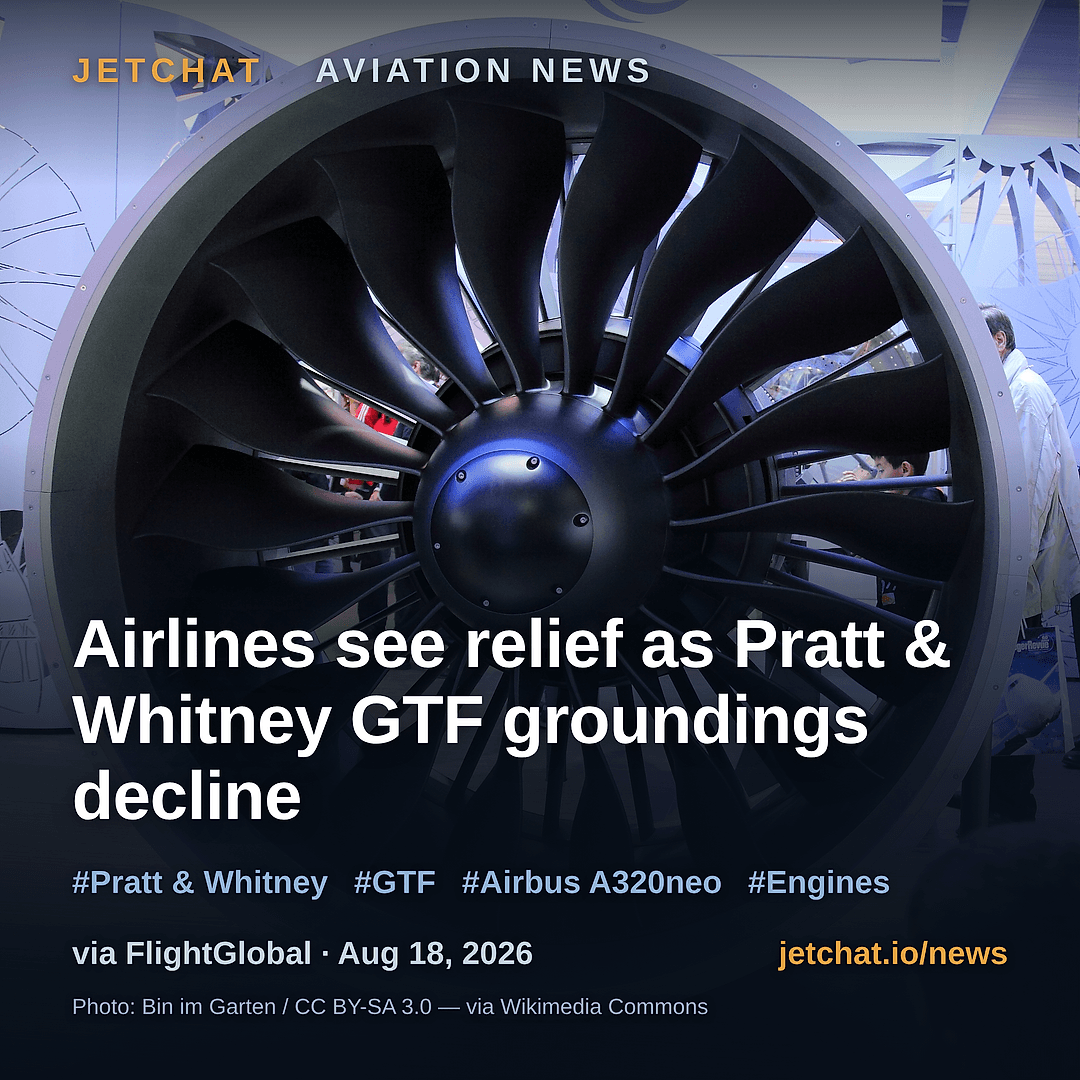
Photo: Bin im Garten / CC BY-SA 3.0 — via Wikimedia Commons (CC BY-SA 3.0) · source
The aviation industry is finally experiencing a reduction in aircraft groundings caused by Pratt & Whitney's Geared Turbofan engine recall. Accelerated maintenance output and a notable drop in shop turnaround times have helped carriers return dozens of Airbus and Embraer jets to revenue service. While some operators anticipate complete fleet restoration by late 2027, others like Brazil's Azul have already resolved their engine shortages entirely. For aspiring airline pilots, resolving these equipment bottlenecks means more stable flight schedules and renewed fleet growth driving hiring demand.
Read the full take
The massive recall of Pratt & Whitney Geared Turbofan engines over contaminated powder metal components has been one of the most disruptive operational hurdles for modern airlines. Affecting critical narrowbody workhorses like the Airbus A320neo family, the Airbus A220, and Embraer’s E2 jets, the defect forced carriers globally to park hundreds of viable airframes while waiting for replacement parts. Now, the bottleneck appears to be widening. Parent company RTX recently reported a sharp jump in maintenance and repair output, slashing shop turnaround times significantly. The results are visible on airline ramps: major low-cost carriers in Mexico and Europe have nearly halved their grounded fleets compared to last year. Air Baltic and Azul have largely moved past the crisis, returning their A220s and E-Jets to normal operational tempos. However, the recovery remains uneven. While maintenance velocity is improving, the sheer backlog means full normalization across the global fleet will take years. Several prominent international carriers still project that their operations will not be entirely clear of engine-related groundings until late 2027 or early 2028. Turkish Airlines, for instance, actually expects its number of idled aircraft to climb through the end of this year before improvements materialize. For the broader aviation community, observing this recovery is vital. When airlines cannot fly their newest, most efficient aircraft, unit costs surge, capacity stagnates, and strategic growth plans are shelved. As these late-model narrowbodies steadily return to the line, airlines will regain the capacity needed to launch new routes and stabilize crew bidding. Line pilots and dispatchers should watch how swiftly operators phase out the expensive wet-lease contracts they utilized as stopgaps, signaling a true return to operational normalcy.