Alaska Airlines Flight Aborts Miami Departure Over Takeover Threats
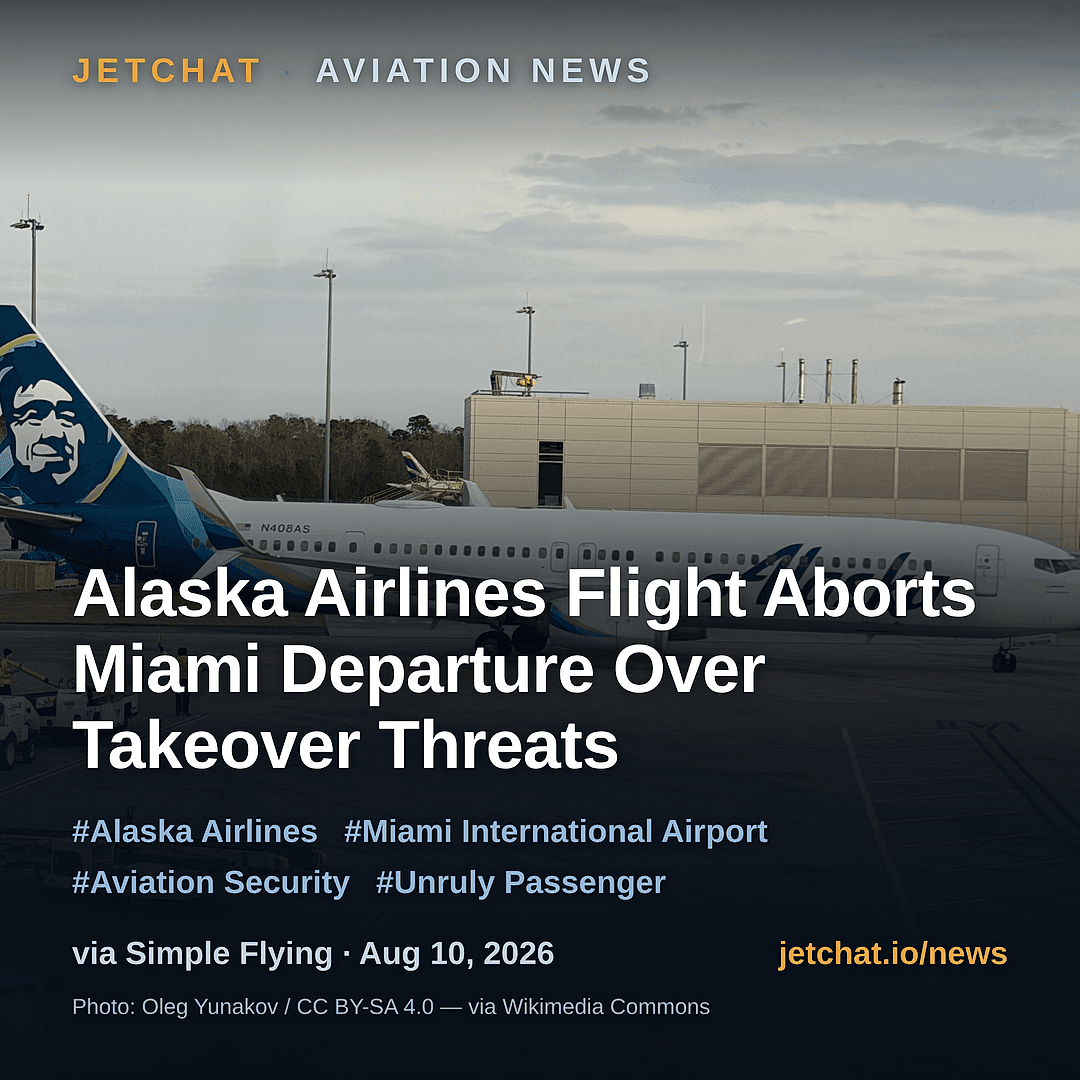
Photo: Oleg Yunakov / CC BY-SA 4.0 — via Wikimedia Commons (CC BY-SA 4.0) · source
An Alaska Airlines Boeing 737 was forced to halt its departure from Miami International Airport on Sunday following a severe security threat. According to air traffic control audio, flight attendants alerted the flight deck that multiple passengers had threatened to take control of the aircraft, prompting the crew to initiate lockdown protocols. For flight crews, this incident highlights the critical importance of clear communication between the cabin and cockpit during potential security breaches on the ground.
Read the full take
The aviation security landscape has fundamentally shifted over the last two decades, but the threat of a passenger attempting to breach the flight deck remains a top concern for all commercial crews. When flight attendants aboard Alaska Airlines Flight 305 reported that a group of individuals was actively threatening to take over the aircraft, the pilots immediately triggered established security protocols to secure the physical doors and halt the departure sequence. This incident in Miami underscores a vital reality for working pilots: threat assessment does not begin at rotation. Ground operations present unique vulnerabilities where the aircraft is fully boarded but the reinforced flight deck door might still be transitioning from boarding procedures to a sterile, locked state depending on the exact phase of pre-flight. By acting decisively on intelligence from the cabin crew, the pilots ensured the aircraft never left the gate area while compromised. For aspiring airline pilots and current professionals, this event is a stark reminder to trust your flight attendants and strictly adhere to sterile cockpit and lockdown procedures. The cabin crew serves as the first line of defense, and their immediate reporting enabled the flight deck to communicate with air traffic control and request law enforcement intervention before the situation could escalate in the air. Moving forward, the industry will likely review this event to evaluate the speed and efficiency of the crew resource management displayed, reinforcing the necessity of comprehensive security training for both cabin and flight deck personnel.