American Airlines Completes First Commercial Flight Using Synthetic eSAF
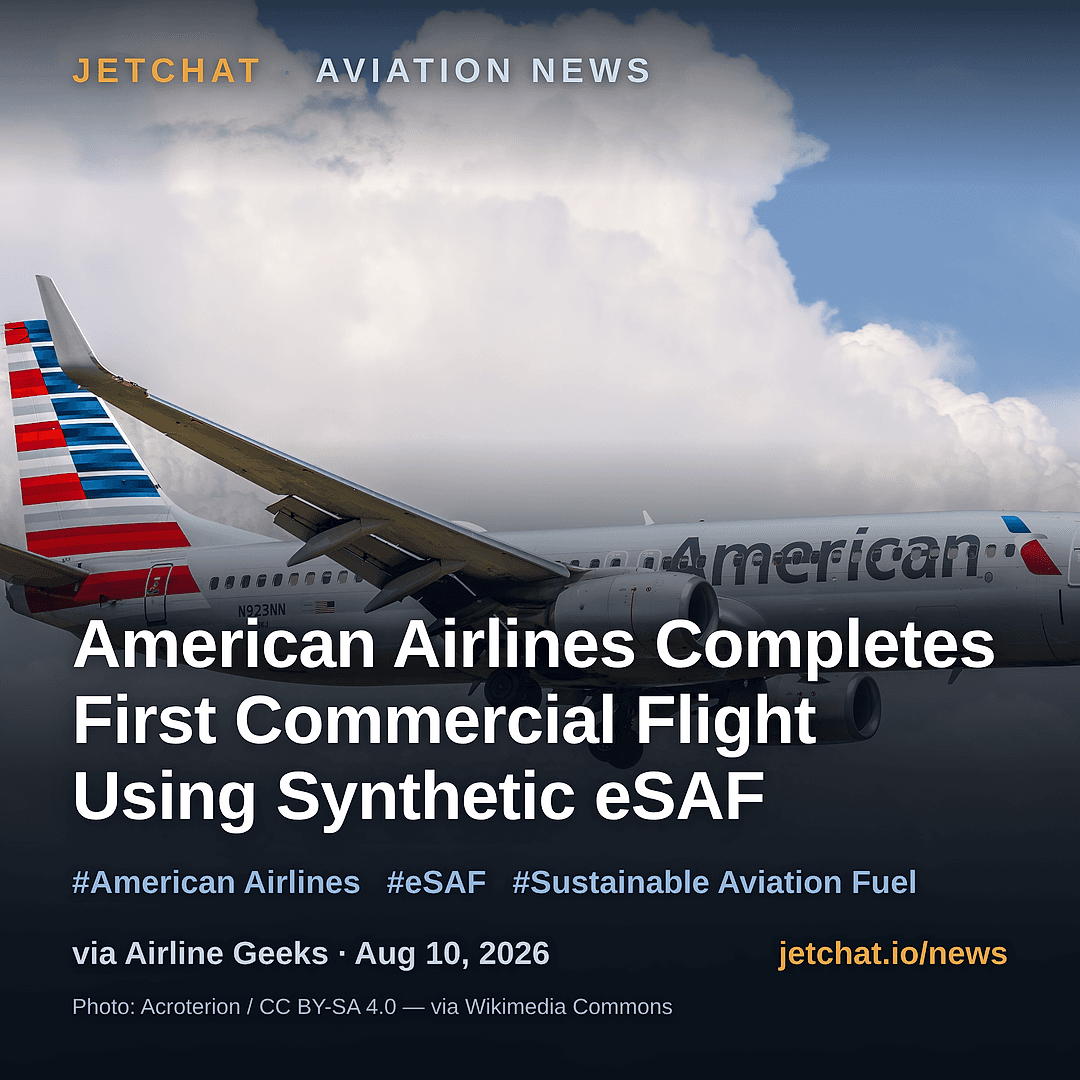
Photo: Acroterion / CC BY-SA 4.0 — via Wikimedia Commons (CC BY-SA 4.0) · source
American Airlines has successfully completed its inaugural commercial flight powered by electro-sustainable aviation fuel, known as eSAF. The landmark regional flight connected Corpus Christi to Dallas-Fort Worth. This synthetic fuel, generated using renewable electricity, represents a critical stepping stone in the industry's push toward net-zero emissions. For aspiring airline pilots, this transition highlights the evolving environmental technologies and operational adaptations that will define the airlines of the future.
Read the full take
The successful deployment of electro-sustainable aviation fuel on a routine American Airlines regional route marks a significant milestone in commercial aviation decarbonization efforts. Unlike traditional sustainable aviation fuels derived from biological feedstocks like cooking oil or agricultural waste, eSAF is a highly refined synthetic alternative. It is produced by combining green hydrogen, generated through water electrolysis using renewable power, with captured carbon dioxide. This advanced process creates a true drop-in fuel that seamlessly integrates with existing turbine engines and airport fueling infrastructure without requiring costly aircraft modifications. For the next generation of aviators, including student pilots and current flight instructors, understanding these new energy paradigms is becoming increasingly essential. While the fundamental flight deck experience remains unchanged today, the broader operational landscape is shifting rapidly. The industry reliance on synthetic fuels will eventually influence fuel planning, supply chain logistics at regional and major hub airports, and perhaps even future aircraft design limitations. The immediate challenge for eSAF production remains scaling the technology to meet global demand while bringing down the currently prohibitive costs. Aviation enthusiasts and industry professionals should watch how major carriers partner with synthetic fuel startups to build out localized production facilities. As manufacturing infrastructure expands, synthetic fuels could become the standard energy source for commercial fleets, permanently transforming how the aviation sector powers its global network over the coming decades.