ANA 767 avoids collision with inspection aircraft at Tokyo Haneda
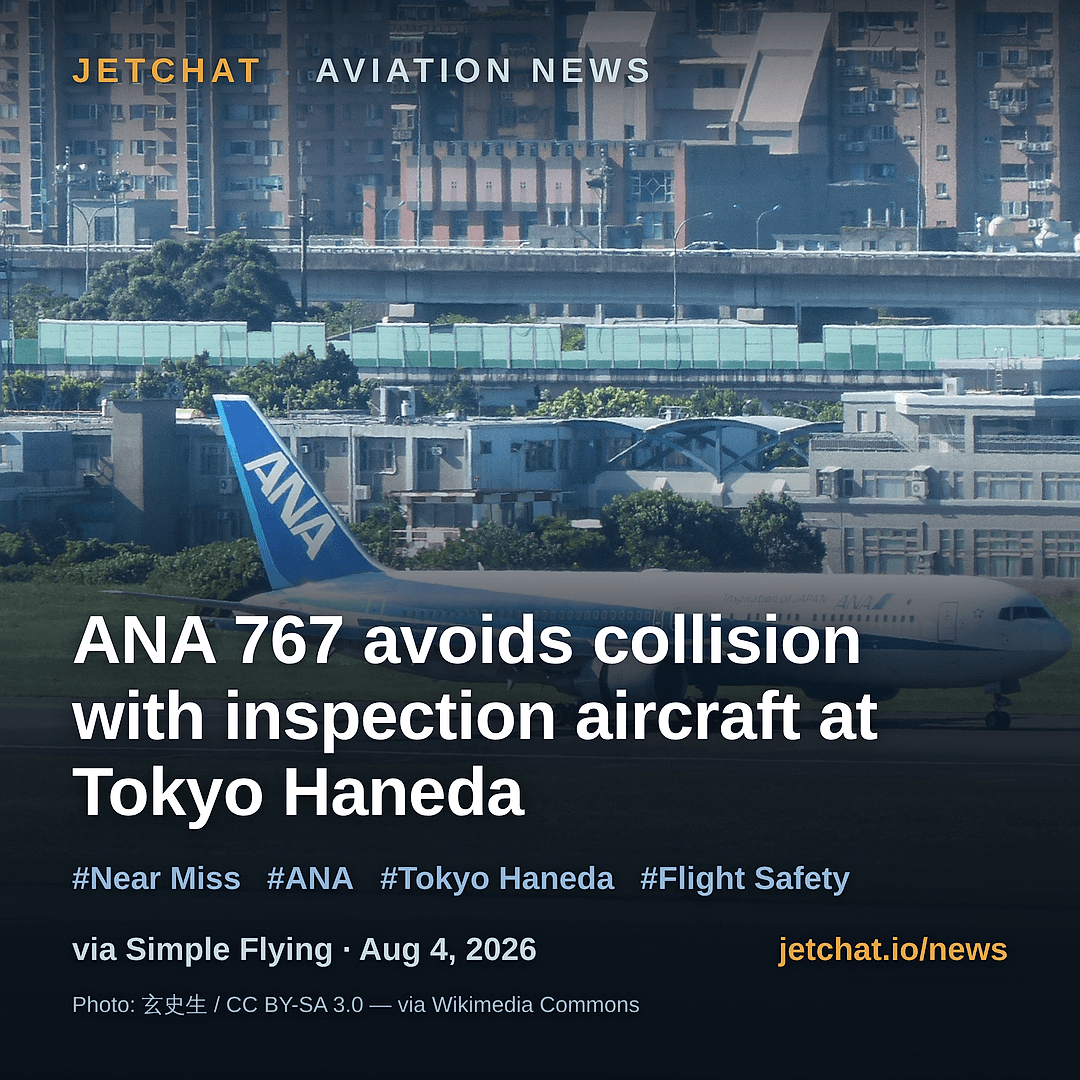
Photo: 玄史生 / CC BY-SA 3.0 — via Wikimedia Commons (CC BY-SA 3.0) · source
A Boeing 767 operated by All Nippon Airways nearly collided with a Japan Civil Aviation Bureau inspection jet at Tokyo Haneda Airport on Tuesday. The inbound widebody from Shanghai came within an estimated seventy feet of the Cessna Citation CJ4 while on final approach. Authorities are currently investigating the circumstances surrounding this severe loss of separation. This near-miss underscores the critical importance of situational awareness and clear air traffic communications in congested terminal environments.
Read the full take
The recent loss of separation at Tokyo Haneda Airport serves as a stark reminder of the unique hazards present in high-density airspace. Tuesday's incident involved an inbound All Nippon Airways Boeing 767 and a Cessna Citation CJ4 operated by the Japan Civil Aviation Bureau for flight inspection duties. With the aircraft coming within just seventy feet of one another, the margin for error was virtually non-existent. For professional aviators and students alike, this event highlights the complexities of operating alongside specialized calibration flights, which often fly non-standard patterns or approaches to test navigational aids. Haneda has seen its share of airspace and runway incursions recently, most notably the tragic runway collision involving a Japan Airlines Airbus A350 and a coast guard aircraft. That prior accident already prompted sweeping reviews of air traffic control procedures and runway safety protocols at Japanese airports. This latest close call will likely accelerate those regulatory changes and could lead to stricter separation minimums or enhanced technological safeguards for ground and approach controllers. Pilots operating in busy terminal areas should use this as a case study in maintaining sterile cockpit rules, actively monitoring traffic collision avoidance systems, and remaining hyper-vigilant during final approach segments. Moving forward, the aviation community will be watching the official safety investigation closely to see if systemic communication breakdowns, radar limitations, or simple human error contributed to the conflict.