Aviation Icon Sully Sullenberger Announces Early-Stage Alzheimer's Diagnosis
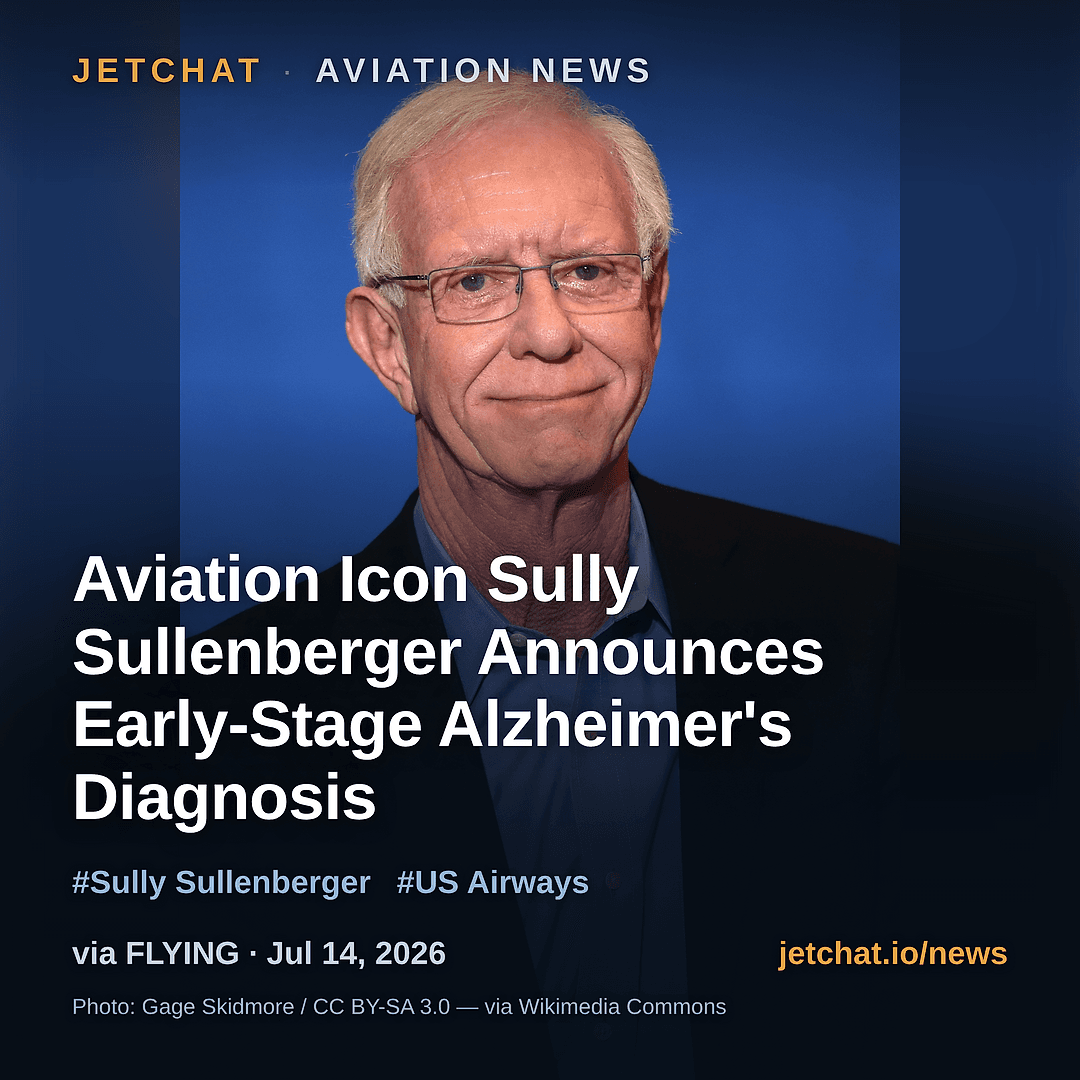
Photo: Gage Skidmore / CC BY-SA 3.0 — via Wikimedia Commons (CC BY-SA 3.0) · source
Captain Chesley 'Sully' Sullenberger, renowned for successfully ditching US Airways Flight 1549 in the Hudson River in 2009, has publicly shared his early-stage Alzheimer's disease diagnosis. The seventy-five-year-old aviator is undergoing treatment in San Francisco and released a statement hoping to bring awareness to the condition by stepping into the public eye. For the aviation community, Sullenberger remains the ultimate benchmark for airmanship and crew resource management, and his continued transparency serves as a powerful reminder of the human element behind the flight deck door.
Read the full take
Chesley Sullenberger's legacy extends far beyond the few minutes it took to glide a crippled Airbus A320 into the icy waters of the Hudson River. Following the flawless execution of that water landing alongside First Officer Jeffrey Skiles, Sullenberger utilized his newfound global platform to become a steadfast advocate for aviation safety, crew training, and industry professionalism. He retired from airline flying in 2010 but never stepped away from the aviation community, ultimately serving as the United States representative to the International Civil Aviation Organization. His recent decision to publicly announce his early-stage Alzheimer's diagnosis reflects the same quiet leadership and integrity he demonstrated during his flying career. By openly discussing his memory challenges and treatment at the University of California, San Francisco, Sullenberger aims to destigmatize the disease and encourage other families to seek support. For student pilots and seasoned airline captains alike, the 2009 ditching is heavily studied not just as a miraculous event, but as a triumph of rigorous training, situational awareness, and exceptional crew resource management. Sullenberger has always deferred the hero label, instead pointing to the collective effort of the flight crew, cabin crew, and first responders. As he faces this challenging new chapter, the global aviation community stands firmly behind him. His enduring impact on pilot training programs worldwide ensures that his dedication to safety and excellence will continue to shape the next generation of professional aviators.