Boeing Completes Flight Tests for 737 MAX 7 and 10
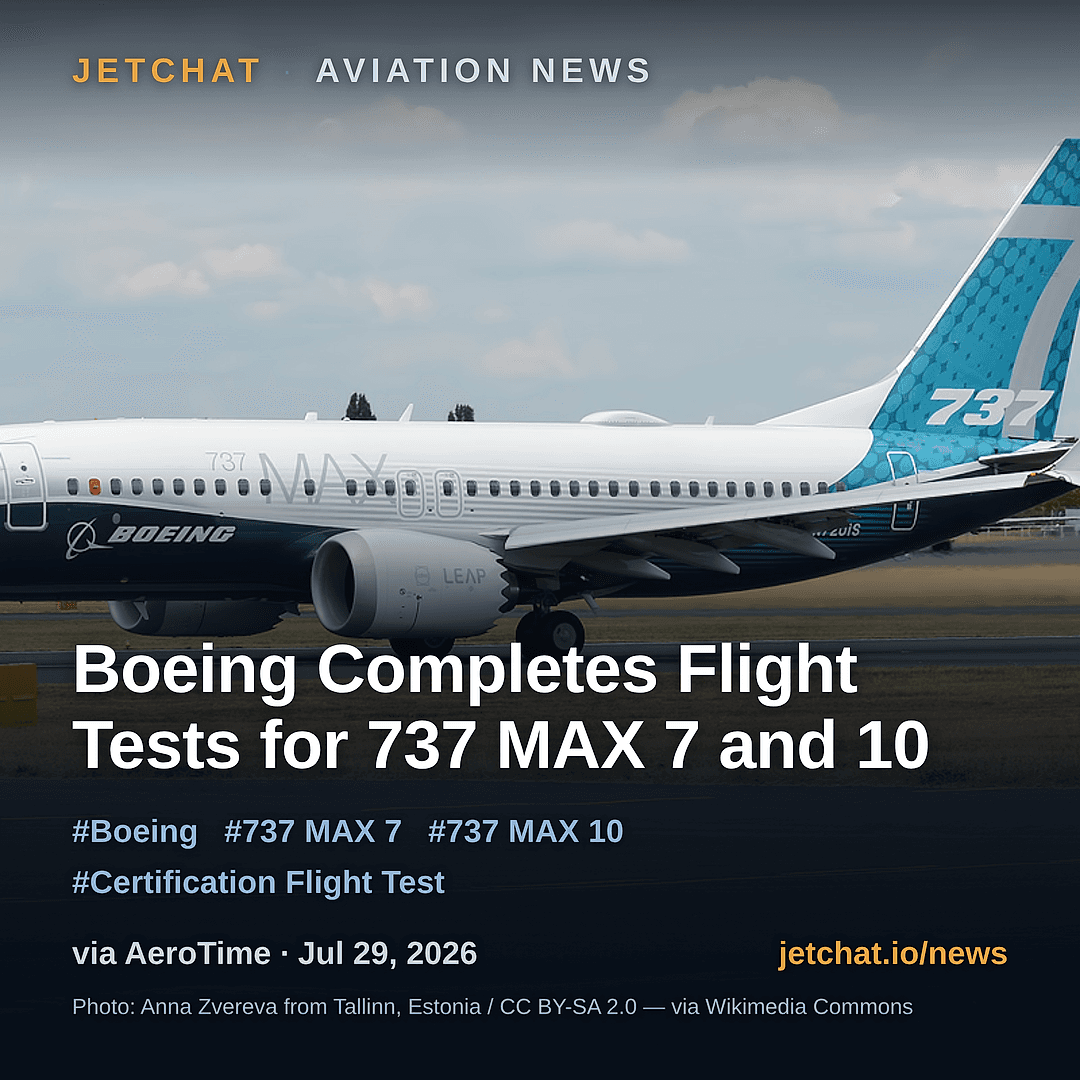
Photo: Anna Zvereva from Tallinn, Estonia / CC BY-SA 2.0 — via Wikimedia Commons (CC BY-SA 2.0) · source
Boeing has officially wrapped up its planned certification flight testing for the 737 MAX 7 and MAX 10 variants. The manufacturer logged over two thousand flight hours for the MAX 10, evaluating critical components like the enhanced angle of attack sensors and engine anti-ice solutions. The program now shifts to finalizing safety assessments for Federal Aviation Administration review. For aspiring airline pilots, this milestone keeps both narrowbodies on track for a 2026 certification, signaling continued fleet growth and future flight deck opportunities.
Read the full take
The conclusion of the flight testing phase marks a significant turning point for Boeing following years of regulatory delays and intense federal scrutiny. Getting the smallest and largest variants of the 737 MAX family through their airborne paces required rigorous evaluation of the aircraft under extreme conditions. Three separate MAX 10 test airframes were utilized to validate hundreds of systems, including maximum energy rejected takeoffs and wet runway braking performance. Notably, the flight campaigns rigorously tested the enhanced Angle of Attack system and the engine anti-ice solution. These components have been subject to severe regulatory focus, making their successful airborne validation a major hurdle cleared. While the flying portion is finished, the manufacturer still faces a mountain of paperwork before the Federal Aviation Administration issues type certificates. Boeing must now complete its remaining system safety assessments, which currently stand at roughly one-third finished, along with late-stage development assurance reviews. For the aviation industry, getting the MAX 10 certified is especially critical. Airlines desperately need the high-capacity narrowbody to compete with the incredibly popular Airbus A321neo. If the current timeline holds, Boeing anticipates securing final certification for both the MAX 7 and MAX 10 in 2026, with the first customer deliveries rolling out the hangar doors in 2027. For commercial aviators, the entry into service of these delayed variants means airlines can finally execute their long-term fleet strategies, which ultimately drives hiring and upgrade progression across the industry.