Boeing Engineers Reject Contract Offer, Authorize Strike Action
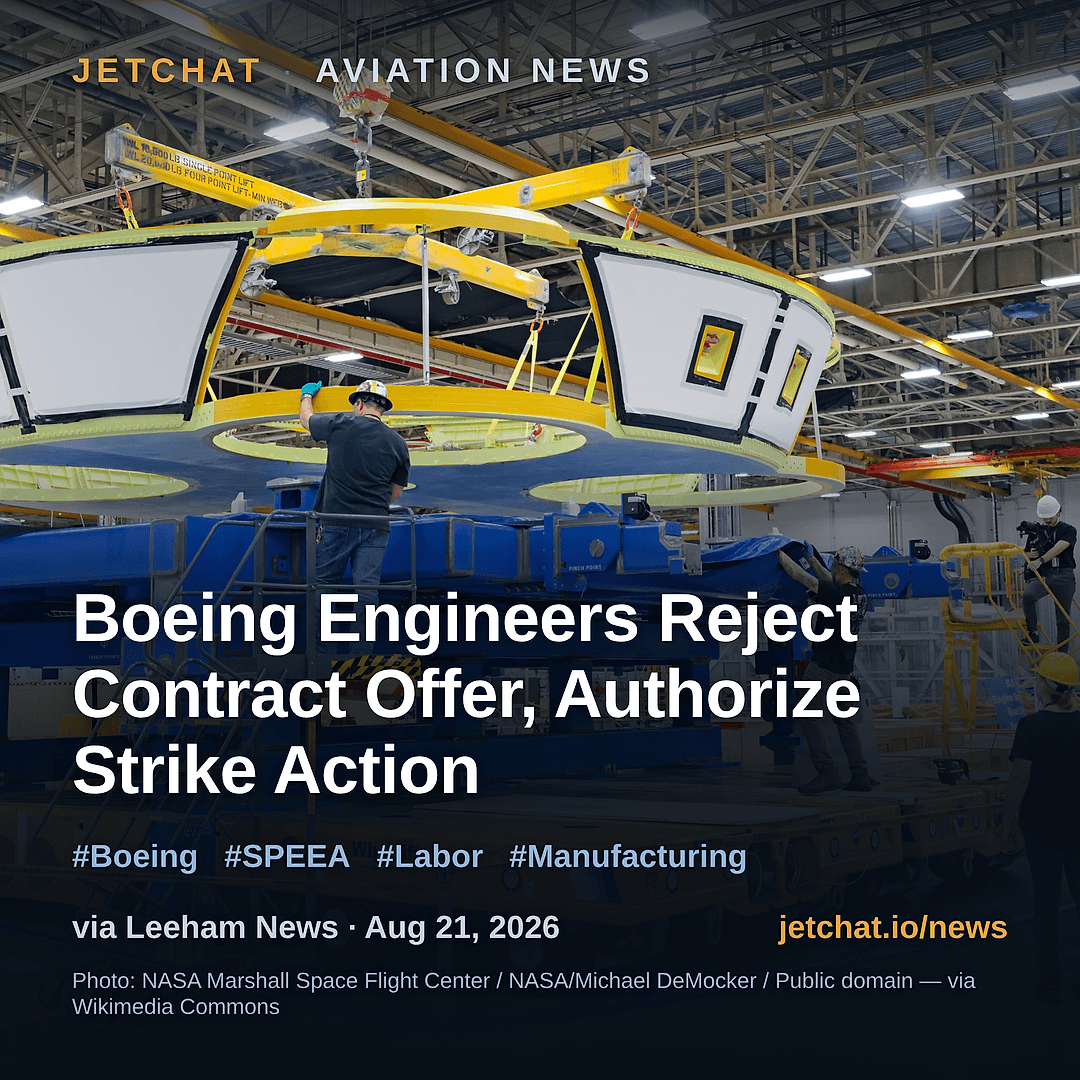
Photo: NASA Marshall Space Flight Center / NASA/Michael DeMocker / Public domain — via Wikimedia Commons (Public domain) · source
Technical staff and engineers at Boeing have voted down the company's "best and final" contract proposal, simultaneously granting their union leadership the authority to call a strike. The Society of Professional Engineering Employees in Aerospace (SPEEA) membership decisively rejected the deal, even though their own negotiating committee had unanimously recommended its approval. Both parties are now preparing to return to the bargaining table. For pilots and aviation professionals, a potential work stoppage could severely disrupt aircraft production schedules and delay fleet deliveries worldwide.
Read the full take
The recent vote by Boeing engineers and technical workers to reject the manufacturer's final contract offer injects a new layer of uncertainty into the global aviation supply chain. Members of the Society of Professional Engineering Employees in Aerospace (SPEEA) defied the unanimous recommendation of their own negotiating team, signaling deep-rooted dissatisfaction on the factory floor that goes beyond standard bargaining friction. Although a strike authorization does not guarantee an immediate walkout, it provides union negotiators with significant leverage as both sides prepare to resume talks. The aerospace giant has been working diligently to stabilize its production lines and restore confidence among airlines following a series of high-profile manufacturing challenges. A work stoppage by highly specialized technical staff would inevitably throw a wrench into these recovery efforts. For the broader aviation community, particularly aspiring airline pilots and current flight crews, the ripple effects of a manufacturing slowdown are highly relevant. Delayed aircraft deliveries translate directly into stalled route expansions, deferred hiring waves, and prolonged reliance on aging airframes. Airlines build their capacity forecasts around reliable delivery schedules, and any prolonged labor dispute at a major manufacturer forces carriers to adjust their operational strategies. Industry observers should closely monitor the upcoming round of negotiations. The key indicator will be whether Boeing can adjust its compensation or workplace policies enough to satisfy the rank-and-file without disrupting its financial recovery targets. Until a revised agreement is ratified, the threat of a strike will cast a long shadow over the company's near-term production forecasts and delivery commitments.