Boeing opens fourth 737 MAX assembly line in Everett
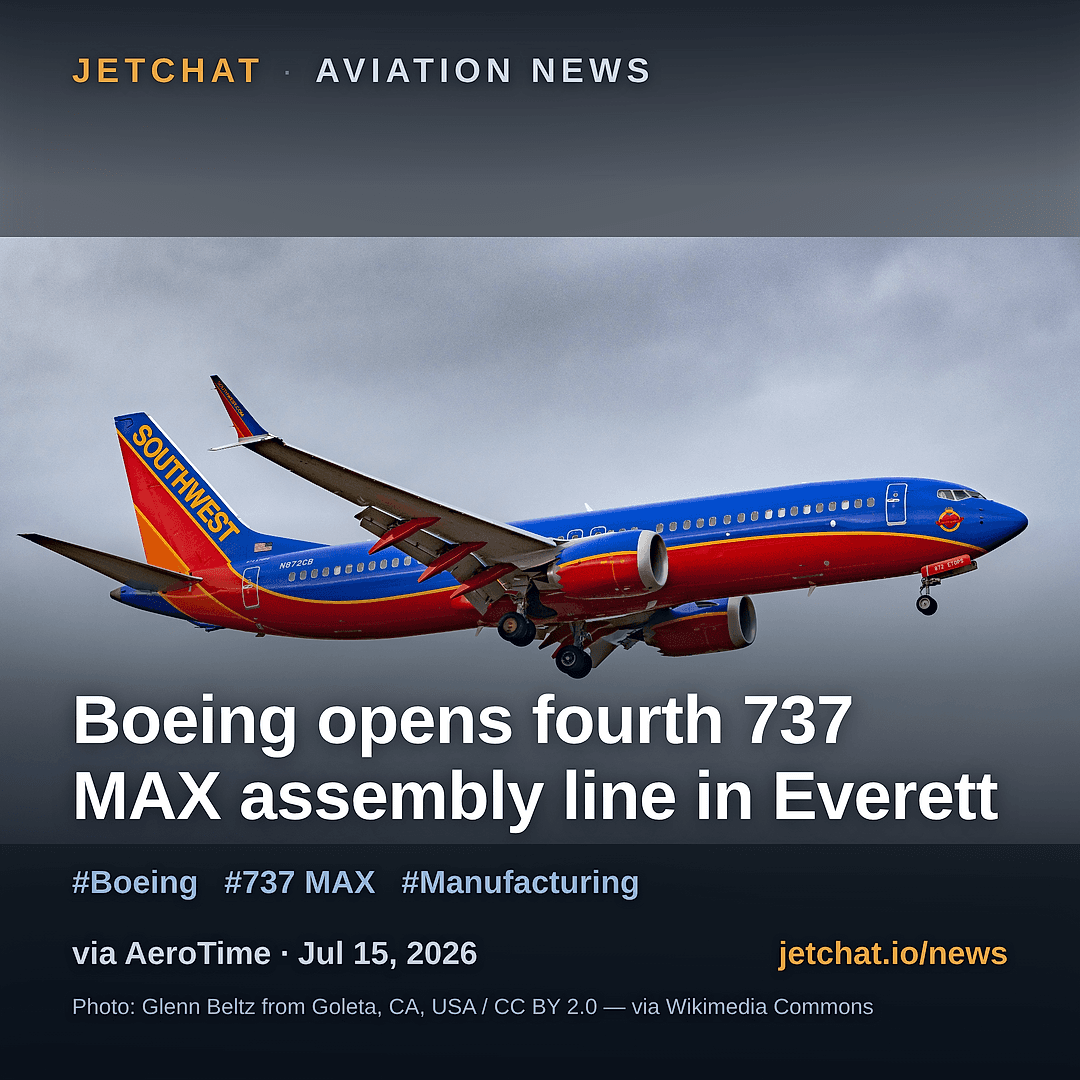
Photo: Glenn Beltz from Goleta, CA, USA / CC BY 2.0 — via Wikimedia Commons (CC BY 2.0) · source
Aerospace giant Boeing has activated a fourth manufacturing facility for the 737 MAX in Everett, Washington, utilizing factory space previously dedicated to widebody aircraft. This marks the first time in over half a century that the narrowbody jet is being manufactured outside of its traditional Renton home. The new facility recently began initial assembly on a MAX 10 variant and will gradually scale up operations. For aspiring airline pilots, a healthier manufacturing pipeline means steady aircraft deliveries and sustained hiring momentum at major carriers.
Read the full take
The activation of the Everett North Line represents a significant milestone in Boeing's broader strategy to recover and stabilize its narrowbody manufacturing ecosystem. For decades, the 737 program has been synonymous with the Renton facility. However, managing a massive backlog of over four thousand aircraft requires strategic expansion. By utilizing the massive floor space left vacant by the retired 747 program, the manufacturer gains crucial breathing room. This new final assembly line is not meant to immediately flood the market with airframes. Instead, it serves a dual purpose: expanding long-term volume and acting as a pressure release valve for Renton. Everett will specifically take on aircraft requiring complex interior configurations or extended build times, ensuring that the primary lines maintain a steady, uninterrupted flow. Management intends to use this initial phase for rigorous testing and regulatory compliance, running at a low initial rate before pushing toward the company's ultimate goal of fifty-two monthly deliveries. For the aviation community, this development is closely tied to the industry's recovery from recent regulatory caps. Following the January 2024 door plug incident, the Federal Aviation Administration heavily restricted production rates until stringent quality control benchmarks were met. The measured pace at Everett indicates a cautious approach, prioritizing manufacturing stability over sheer speed. As commercial carriers eagerly await their delayed fleet additions, this added capacity is critical. For student pilots and flight instructors looking toward the airlines, resolving these manufacturing bottlenecks is essential for maintaining robust pilot hiring forecasts well into the next decade.