Boeing to accelerate next-generation jet development post-Max certification
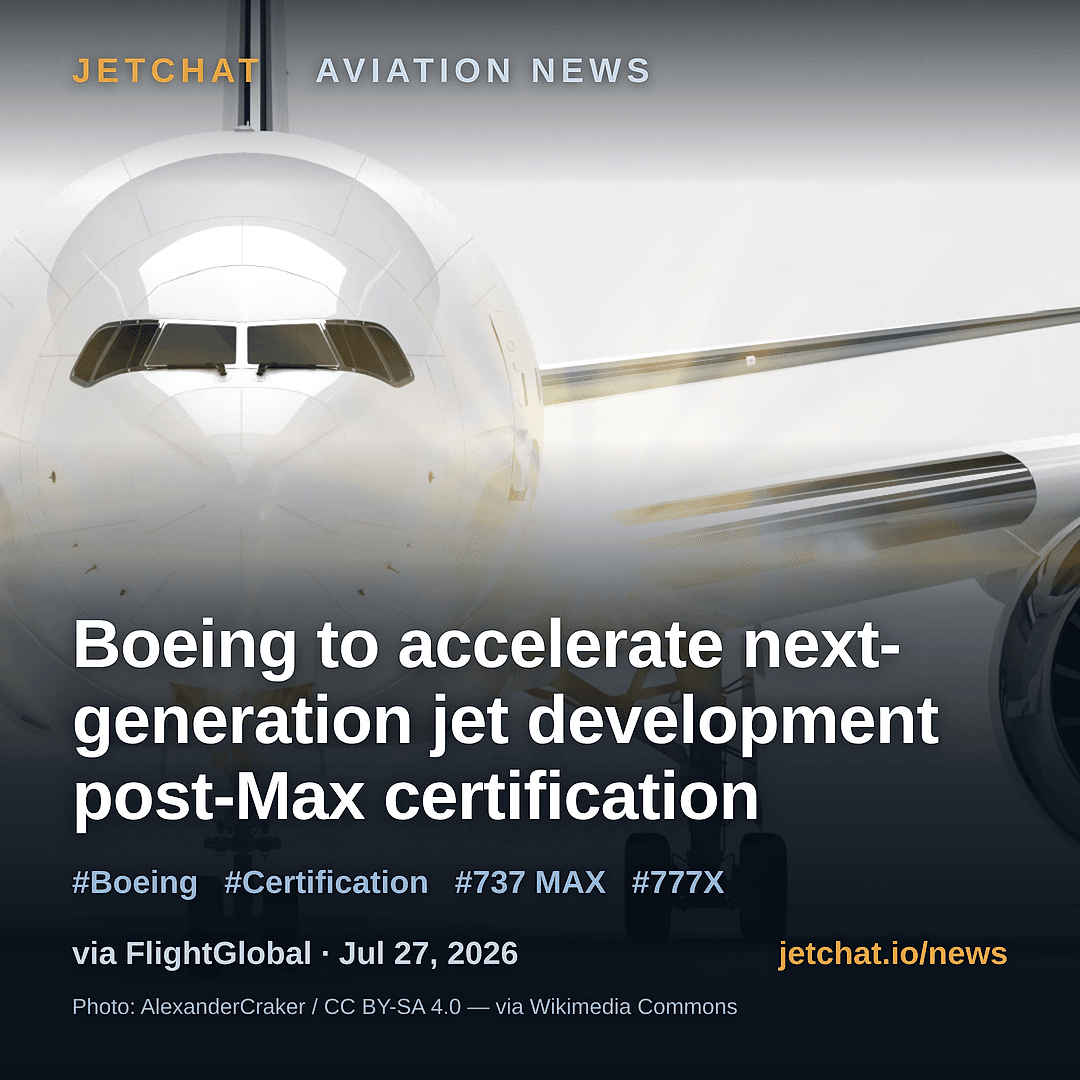
Photo: AlexanderCraker / CC BY-SA 4.0 — via Wikimedia Commons (CC BY-SA 4.0) · source
Boeing intends to significantly increase research and development on its next clean-sheet aircraft design once it secures final approvals for the 737 Max 7, Max 10, and 777-9. By wrapping up these delayed projects and scaling up narrowbody production rates, the manufacturer hopes to free up essential engineering talent and generate the cash needed for a massive new program. For aspiring airline pilots, this timeline suggests the workhorse aircraft you fly at the start of your career will remain the current generation of jets well into the late 2030s.
Read the full take
The aerospace industry has been waiting years for Boeing to announce its next major commercial aircraft program. However, the manufacturer's immediate priority remains stabilizing its current product line. Executives recently confirmed that any serious push toward a next-generation narrowbody replacement will only happen after the Federal Aviation Administration signs off on the 737 Max 7, Max 10, and the widebody 777-9. Once these regulatory hurdles are cleared, Boeing plans to reallocate a massive pool of engineering talent directly into advanced product development. This transition is heavily dependent on the company's financial recovery. Ramping up 737 production is the linchpin of this strategy, as the narrowbody program generates the vast majority of the commercial division's revenue. The recent opening of a fourth 737 assembly line in Everett is designed to help push output past fifty airframes per month, generating the necessary capital to service a massive debt load while funding future research. Industry expectations for a new narrowbody timeline have steadily shifted to the right. While a mid-2030s entry into service was once the consensus, supply chain realities and the need for a targeted twenty to thirty percent efficiency improvement over current models mean a new jet might not arrive until closer to 2040. For the aviation community, this indicates that the familiar Boeing 737 and Airbus A320 families will dominate training footprints and airline fleet strategies for at least another fifteen years. Consequently, flight crews entering the regional and major airline pipelines today can expect to spend the bulk of their early careers mastering the flight decks currently in service.