Boeing Will Structurally Modify Stored 777X Airframes Before Delivery
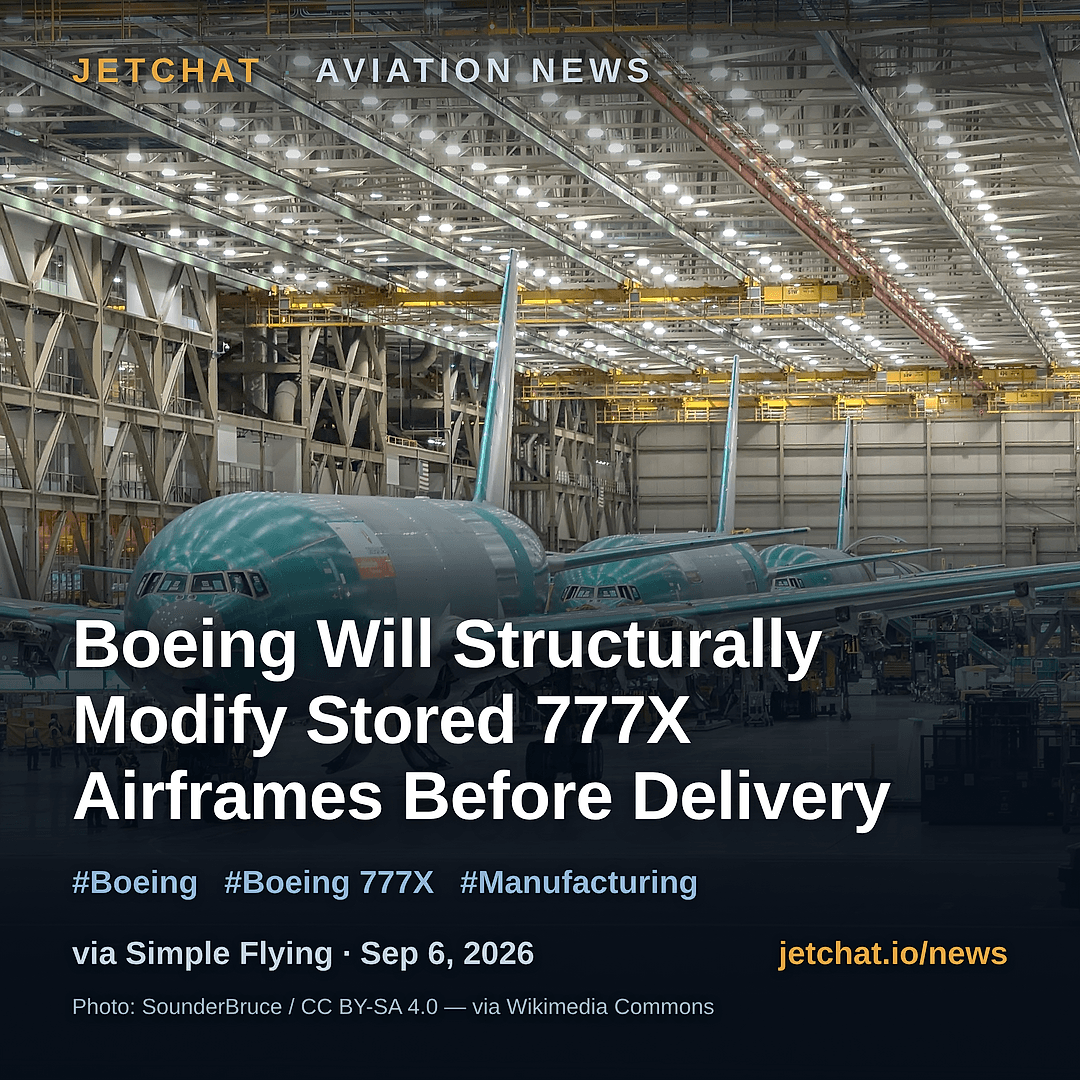
Photo: SounderBruce / CC BY-SA 4.0 — via Wikimedia Commons (CC BY-SA 4.0) · source
Boeing will perform extensive modifications on roughly thirty previously manufactured 777X airplanes currently sitting in storage. Because the certification process took longer than anticipated, engineers introduced multiple design revisions that must now be retroactively applied to these early production models. While recently built airframes only need basic software updates, the oldest parked jets require heavy structural rework before they can be handed over to customers. For pilots aiming for the heavy metal, this underscores how stringent modern certification standards directly shape the hardware you will eventually fly.
Read the full take
The saga of the Boeing 777X highlights the severe logistical bottlenecks that occur when manufacturing outpaces regulatory approval. Historically, aerospace manufacturers produce a handful of test aircraft alongside early customer airframes to ensure a smooth transition once the Federal Aviation Administration grants a type certificate. However, the 777X timeline has been significantly delayed by intense regulatory scrutiny and shifting compliance standards over the past several years. Because assembly lines cannot simply pause without causing massive supply chain disruptions, Boeing continued building the giant twin-engine jets. Now, the manufacturer faces the costly reality of retroactive compliance. The earliest airframes off the line will essentially need to be opened up and rebuilt to match the final, certified structural design. This retroactive modification process is a massive undertaking, far more complex than the routine software patches required for the jets rolling off the factory floor today. For aspiring airline pilots and aviation enthusiasts, this situation illustrates the evolving landscape of aircraft certification. The days of concurrent manufacturing and swift approvals are largely over, replaced by a hyper-cautious regulatory environment that demands absolute compliance before passenger operations begin. Moving forward, the industry will be watching how quickly Boeing can execute these structural teardowns without further delaying delivery schedules for flagship carriers. The successful integration of these modifications will ultimately determine when pilots can finally start bidding for seats in the highly anticipated folding-wing widebody.