Delta Faces Class Action Over Unpaid Pilot Military Leave
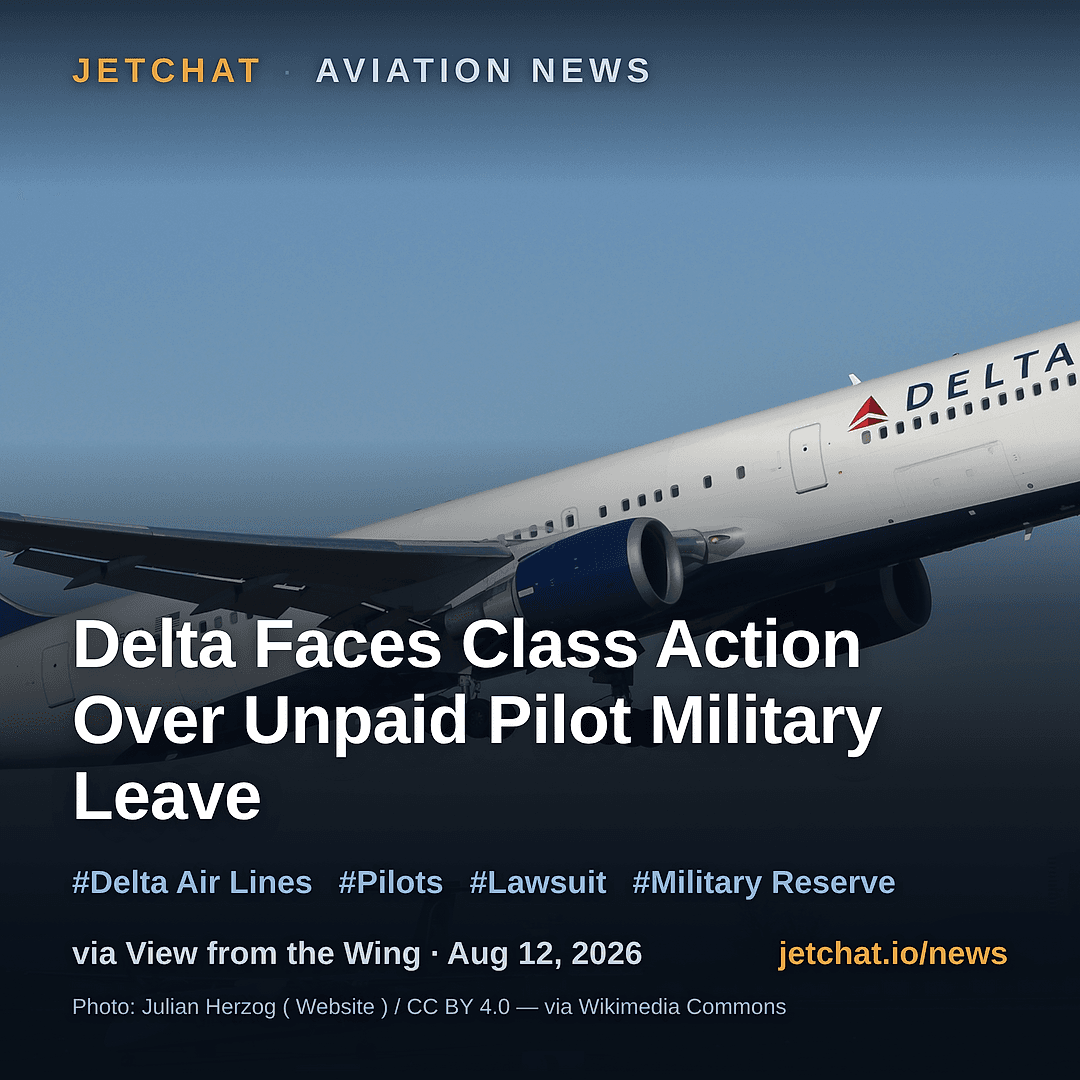
Photo: Julian Herzog ( Website ) / CC BY 4.0 — via Wikimedia Commons (CC BY 4.0) · source
A federal judge has granted class-action status to Delta Air Lines pilots suing the carrier over unpaid short-term military leave. The lawsuit alleges that Delta compensates aviators for similar short-term absences, such as jury duty or bereavement, but unlawfully withheld pay from National Guard and reserve members. Covering over one hundred thousand leave events since 2007, the case could cost the airline millions. This matters to pilots because it could set a major legal precedent regarding how airlines must treat reserve duty compensation across the industry.
Read the full take
The recent class certification in the Delta Air Lines military leave lawsuit marks a significant moment for aviators balancing airline careers with military service. National Guard and reserve pilots are a crucial part of the commercial aviation workforce, bringing extensive flight experience and discipline to the flight deck. However, juggling flight schedules with mandatory drill weekends and short-term deployments often creates friction regarding compensation and seniority. The core of this legal dispute rests on federal employment protections for service members. The plaintiffs argue that short-term military duty should be treated exactly like other compensated short-term absences, such as sick time or jury duty. By securing class-action status, the plaintiffs can bundle more than one hundred thousand distinct leave periods dating back to 2007 into a single massive claim. If the pilots prevail, Delta could face substantial financial damages. More importantly for the broader aviation community, a victory or a substantial settlement here would likely force other major carriers to audit and potentially overhaul their own payroll policies for military reservists. For aspiring airline pilots currently serving in the armed forces, this case is worth watching closely. It highlights the ongoing legal battles to ensure that military commitments do not result in a financial penalty when maintaining a commercial flying career. The outcome could permanently redefine the financial relationship between airlines and their military veteran employees.