EASA modernizes simulator rules with new capability-based training framework
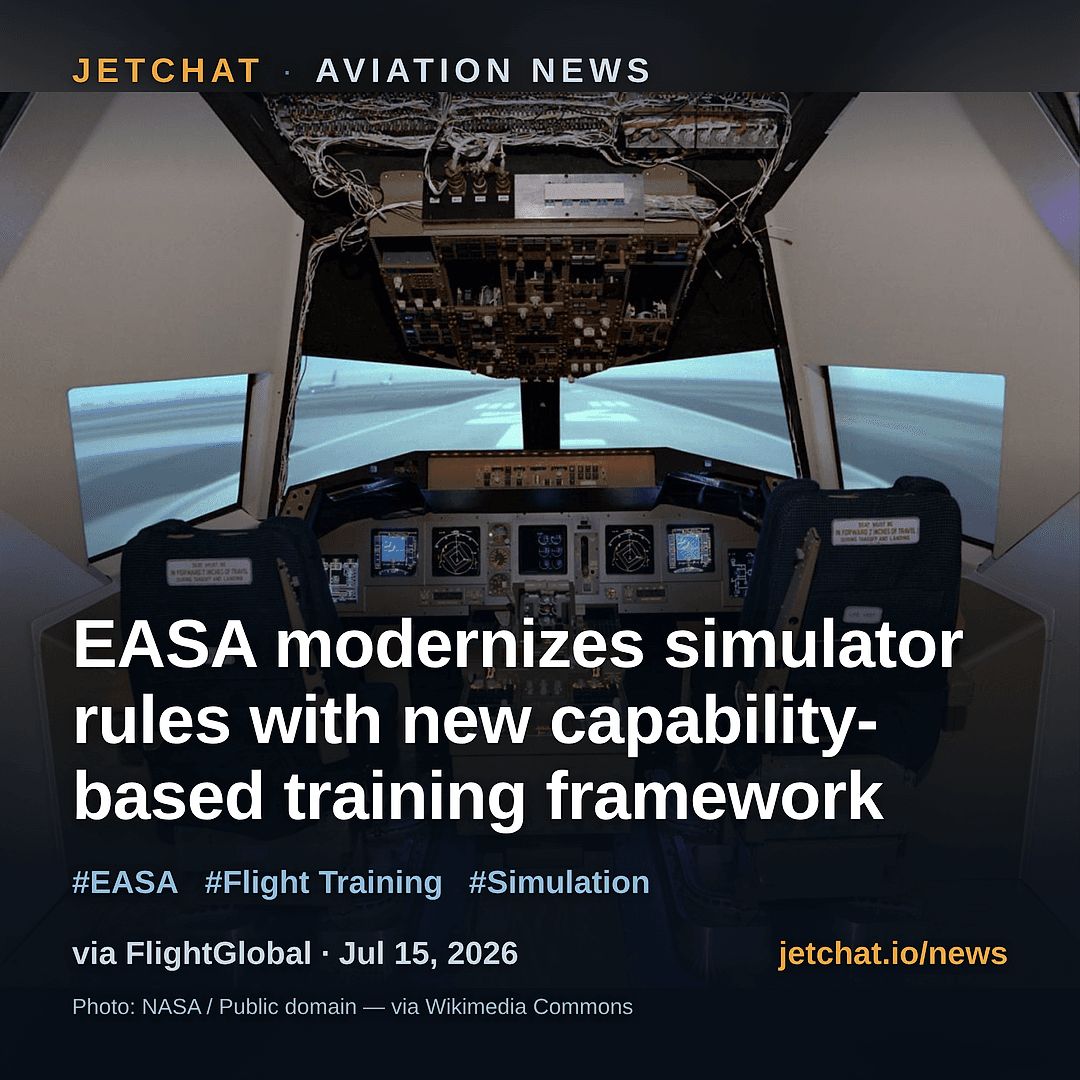
Photo: NASA / Public domain — via Wikimedia Commons (Public domain) · source
European regulators are updating how flight simulators are evaluated, moving away from rigid device categories to a system based on actual hardware capabilities. The European Union Aviation Safety Agency will now use a standardized signature to measure a device's fidelity, opening the door for broader use of virtual reality and touchscreen technologies. For flight schools and students, this shift means highly effective simulator time might become more accessible and affordable without relying strictly on expensive full-flight setups.
Read the full take
The European Union Aviation Safety Agency is officially breaking the stranglehold of traditional full-flight simulators on pilot training. Historically, aviation authorities have grouped training devices into rigid, predefined categories. This legacy structure essentially forced flight schools to utilize massive, multi-million-dollar full-flight simulators to grant specific regulatory training credits, leaving highly capable but lower-tier flight training devices underutilized. Under the newly introduced framework, European regulators will instead evaluate hardware and software based on a unique capability signature. This acts as a metric for exactly what a specific piece of equipment can accomplish regardless of its traditional classification. By adopting a task-to-tool philosophy, approved training organizations will have the regulatory blessing to match specific learning objectives with the most appropriate technology. This is a massive victory for the integration of modern advancements like virtual reality headsets and advanced touchscreen panels, which have proven their educational value but previously struggled to fit neatly into outdated certification boxes. As European regulators roll out stakeholder workshops in Germany later this year to facilitate the transition, the global aviation training community will be watching closely. If successful, this modernized blueprint could drastically lower training costs and increase simulator availability for student pilots, all while maintaining rigorous safety standards. The shift signals a long-overdue regulatory acknowledgment that a device does not need a hydraulic motion base to successfully teach complex flight procedures.