Eleven Survive Kenmore Air DHC-3 Otter Crash in San Juans
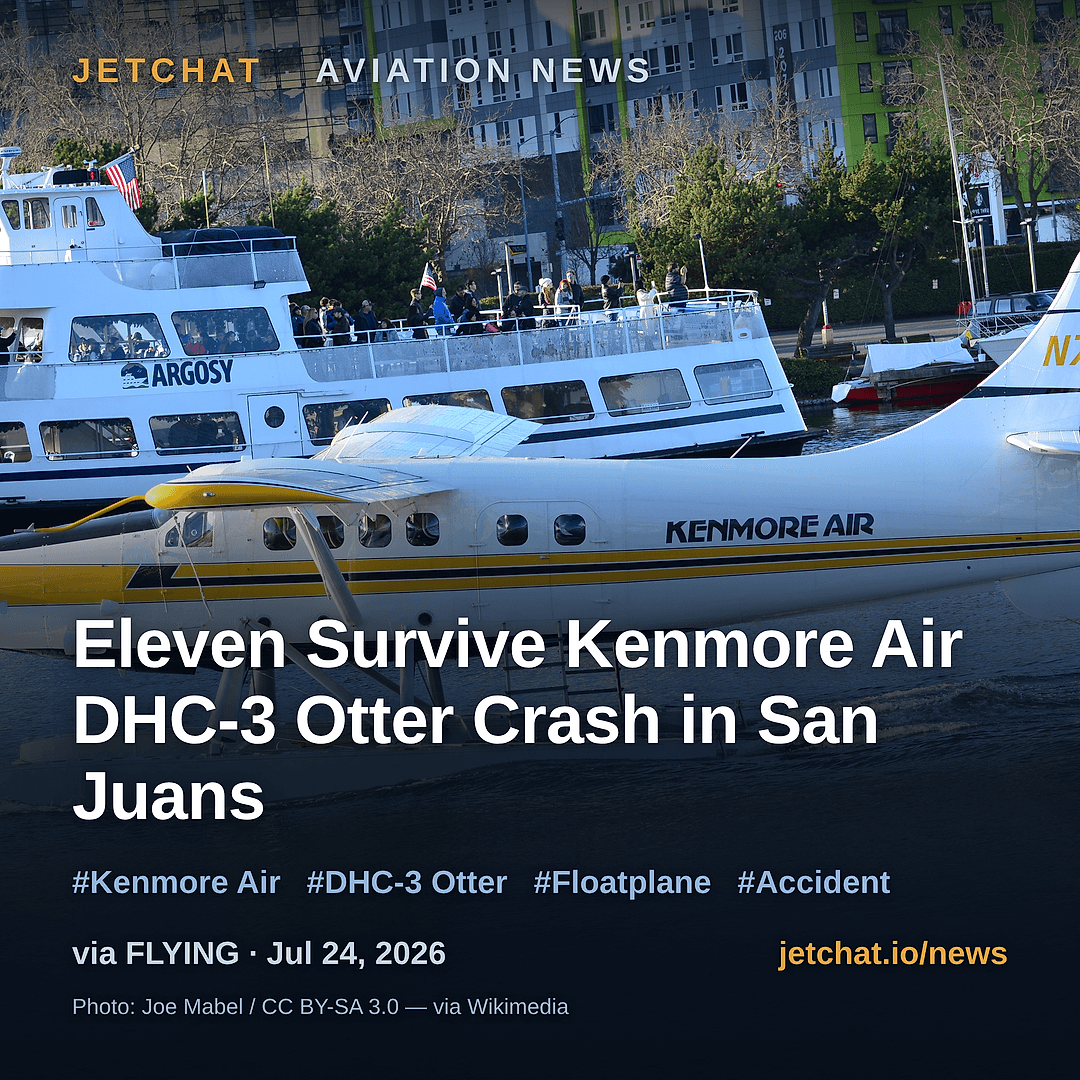
Photo: Joe Mabel / CC BY-SA 3.0 — via Wikimedia (CC BY-SA 3.0) · source
A Kenmore Air de Havilland DHC-3 Otter carrying 11 people crashed near Washington's Sucia Island on Thursday, with all aboard surviving despite the aircraft catching fire. The floatplane was en route from Seattle to Roche Harbor when it went down along the shoreline, leaving occupants with non-life-threatening injuries including broken bones and lacerations. For pilots operating in maritime environments, this accident underscores the critical importance of swift egress procedures and emergency preparedness during over-water operations near unforgiving terrain.
Read the full take
The survival of all 11 individuals aboard the Kenmore Air DHC-3 Otter is a remarkable outcome for a shoreline impact that resulted in a post-crash fire. Operating in the Pacific Northwest presents unique challenges for floatplane pilots, including rapidly changing wind conditions, dense maritime traffic, and proximity to rugged coastlines. Bystander video captured just prior to the accident reportedly shows the Otter flying low over the water with a slight wing rock before disappearing behind terrain. Investigators from the National Transportation Safety Board will likely focus on these final moments to determine if mechanical issues, environmental factors like low-level wind shear, or spatial misjudgments played a role in the descent. Kenmore Air is a highly respected legacy operator in the Seattle region, known for its extensive network connecting urban centers to the San Juan Islands and British Columbia. The company took the prudent step of grounding its Friday schedule to support the affected passengers and crew, demonstrating a strong safety culture focused on human factors following a traumatic event. For the broader aviation community, particularly commercial seaplane pilots, this investigation will be closely watched. The DHC-3 Otter is a workhorse of backcountry and coastal flying, and any findings regarding its flight control systems or powerplant behavior will be vital. Furthermore, the successful evacuation of a burning aircraft on a remote shoreline highlights how rigorous passenger briefings and clear exit strategies can mean the difference between a rescue and a recovery operation. Pilots should use this event as an opportunity to review their own ditching and emergency egress checklists.