European jet fuel reserves drop to one-month supply
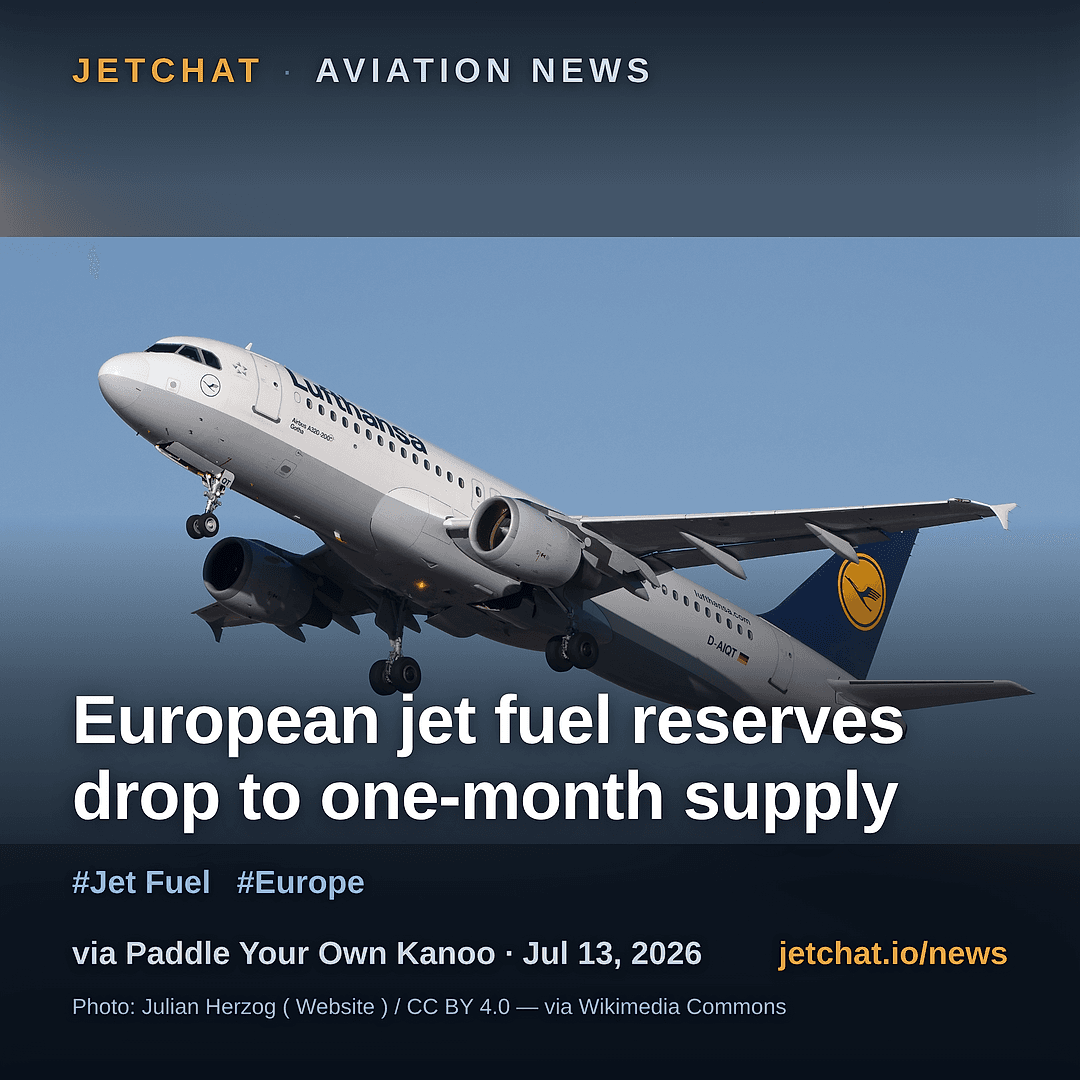
Photo: Julian Herzog ( Website ) / CC BY 4.0 — via Wikimedia Commons (CC BY 4.0) · source
Ongoing geopolitical tensions in the Middle East have severely disrupted Europe's jet fuel supply chain, leaving the continent with roughly a one-month reserve. Industry analysts warn of a potential deficit of 600,000 barrels per day during the busy third quarter, exacerbated by a lack of local refining capacity. While airlines have temporarily stabilized operations by importing from North America and Africa, operators face skyrocketing wholesale costs. For commercial pilots, this volatility means prolonged pressure on airline profitability, which could impact future hiring and route expansion plans.
Read the full take
The root of this supply crunch lies in a structural vulnerability within the European aviation sector. Over the past decade, Europe and the United Kingdom have steadily decommissioned domestic refining facilities, opting instead to rely on imports from Kuwait and the United Arab Emirates. Those vital supply lines depend on safe passage through the Strait of Hormuz. With recent conflicts effectively severing that route, the continent was forced to pivot rapidly to secondary markets like the United States, Canada, India, and Nigeria. While these alternative sources have kept aircraft flying and prevented mass cancellations so far, the logistics of redirecting global energy flows have driven operating expenses through the roof. This is particularly punishing for carriers that chose not to hedge their fuel purchases before the disruption. Despite previous optimism surrounding diplomatic ceasefire efforts, the reality on the ground indicates that the squeeze will last well into the peak summer travel season. Industry analysts project a shortfall of hundreds of thousands of barrels daily just as airlines attempt to maximize their seasonal schedules. Even if the supply remains barely adequate to avoid grounding fleets, the economic fallout is unavoidable. Passengers are already bearing the brunt through elevated ticket prices, and major carriers have signaled that fares will not drop even if wholesale fuel costs eventually normalize. For the broader aviation community, this situation underscores the fragility of global energy logistics. As airlines absorb these massive financial shocks, aspiring aviators should pay close attention to carrier balance sheets, as prolonged fuel crises historically lead to tightened budgets, delayed fleet upgrades, and paused recruitment efforts.