Fuel costs drive China's top airlines into operating losses
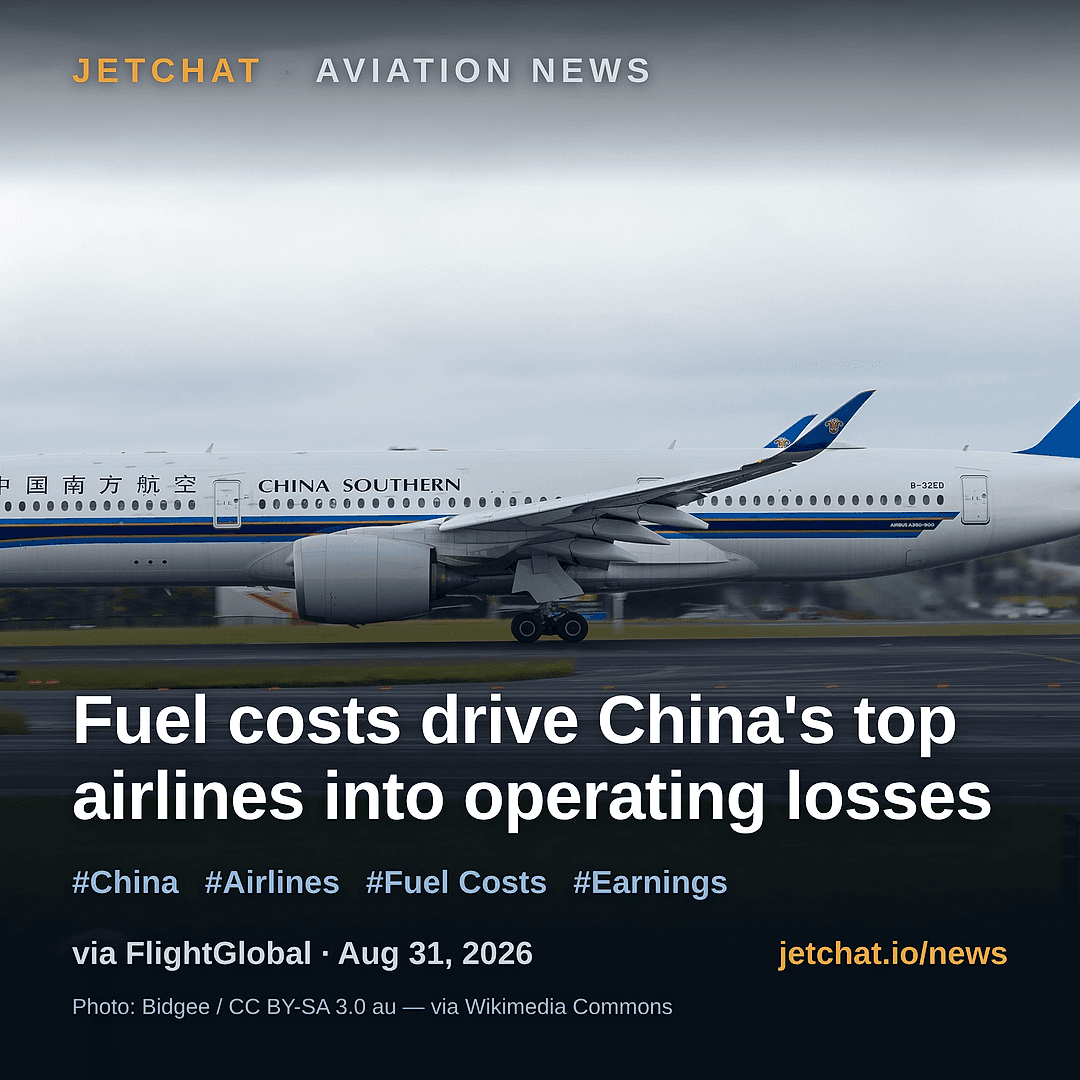
Photo: Bidgee / CC BY-SA 3.0 au — via Wikimedia Commons (CC BY-SA 3.0 au) · source
The three largest airlines in China posted significant operating losses for the first half of the year, reversing their profitable first-quarter trends. Despite double-digit percentage increases in passenger revenue, Air China, China Eastern, and China Southern were heavily battered by soaring jet fuel prices combined with a lack of fuel hedging strategies. For aspiring airline pilots, this serves as a stark reminder of how volatile commodity prices can directly squeeze carrier profitability, potentially impacting future hiring waves and fleet expansion plans.
Read the full take
The aviation industry often operates on razor-thin margins, and the recent financial filings from China's largest carriers perfectly illustrate this vulnerability. While travel demand across Asia has rebounded strongly, higher ticket sales alone cannot always outpace the raw physics of flight economics. Jet fuel remains one of the largest line items for any airline. When prices spike due to geopolitical tension, carriers that purchase fuel on the spot market without financial safety nets absorb the full blow. Unlike many North American and European operators that aggressively hedge their fuel contracts to lock in predictable rates, these major Chinese operators generally buy their domestic fuel at current market prices. This exposure resulted in fuel-related expenses jumping more than thirty percent compared to the previous year. To combat these pressures, flight operations departments are forced to implement aggressive fuel-saving procedures. For crews in the flight deck, this translates to stricter single-engine taxi protocols, optimized descent profiles, and highly scrutinized fuel planning. However, operational efficiency can only mitigate so much financial damage. The broader significance for the global aviation market is twofold. First, these losses highlight the massive headwind legacy carriers face when competing against domestic high-speed rail and aggressive low-cost regional airlines. Second, prolonged unprofitability at major state-backed carriers could slow their aggressive international route expansions, slightly easing competitive pressures for Western airlines flying Pacific routes. Moving forward, industry watchers should monitor whether these massive losses compel Chinese airline executives to adopt standard fuel hedging practices, or if they will continue to rely solely on ticket surcharges and cockpit fuel conservation to balance the books.