GE Aerospace Acquires Engine Supplier CPP for $11.75 Billion
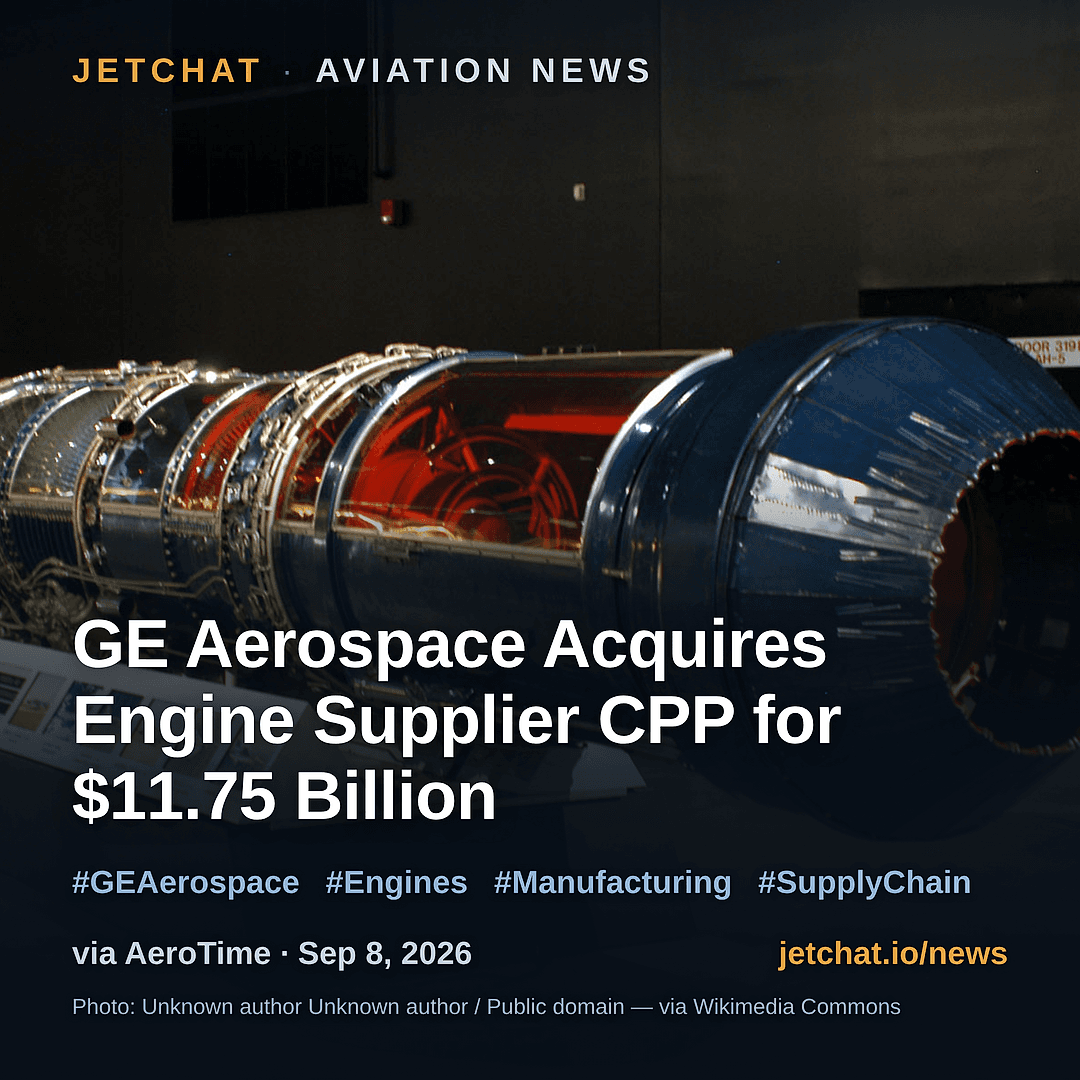
Photo: Unknown author Unknown author / Public domain — via Wikimedia Commons (Public domain) · source
In a major move to streamline aircraft engine production, GE Aerospace is purchasing Cleveland-based supplier Consolidated Precision Products for $11.75 billion. The acquisition gives the engine manufacturer direct control over the production of specialized metal castings used in powerplants like the LEAP and GEnx series. With the deal expected to close in late 2027, the aerospace giant aims to resolve persistent supply chain bottlenecks that have hampered manufacturing rates. For pilots, reducing these delays means faster deliveries of new aircraft and improved spare parts availability for fleet maintenance.
Read the full take
The multibillion-dollar acquisition of Consolidated Precision Products underscores a vital shift in aerospace manufacturing toward vertical integration. For years, the aviation industry has grappled with severe supply chain constraints, particularly in highly specialized metallurgical fields like casting and forging. By purchasing a key supplier, GE Aerospace is taking aggressive steps to insulate its production lines from external delays. Consolidated Precision Products employs thousands of workers across numerous facilities and is responsible for producing the intricate titanium and superalloy components essential for modern turbine engines. Because GE anticipates a massive thirty percent surge in component demand over the next four years, controlling this critical segment of the supply chain is a strategic necessity rather than a mere financial investment. This move mirrors a wider industry trend of securing essential manufacturing capabilities in-house, similar to recent joint acquisitions by European aerospace leaders. Creating these complex engine parts requires specialized facilities that take years to build and certify, meaning aircraft manufacturers cannot easily swap vendors when shortages occur. Bringing these operations directly under the corporate umbrella allows GE to streamline operations and prioritize its own output requirements. As airlines clamor for new jets to meet global travel demand, alleviating engine production bottlenecks remains one of the highest priorities in commercial aviation. For the pilot community, this industrial maneuvering directly impacts career progression and daily operations. When engine manufacturers can reliably deliver new powerplants and spare parts, airlines can maintain aggressive fleet expansion schedules and avoid grounding operational aircraft, ultimately leading to more stable flight schedules and steady hiring trends across the flight deck.