Lufthansa and Air France-KLM Bid for TAP Portugal Stake
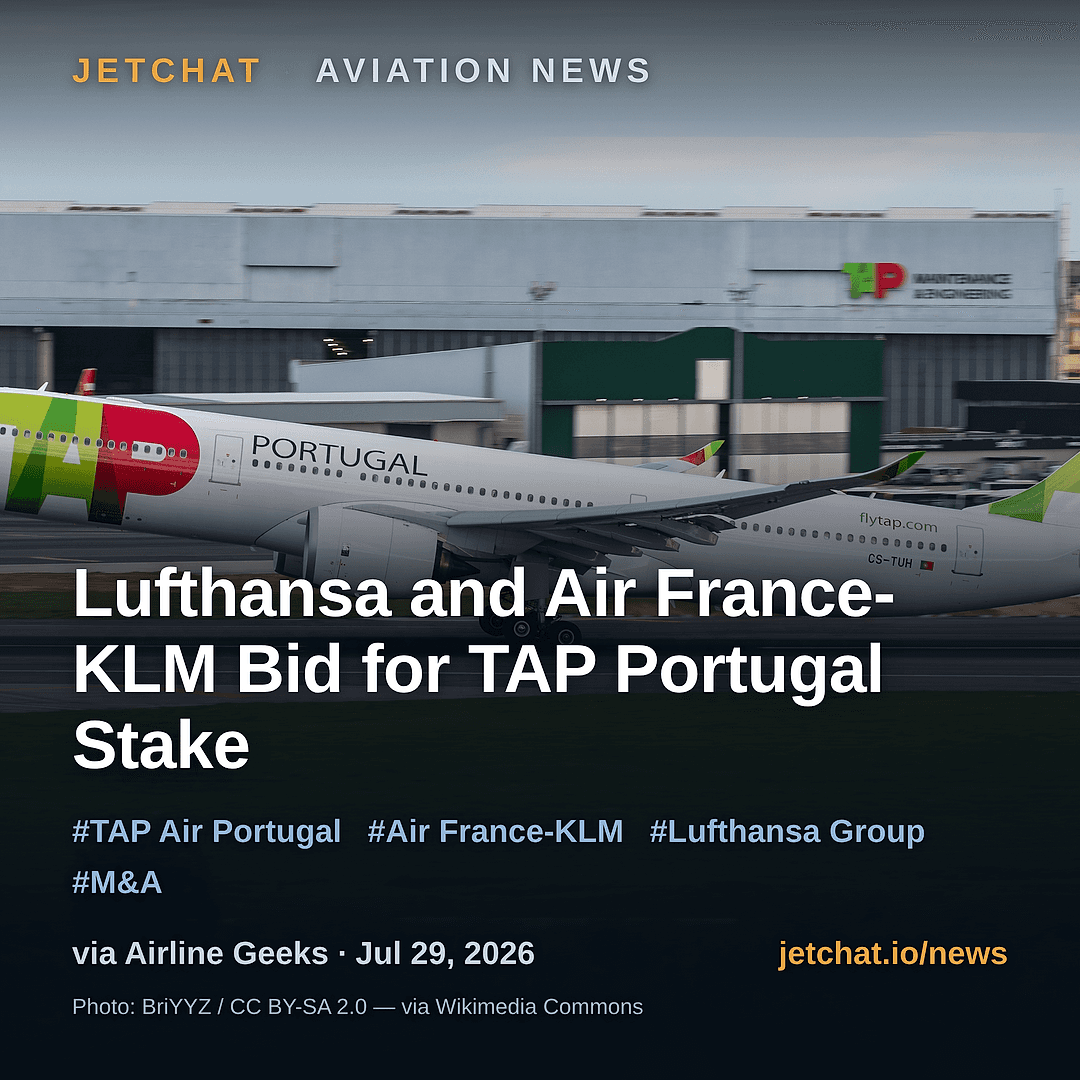
Photo: BriYYZ / CC BY-SA 2.0 — via Wikimedia Commons (CC BY-SA 2.0) · source
The Portuguese government is officially moving forward with the partial privatization of TAP Air Portugal, offering up to a 49.9 percent stake in the national carrier. Both the Lufthansa Group and Air France-KLM have submitted competing bids to acquire the minority share. This potential consolidation of major European airlines highlights a broader trend of legacy carriers absorbing smaller national operators, which matters to aspiring airline pilots by directly shaping future hiring environments, seniority list integrations, and long-term career stability across the transatlantic market.
Read the full take
TAP Air Portugal has long been a highly attractive asset in the European aviation market, primarily due to its strategic geographic location and its incredibly strong long-haul network connecting Europe to South America, particularly Brazil. For the Portuguese government, offloading a minority stake of up to 49.9 percent is a calculated move to inject private capital and operational expertise into the flag carrier while still retaining majority control. For the Lufthansa Group and Air France-KLM, acquiring TAP represents a massive opportunity to dominate transatlantic routes to the Southern Hemisphere. Lufthansa recently expanded its footprint by taking a stake in Italy's ITA Airways, while Air France-KLM recently invested in SAS. This bid for TAP further underscores the aggressive consolidation sweeping through the European airline industry, where large conglomerates are systematically absorbing smaller, independent flag carriers. For aspiring airline pilots and current aviation professionals, this wave of consolidation is a critical trend to monitor. When major alliance groups swallow independent carriers, it dramatically alters pilot recruitment pipelines, fleet assignments, and collective bargaining dynamics. A successfully integrated TAP could mean expanded route networks and stabilized career prospects within the acquiring group, but it also means fewer distinct corporate entities hiring in the market. As the Portuguese government evaluates these bids, industry observers should watch closely to see which airline alliance ultimately gains this strategic Lisbon hub, as the final decision will shift the competitive balance of transatlantic aviation for decades.