Medical Emergency Declared on Frontier A321 Following Suspected Fumes
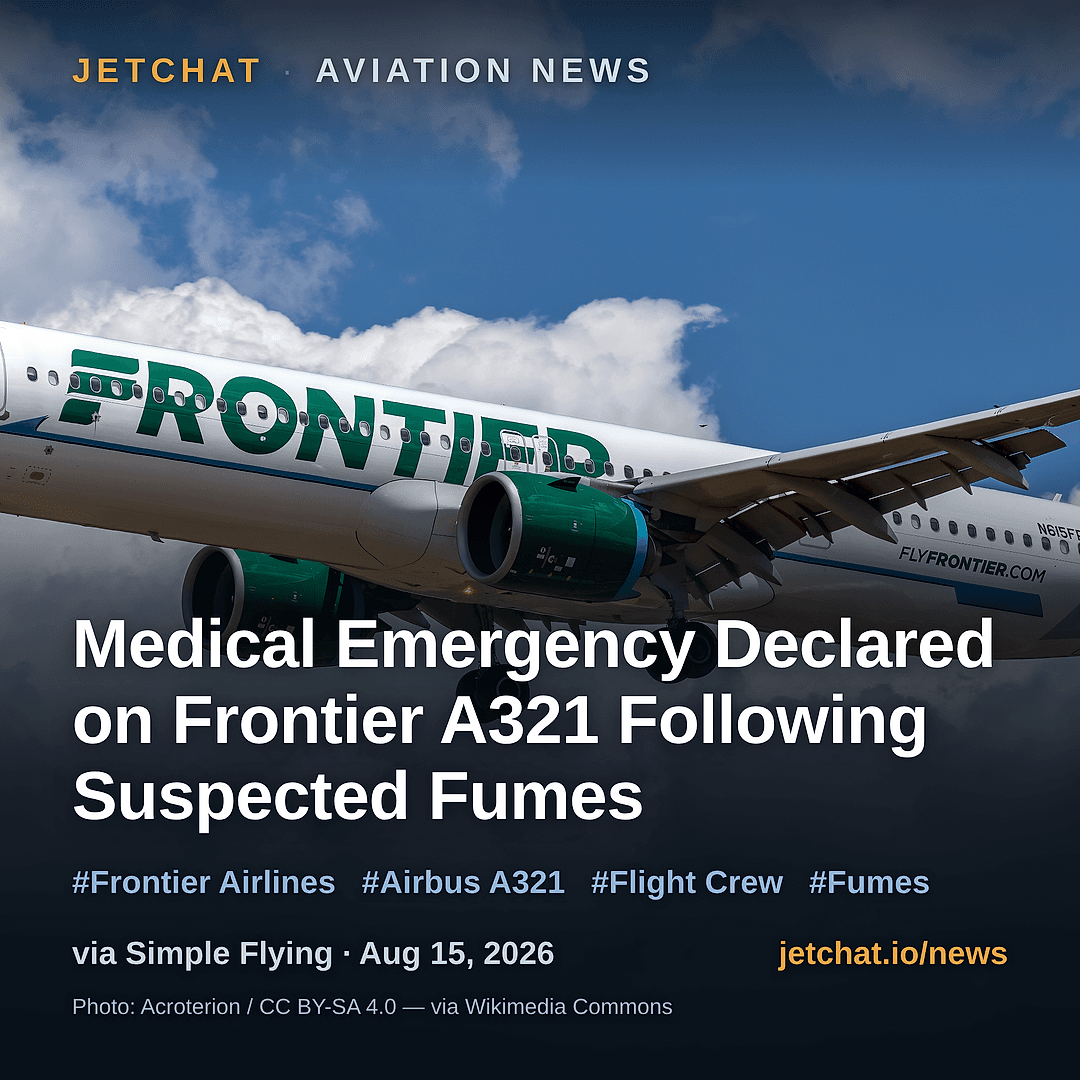
Photo: Acroterion / CC BY-SA 4.0 — via Wikimedia Commons (CC BY-SA 4.0) · source
A Frontier Airlines Airbus A321 en route from Cleveland to Fort Lauderdale declared a medical emergency on Thursday after four of the five cabin crew members reported sudden illness, including severe headaches. While the airline has not officially confirmed the cause, the rapid onset of symptoms strongly suggests a cabin fume event. For flight crews, this incident underscores the critical importance of recognizing the early signs of contaminated bleed air and executing rapid checklist responses to protect everyone on board.
Read the full take
Fume events remain one of the more insidious threats in commercial aviation, often presenting without visible smoke but carrying significant risks of crew incapacitation. During this recent Frontier Airlines flight, the report that nearly the entire cabin crew developed sudden headaches is a textbook indicator of contaminated air entering the pressure vessel. In turbine aircraft like the Airbus A321, cabin air is supplied by bleed air drawn from the engine compressor stages before combustion occurs. If engine seals degrade or fail, aerosolized engine oil or hydraulic fluid can mix with this high-temperature air, introducing volatile organic compounds directly into the environmental control system. For pilots, this scenario highlights the necessity of immediate action. When multiple crew members report simultaneous neurological or respiratory symptoms, flight deck crews must quickly don supplemental oxygen to ensure their own cognitive functions remain unimpaired. The priority immediately shifts from troubleshooting to securing the aircraft and initiating a rapid diversion. Going forward, maintenance teams will thoroughly inspect the aircraft's engine seals and Auxiliary Power Unit for signs of fluid leakage. This incident serves as a vital case study for student and professional pilots alike: environmental hazards can degrade crew performance rapidly, making strict adherence to non-normal checklists and swift decision-making absolutely paramount for safe operations.