Montreal Airport Signaller Seriously Injured After Aircraft Strike
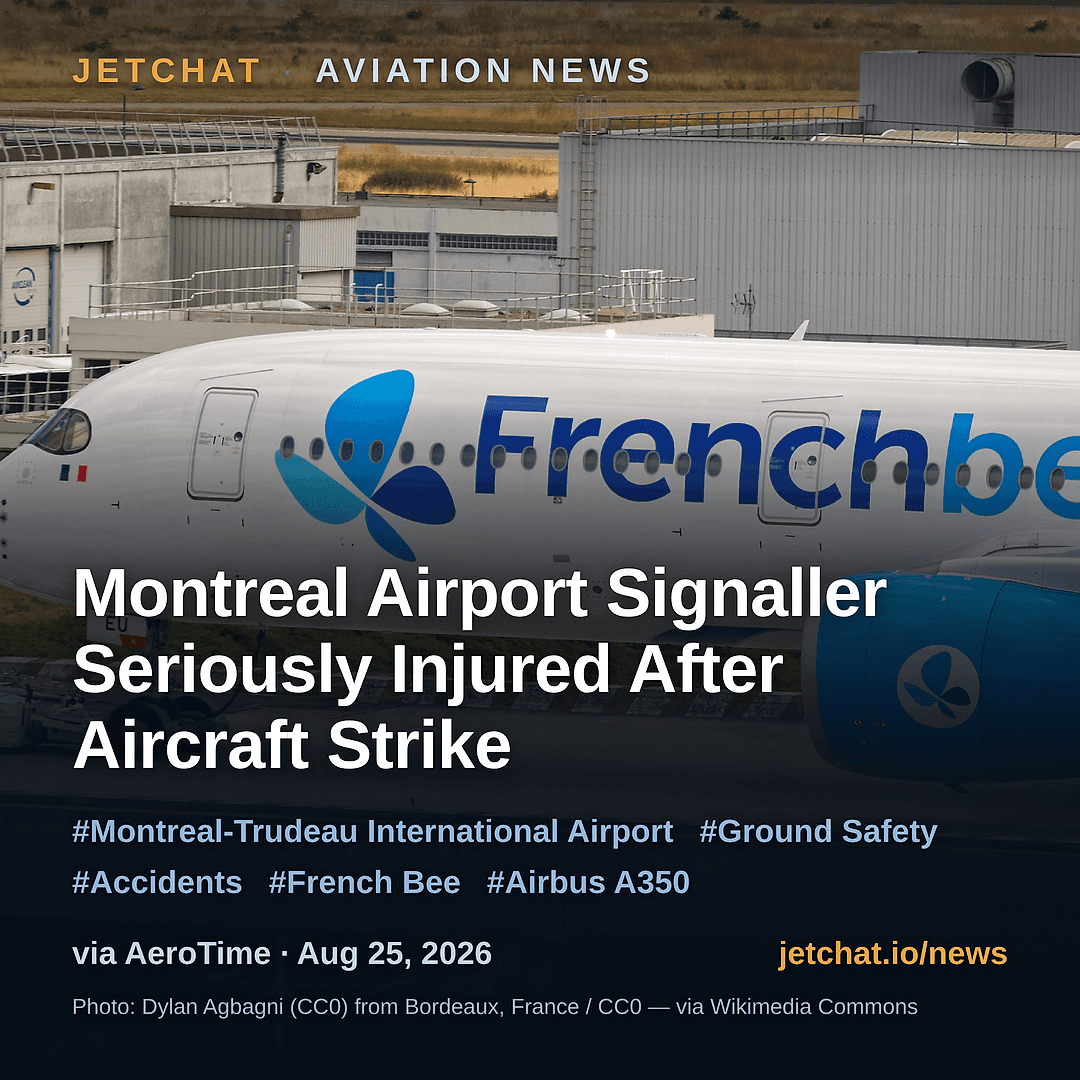
Photo: Dylan Agbagni (CC0) from Bordeaux, France / CC0 — via Wikimedia Commons (CC0) · source
A ground worker at Montreal-Pierre Elliott Trudeau International Airport sustained severe injuries following a collision with a widebody jet on August 24, 2026. The employee, reportedly working as a signaller, was hit on the apron while a French bee Airbus A350-900 was preparing for a delayed departure to Paris. Quebec workplace safety officials and local police are currently investigating the circumstances surrounding the apron collision. This incident serves as a stark reminder for flight crews to maintain hyper-vigilance regarding ramp personnel during taxi and pushback operations.
Read the full take
Ramp environments are notoriously hazardous, demanding constant coordination between flight decks and ground handling teams. This recent event at Montreal-Pierre Elliott Trudeau International Airport highlights the inherent dangers present during aircraft movement on the apron. On the evening of August 24, an individual directing an Airbus A350-900 was struck and severely injured. The widebody jet, operated by French bee, was preparing to fly to Paris after a multi-day delay stemming from an earlier technical issue. While the Transportation Safety Board of Canada was alerted, local police indicated that Quebec's workplace safety regulator will take the lead on the investigation because it constitutes an occupational accident. For commercial aviators and ground teams, the eventual findings will likely yield important safety recommendations regarding ramp communications, visibility, and standardized signaling protocols. For aspiring airline pilots and current professionals, apron accidents underscore the critical nature of sterile cockpit procedures and situational awareness before and during taxi. Pilots must verify that all ground personnel are clear of the aircraft footprint, paying special attention to blind spots around large airframes like the A350. As airports grow busier and operations face schedule pressures, especially following maintenance delays, the risk of miscommunication or overlooked clearances magnifies. Industry professionals will be watching the regulatory reports closely to see if fatigue, low-light conditions, or communication breakdowns played a role in this tragic event, reinforcing the absolute necessity of visual confirmation before initiating any aircraft movement.