MSC Air Cargo Drives Boeing 777-8F Backlog Past 80 Jets
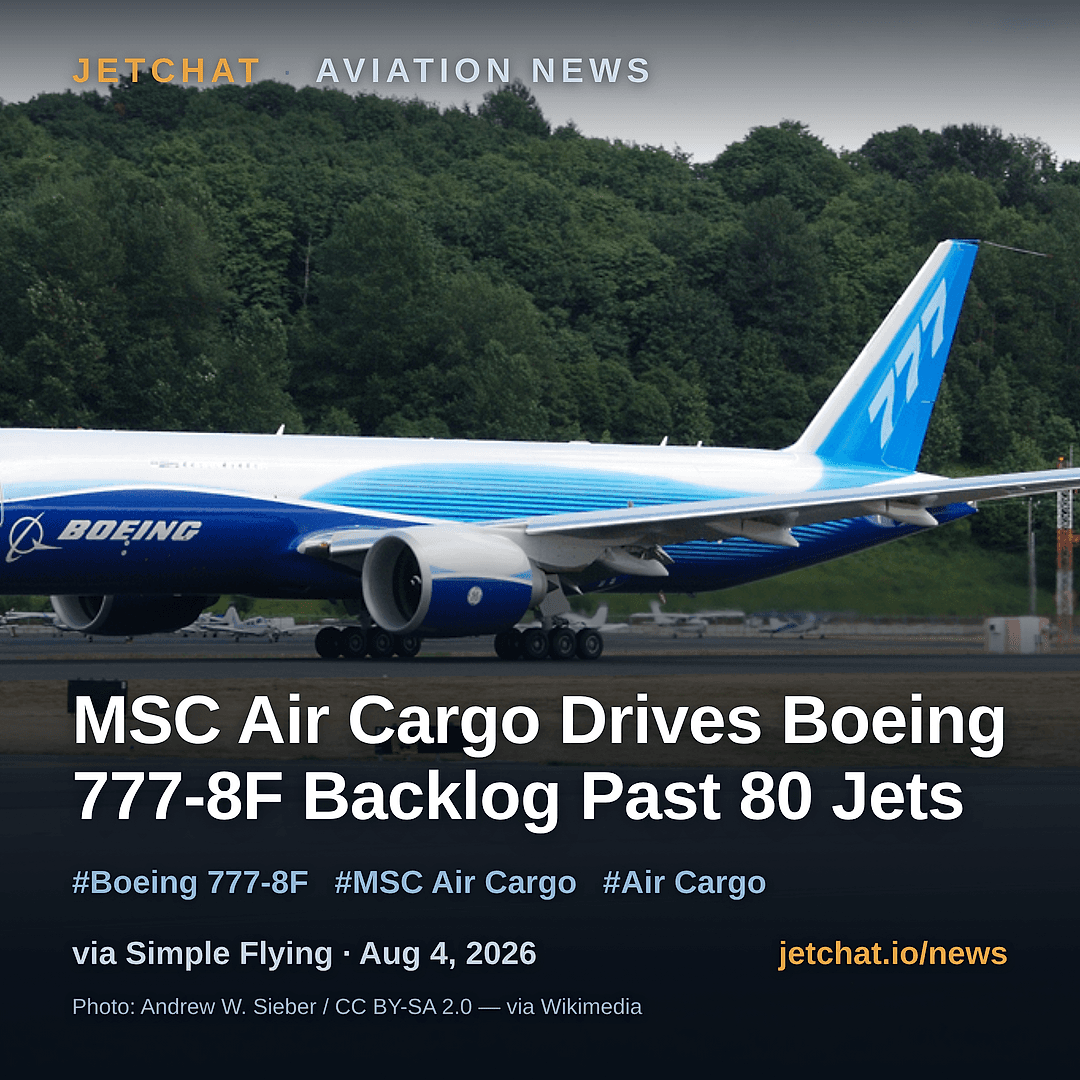
Photo: Andrew W. Sieber / CC BY-SA 2.0 — via Wikimedia (CC BY-SA 2.0) · source
Global shipping giant MSC has officially stepped forward to claim a previously unidentified order for five Boeing 777-8F freighters. This commitment, revealed during the Farnborough International Airshow, pushes the manufacturer's firm order book for the next-generation cargo jet past the 80-airframe milestone. The massive twin-engine aircraft aims to replace aging legacy fleets ahead of looming international emission limits taking effect later this decade. For aviators eyeing the cargo sector, this growing backlog signals long-term career stability on heavy international freight routes.
Read the full take
The recent Farnborough International Airshow shed light on a mystery buyer in Boeing’s ledger, revealing MSC Air Cargo as the purchaser of five 777-8F freighters. While MSC is historically known for maritime shipping, its expanding aerial logistics footprint highlights a broader industry trend where ocean freight operators are aggressively vertically integrating their supply chains. This strategy creates a fascinating new avenue for heavy-jet aviators, who may increasingly find themselves flying for global logistics brands rather than traditional cargo airlines. The 777-8F represents a crucial pillar in global aviation's transition toward greener operations. Existing workhorses like the 747-400F and the current generation of 777 freighters are facing a hard deadline. Upcoming 2028 international aviation emissions standards will force an end to the production of current-generation cargo jets, mandating a shift to more efficient airframes. Boeing designed the 777-8F to fill this exact void, promising massive payload capabilities coupled with modern twin-engine fuel economics. Despite the aircraft family not yet achieving certification, Boeing’s accumulation of over 80 firm orders demonstrates immense market confidence. For aspiring airline pilots and current aviators plotting their career trajectories, this backlog is a strong indicator of where long-haul flying jobs will be concentrated in the 2030s. The industry will be watching closely to see how Boeing navigates the certification process for the broader 777X family, as any delays could severely impact global freight capacity right as those strict new environmental regulations begin to take effect.