Next-Generation Aircraft Engines May Rely on Incremental Design Updates
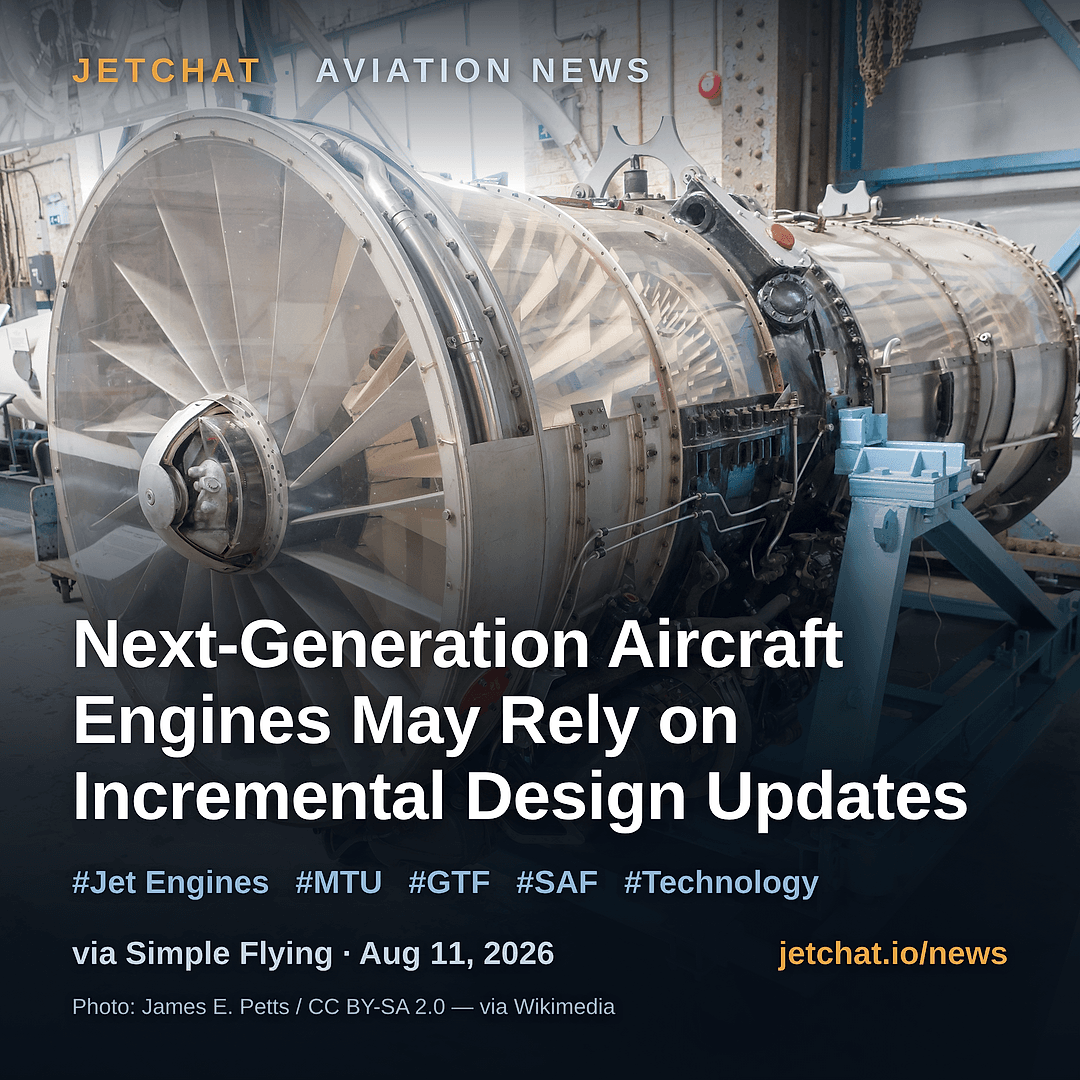
Photo: James E. Petts / CC BY-SA 2.0 — via Wikimedia (CC BY-SA 2.0) · source
For decades, major gains in commercial aviation efficiency came from entirely new propulsion architectures, such as the introduction of high-bypass and geared turbofans. However, industry analysts now suggest that the upcoming era of powerplant development could abandon radical physical redesigns in favor of refining existing concepts through advanced materials and sustainable fuel compatibility. For aspiring airline pilots and enthusiasts, this signals a future where cockpit operations and engine management remain familiar, even as the underlying technology subtly becomes much greener and more efficient.
Read the full take
Historically, aviation has leaned on massive structural shifts to achieve meaningful fuel and performance economies. The leap from turbojets to early turbofans, and later to the massive high-bypass and geared turbofans of today, fundamentally altered aircraft capabilities, maintenance, and pilot procedures. We have come to expect that the next big jump in efficiency requires an equally dramatic reinvention of the jet engine, perhaps open rotor designs or fully hybrid-electric propulsion systems taking center stage immediately. Yet, the near-term future of commercial propulsion appears rooted in optimization rather than revolution. Manufacturers are finding that extracting the next double-digit improvement in fuel burn may not require a completely new engine architecture. Instead, developers are focusing their engineering efforts on advanced heat-resistant materials like ceramic matrix composites, highly refined 3D-printed components, and seamless integration with sustainable aviation fuels or hydrogen. For the pilot community, particularly student pilots and those building time for the airlines, this means the transition to next-generation flight decks might be smoother than previously anticipated. Rather than learning entirely new thrust management paradigms associated with exotic propulsion types, tomorrow's flight crews will likely operate highly refined versions of the turbofans they already know. The underlying thermal and aerodynamic efficiency will drastically improve, but the basic operational footprint will stay consistent. Moving forward, aviation professionals should watch how regulatory bodies and major manufacturers push these incremental upgrades, as mastering current automated engine controls will directly translate to flying the airliners of the next several decades.