Qantas accelerates Airbus A380 retirement to 2028 amid fleet renewal
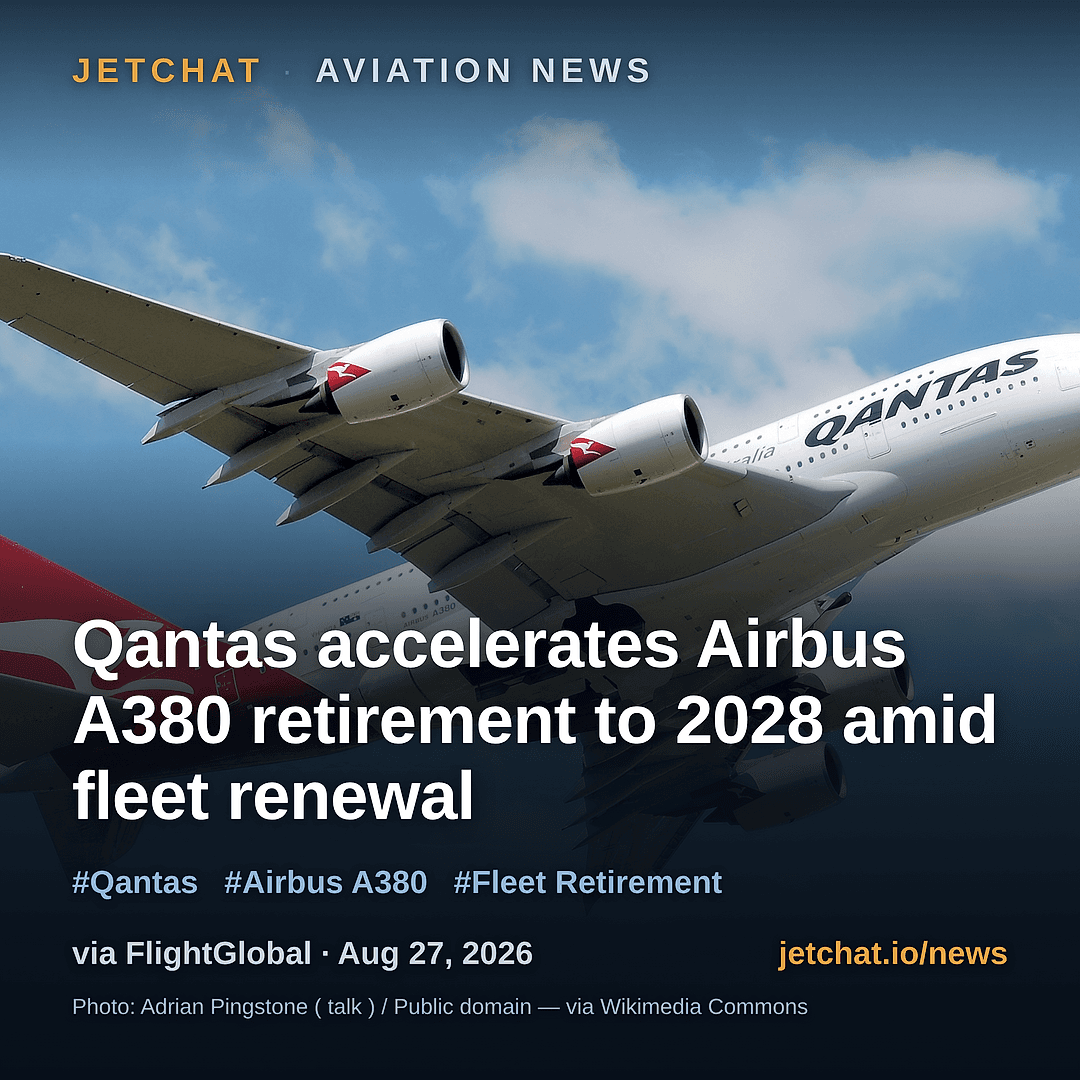
Photo: Adrian Pingstone ( talk ) / Public domain — via Wikimedia Commons (Public domain) · source
Australia's flag carrier will ground its remaining Airbus A380 fleet by 2028, moving the superjumbo's retirement up by four years. Qantas cites rising maintenance costs, supply chain bottlenecks for the out-of-production aircraft, and fuel price volatility as primary factors for the accelerated exit. The airline will transition to a more efficient twin-engine widebody fleet, prioritizing incoming Airbus A350s and Boeing 787s. For pilots building their careers, this marks a definitive industry shift away from four-engine heavies toward ultra-long-haul twin-engine operations.
Read the full take
The decision by Qantas to shed its Airbus A380s four years earlier than anticipated underscores a broader, unforgiving industry reality: the era of the four-engine passenger jet is rapidly closing. Initially slated to fly until 2032, the Australian carrier's ten superjumbos are now falling victim to compounding economic pressures. Operating out-of-production aircraft invariably introduces supply chain friction, but when paired with volatile global fuel prices, the operating economics of the massive quad-jet simply cannot compete with modern twin-engine alternatives. For aspiring airline pilots and current first officers looking ahead to widebody flying, this fleet modernization strategy highlights where future career opportunities will concentrate. Qantas is fully committing to advanced twin-engine platforms. The airline anticipates replacing the A380s with Airbus A350s, including the ultra-long-range variants earmarked for its ambitious Project Sunrise flights connecting Australia directly to Europe. Furthermore, the carrier's aging Airbus A330s will be swapped for Boeing 787 Dreamliners on long-haul routes and Airbus A321XLRs for transcontinental and medium-haul segments. Interestingly, the incoming A321XLRs represent a significant shift in narrowbody utility, with Qantas planning to equip a dedicated sub-fleet with lie-flat business suites. This blurs the traditional lines between narrowbody and widebody operations, meaning pilots flying single-aisle equipment will increasingly find themselves executing long, premium-heavy international segments. Ultimately, Qantas' accelerated timeline reflects growing confidence in the delivery schedules of Boeing and Airbus. As the superjumbos phase out, flight crews will need to adapt to a landscape dominated by ultra-long-haul twin operations, demanding new approaches to fatigue management and extended operations.