Report: A320neo Flight Controls Briefly Failed Before Sudden Plunge
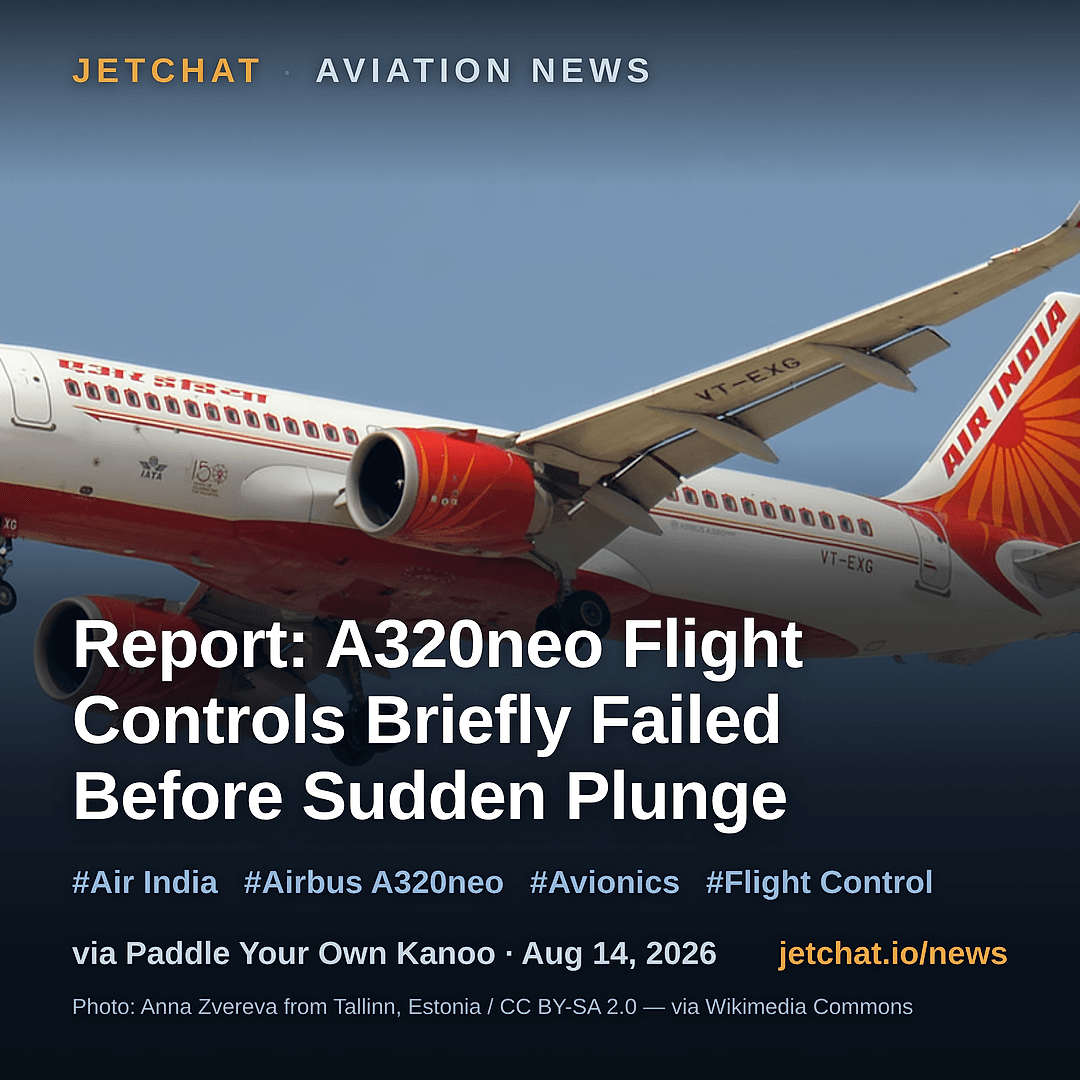
Photo: Anna Zvereva from Tallinn, Estonia / CC BY-SA 2.0 — via Wikimedia Commons (CC BY-SA 2.0) · source
An internal manufacturer document reveals that the flight control computers on an Air India A320neo went offline for about four seconds before a sudden 300-foot drop at cruise altitude last August. The brief loss of elevator and aileron authority caused an uncommanded pitch-up, and the first officer's nose-down inputs were delayed by a temporary hydraulic loss, injuring 24 people. For line pilots, this incident underscores the critical importance of understanding fly-by-wire reversion modes during transient system failures.
Read the full take
While the official investigation by Indian and French authorities remains underway, the reported transient failure of flight control systems on the Airbus A320neo raises significant questions for line pilots operating fly-by-wire aircraft. According to the leaked internal document, the jet experienced a brief loss of elevator and aileron control, resulting in an uncommanded pitch-up maneuver at cruise altitude. When the first officer applied nose-down inputs, the aircraft's response was delayed, reportedly due to a simultaneous hydraulic system issue. This occurrence echoes previous industry concerns regarding A320 family computer hardware. Late last year, the manufacturer issued an urgent directive following an uncommanded pitch-down event on a different carrier's flight. In that case, investigators determined that a specific software version was vulnerable to data corruption from intense solar radiation, prompting a fleet-wide rollback. It is not yet publicly known if this Air India airframe was running the affected software or if the transient failure stems from an entirely different anomaly. Adding a layer of complexity to the human factors investigation, reports indicate the captain failed mandatory post-incident drug testing. While authorities have not linked these test results to the initial system failure or the crew's subsequent recovery actions, it will undoubtedly factor into the comprehensive review of crew resource management during the event. For professional aviators, this incident serves as a stark reminder to expect the unexpected at cruise altitude. Thoroughly understanding fly-by-wire degradation states and trusting primary flight displays during transient automation failures remain paramount for safely resolving sudden emergencies.