Rolls-Royce Triples Boeing 787 Engine Overhaul Intervals With Redesign
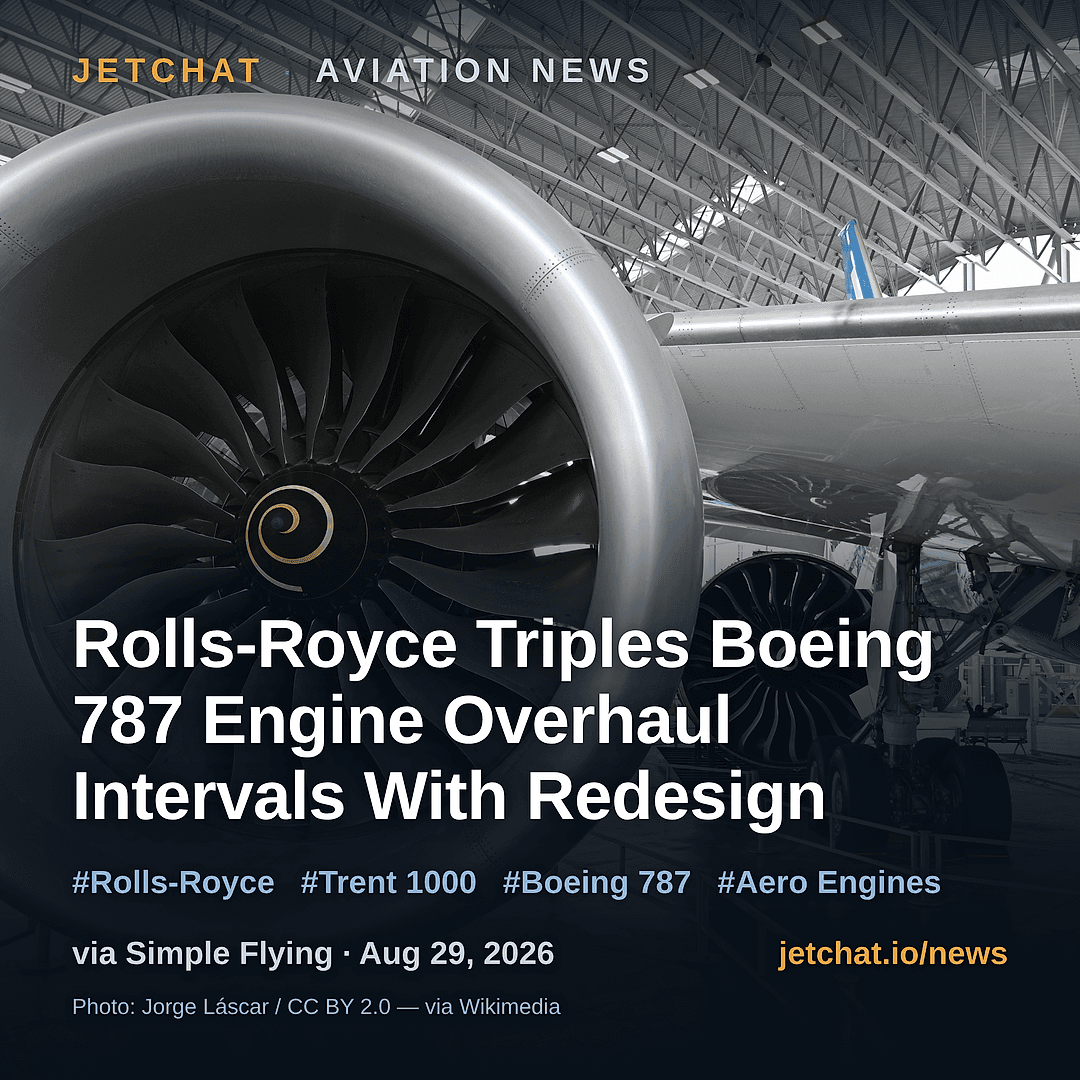
Photo: Jorge Láscar / CC BY 2.0 — via Wikimedia (CC BY 2.0) · source
Rolls-Royce has successfully extended the maintenance intervals for its Trent 1000 engines, which power the Boeing 787 Dreamliner, by redesigning a single turbine blade. This engineering adjustment effectively triples the time the powerplants can remain on the wing before requiring a major overhaul. For commercial aviators and aspiring airline pilots, this development means fewer aircraft substitutions, reduced schedule disruptions, and more predictable flight operations on widebody routes.
Read the full take
The Boeing 787 Dreamliner was introduced with aggressive efficiency goals, demanding that engine manufacturers push the absolute boundaries of modern aerospace engineering. While General Electric brought the GEnx-1B to the market, Rolls-Royce secured a strong early foothold with the Trent 1000, providing the thrust for the initial test aircraft as well as the debut passenger flights flown by All Nippon Airways. However, the Trent series historically faced durability challenges, specifically concerning premature blade wear that forced airlines into frequent, costly grounded maintenance cycles. By completely overhauling the architecture of a problematic turbine blade, Rolls-Royce has effectively tripled the time these engines can safely operate between major shop visits. This is a monumental shift for fleet dispatch reliability. For line pilots, an aircraft that stays out of the hangar translates directly to a more stable monthly roster. When widebody jets are grounded for unscheduled engine swaps, airlines are forced into cascading equipment changes, often downgrading routes to smaller jets or canceling flights altogether, both of which disrupt crew schedules and bidding preferences. Looking ahead, this overhaul extension keeps Rolls-Royce highly competitive against General Electric in the ongoing widebody engine market. Aviation enthusiasts and industry professionals should watch how this improved durability influences upcoming fleet renewal decisions. As carriers look to expand their long-haul networks, the promise of increased time-on-wing could drive a resurgence in Trent 1000 orders, ultimately shaping the equipment future airline pilots will operate.