Seatbelt saves Ryanair passenger after 737 window shatters midflight
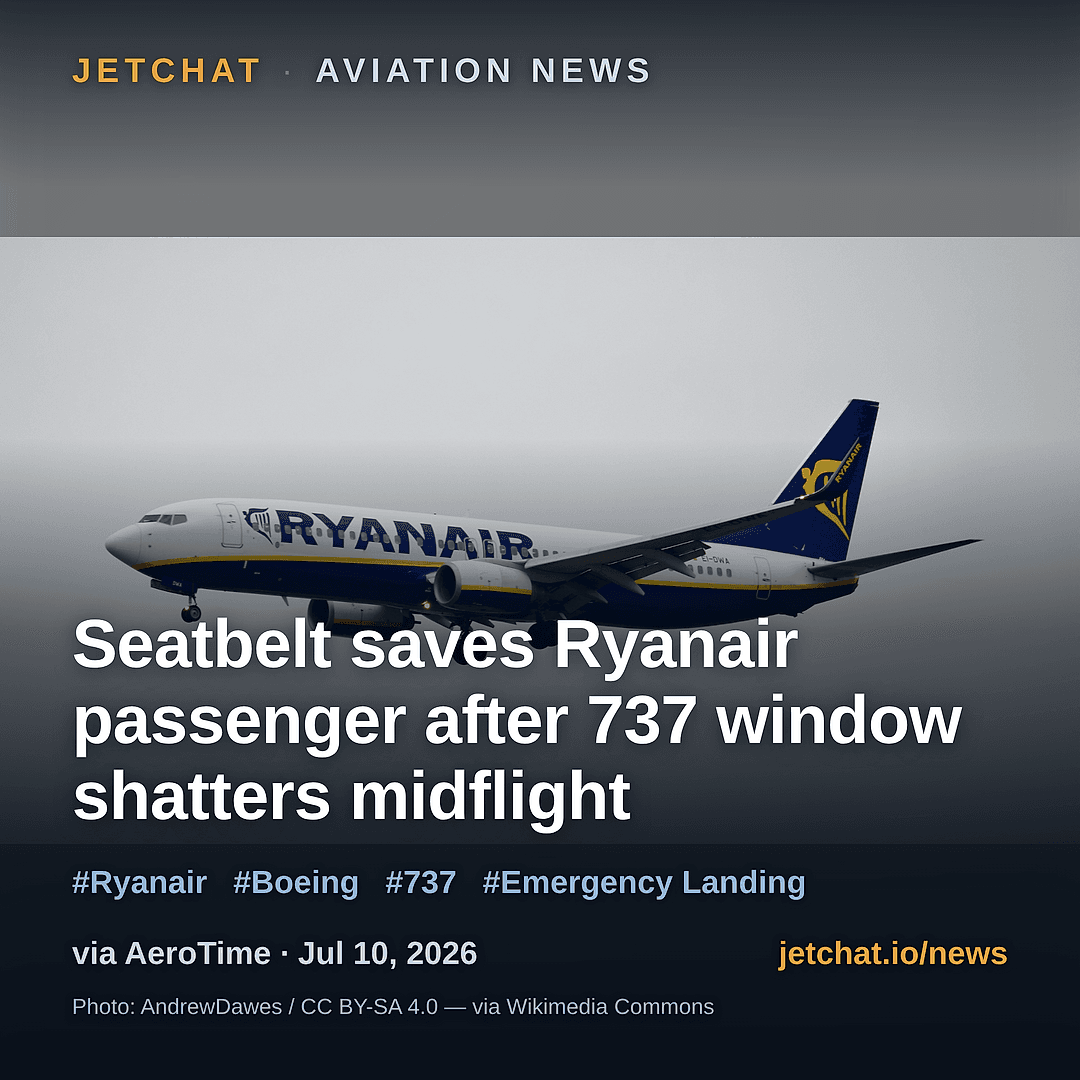
Photo: AndrewDawes / CC BY-SA 4.0 — via Wikimedia Commons (CC BY-SA 4.0) · source
A Ryanair Boeing 737-800 flying from Greece to Germany suffered a shattered cabin window at 16,000 feet, reportedly caused by engine debris. The resulting rapid decompression pulled a male passenger partially outside the aircraft, though he was saved by his fastened seatbelt and nearby passengers. The flight crew successfully deployed oxygen masks and executed an emergency return to Thessaloniki. This incident underscores for flight instructors and airline crews the critical importance of strictly enforcing seatbelt compliance during all phases of flight.
Read the full take
While explosive decompression events involving window failures are exceedingly rare, they represent one of the most critical emergencies a flight crew can face. According to preliminary reports, this July 2026 incident involving a Ryanair Boeing 737-800 at 16,000 feet was likely triggered by uncontained engine debris striking the fuselage. For professional pilots and those in training, this event is a stark reminder of why immediate donning of oxygen masks and rapid descent procedures are foundational simulator exercises. The structural integrity breach reportedly subjected a passenger to extreme aerodynamic forces, pulling him partially through the window frame. His survival is directly attributed to him wearing a seatbelt while seated, alongside the physical intervention of fellow travelers. This highlights exactly why carriers mandate, and crews must enforce, seatbelt usage even when the seatbelt sign is extinguished. Aviation authorities will now focus on the powerplant. If investigators confirm that an uncontained engine failure threw shrapnel into the cabin, scrutiny will likely shift to engine maintenance records, fan blade inspections, and cowling containment capabilities. This draws immediate parallels to previous high-profile 737 decompression events, which led to industry-wide airworthiness directives regarding fan blade ultrasonic inspections. Moving forward, flight crews should monitor upcoming regulatory bulletins. If a specific component failure is identified, it could trigger emergency inspection mandates for 737-800 operators worldwide. For now, it remains a textbook example of successful emergency crew resource management, resulting in a safe diversion and landing despite a catastrophic airframe breach.