Spokane Wildfires Threaten Airports as Drones Ground Firefighting Aircraft
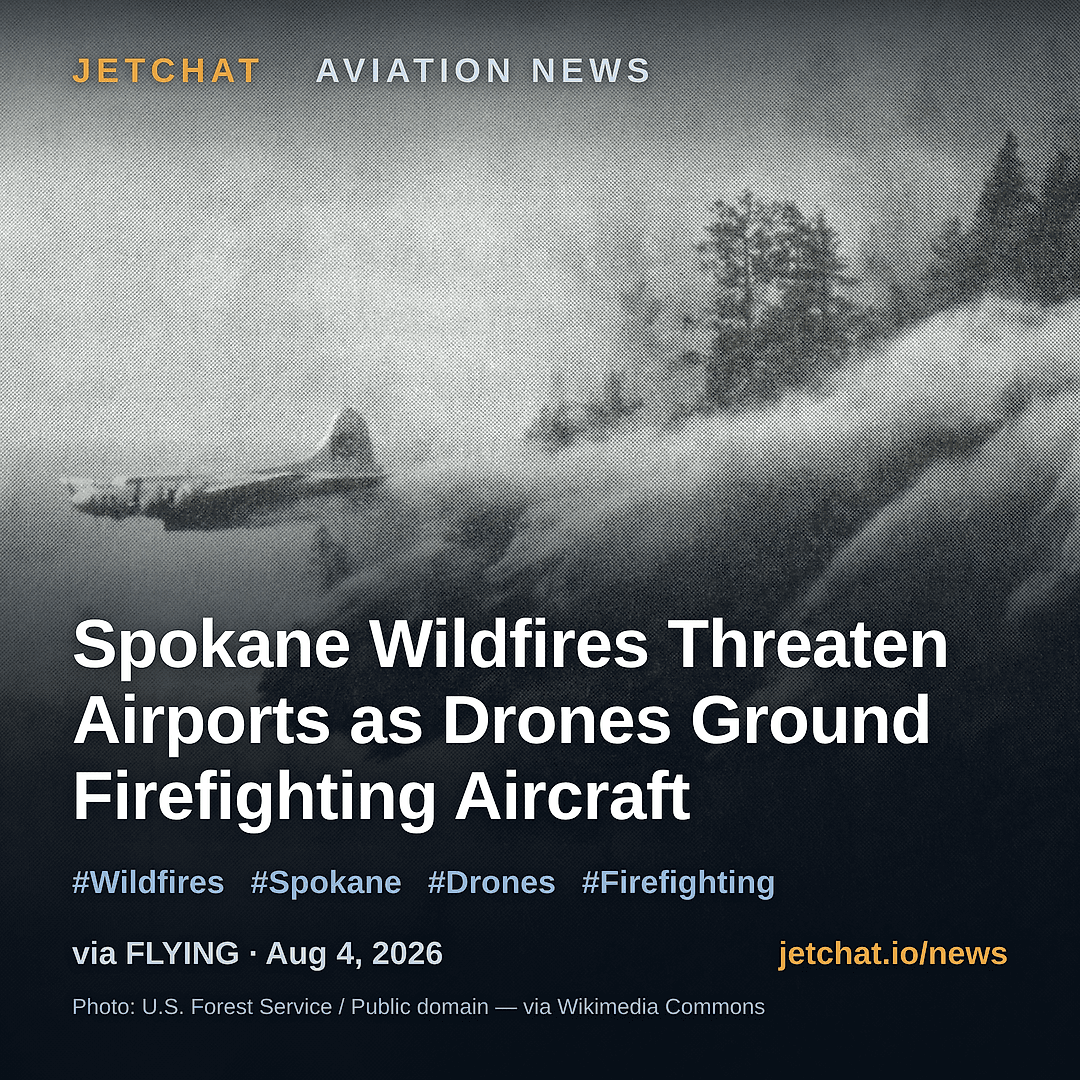
Photo: U.S. Forest Service / Public domain — via Wikimedia Commons (Public domain) · source
Severe wildfires near Spokane, Washington, are burning within miles of Fairchild Air Force Base, Spokane International, and Felts Field, forcing widespread evacuations and triggering temporary flight restrictions. Heavy smoke pushed by easterly winds has reduced visibility to low IFR conditions across the Pacific Northwest, reaching as far as Seattle and Portland. For aviators, this highlights the critical need to check for dynamic fire TFRs and prepare for widespread instrument conditions during the fire season.
Read the full take
The ongoing wildfire crisis in eastern Washington highlights a multifaceted threat to aviation operations, reaching far beyond the immediate burn zones. With blazes encroaching on Spokane International, Felts Field, and Fairchild Air Force Base, local airspace is heavily restricted. The military has already ordered limited evacuations for airmen and civilian personnel residing in high-risk off-base neighborhoods, emphasizing the severity of the threat to aviation infrastructure and staffing. However, the most pressing safety concern for airborne operations stems from unauthorized civilian drone flights. Officials reported over two dozen drone incursions in a single day within the fire temporary flight restrictions. These violations force aerial firefighting assets, including water scoopers and tanker aircraft, to ground themselves due to the severe risk of a midair collision. For general aviation pilots and drone operators alike, the situation serves as a stark reminder that violating a fire TFR not only carries steep federal fines but directly hinders emergency response efforts. Furthermore, the meteorological fallout is severely impacting regional flight training and commercial schedules. Easterly winds are pushing dense smoke over the Cascade Mountains, creating widespread instrument flight rules and low IFR conditions across western Washington and northern Oregon. Student pilots and instructors operating out of normally busy hubs like Seattle and Portland must contend with rapidly deteriorating visibility and challenging air quality. Moving forward, aviators in the Pacific Northwest should expect persistent flight delays and must rigorously review dispatch information, as fire boundaries and flight restrictions will continue to shift rapidly.