Surging fuel costs force American Airlines to revise forecasts
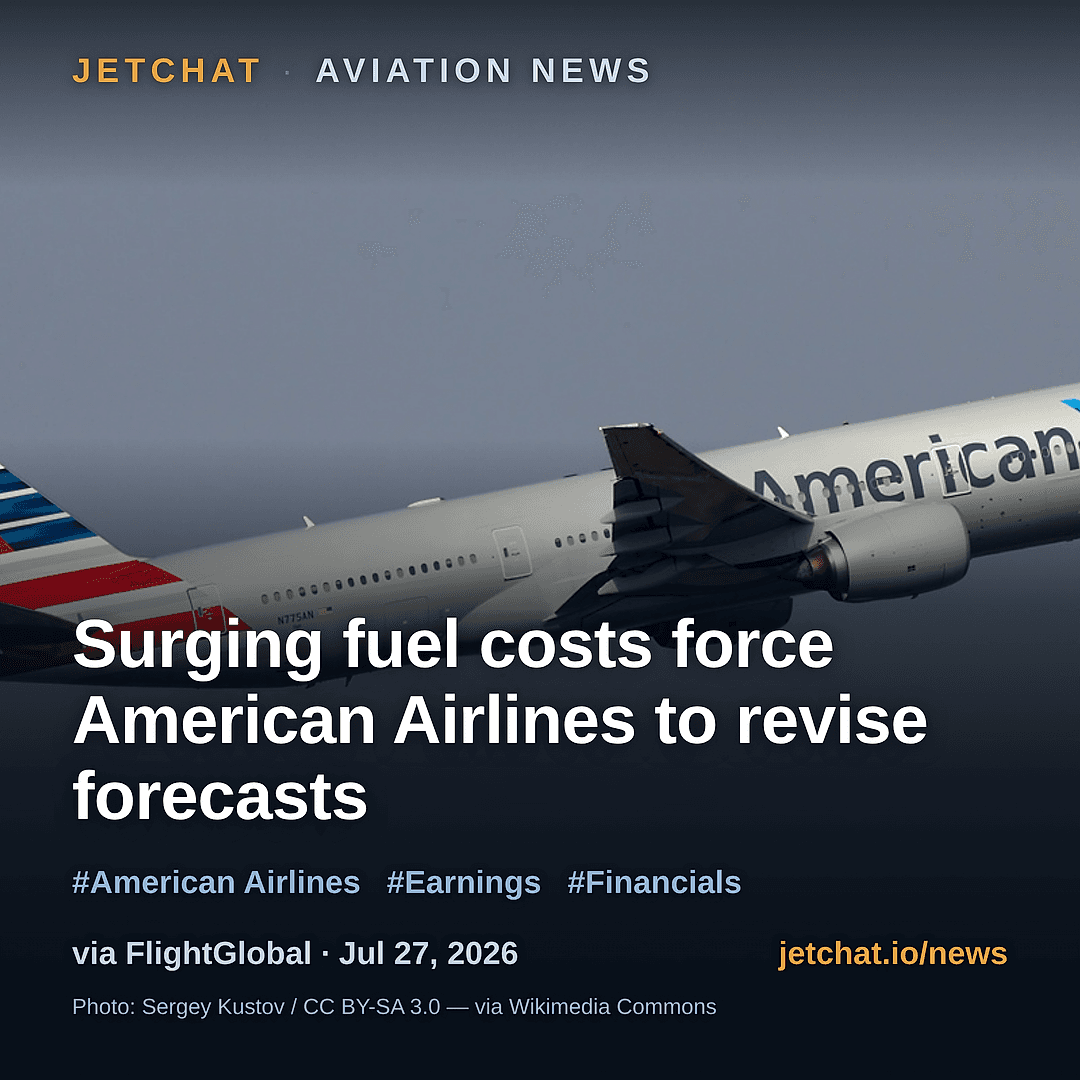
Photo: Sergey Kustov / CC BY-SA 3.0 — via Wikimedia Commons (CC BY-SA 3.0) · source
American Airlines is adjusting its financial outlook after unexpected fuel cost increases erased a projected billion-dollar profit for the year. Chief Executive Robert Isom confirmed the carrier now anticipates breaking even, citing global oil market volatility and regional conflicts. To bounce back and compete with industry rivals, the airline plans to carefully manage flight capacity, prioritize premium seating, and leverage fuel-efficient jets like the upcoming Airbus A321XLR. For aspiring airline pilots, this strategy underscores how volatile fuel markets directly influence carrier hiring pacing and fleet upgrade timelines.
Read the full take
The aviation industry is notoriously sensitive to energy markets, and American Airlines' latest financial pivot offers a stark reminder of that reality. Earlier this summer, the Fort Worth-based carrier was positioned to post significant annual gains. However, shifting geopolitical tensions quickly drove petroleum prices upward, introducing massive unforeseen expenses into the corporate ledger. Now, American must play a strategic game of catch-up against domestic competitors who managed to secure stronger margins during the same quarter. To weather this economic headwind, executive leadership is leaning heavily on operational efficiency rather than banking on cheaper gas. This means an accelerated reliance on modern, highly efficient airframes. The introduction of long-range narrowbody aircraft, specifically the Airbus A321XLR, alongside widebody Boeing 787-9s, will be central to keeping fuel burns manageable on lucrative international routes. Furthermore, American intends to closely monitor seat capacity. By matching flight schedules perfectly to passenger demand and pushing high-margin premium ticket sales, they aim to extract maximum value from every departure. For aviation professionals and those building hours for a right-seat job at a major carrier, these financial maneuvers are critical to watch. When airlines constrain capacity to offset fuel costs, it can occasionally slow down the frantic pace of pilot hiring seen during boom periods. However, the heavy emphasis on transitioning to next-generation flight decks ensures that training programs and new type ratings will remain a major priority as older, gas-guzzling jets are systematically cycled out of the mainline fleet.