Airbus A350 Freighter Deliveries Could Slip Into 2028
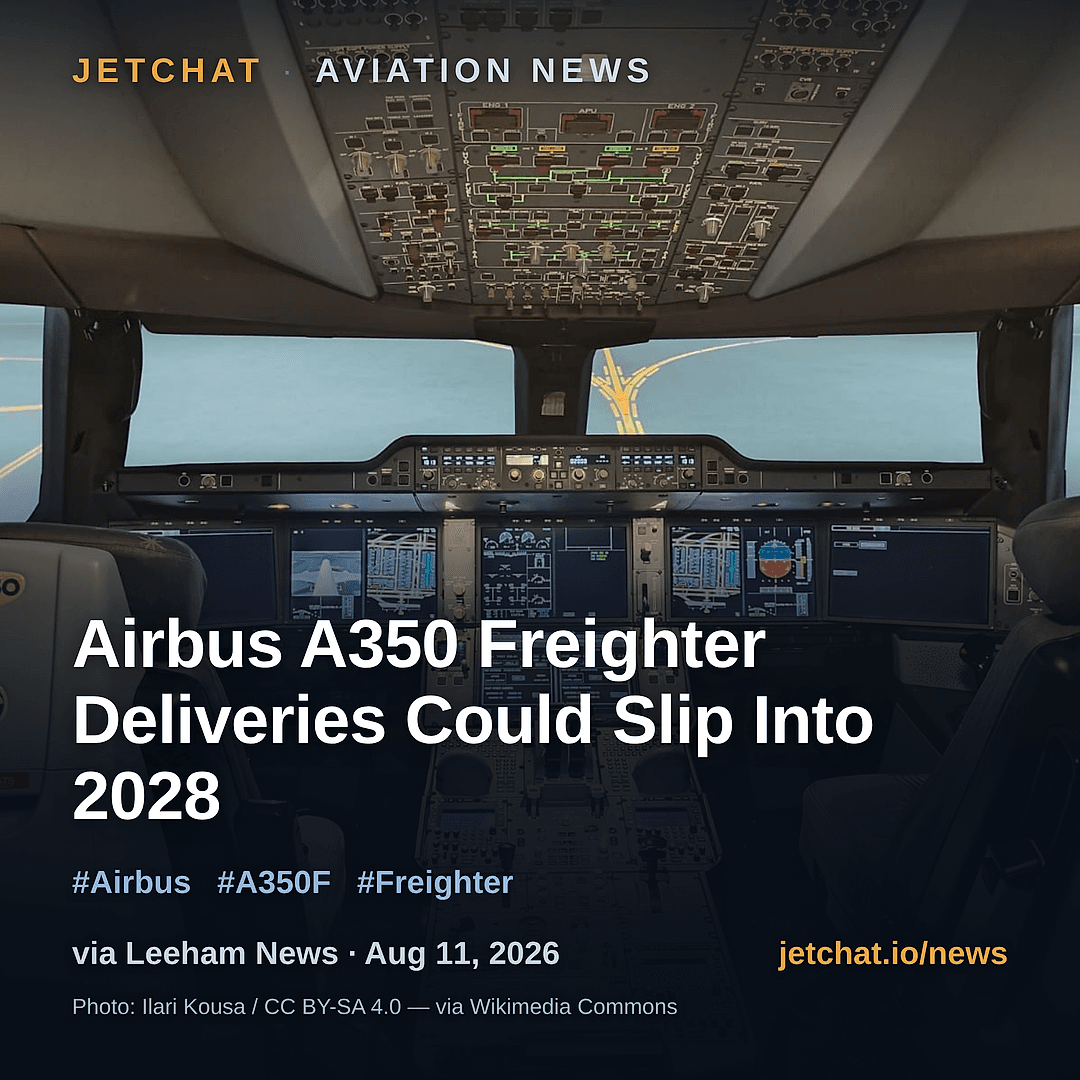
Photo: Ilari Kousa / CC BY-SA 4.0 — via Wikimedia Commons (CC BY-SA 4.0) · source
Industry reports indicate that the highly anticipated Airbus A350 freighter might not reach its launch customers until 2028, despite the manufacturer maintaining its official late-2027 target. Supply chain bottlenecks and certification hurdles continue to challenge major airframe programs across the globe. For aspiring airline pilots eyeing heavy cargo operations, these timeline shifts mean the eventual wave of hiring and transition training for next-generation freighters may be pushed slightly further onto the horizon.
Read the full take
The potential delay of the Airbus A350F is a symptom of a much broader challenge facing aerospace manufacturing today. While Airbus officially stands by its projection to hand over the first airframes by late 2027, industry analysts suggest a slip into 2028 is becoming increasingly probable. Global supply chain constraints, persistent part shortages, and rigorous regulatory scrutiny are extending the timeline from the drawing board to the ramp. For aviation professionals tracking the heavy metal market, the A350F represents a massive shift. Designed to replace aging fleets of Boeing 747 and MD-11 freighters, the composite twin-engine jet promises significant fuel savings and operational efficiency. It is also the primary weapon for Airbus to challenge Boeing's long-standing dominance in the dedicated cargo sector, squaring off directly against the upcoming 777-8F. What does this mean for the flight deck? If you are a pilot aiming for a career in global logistics, the fleet modernization timeline directly influences hiring waves, upgrade times, and transition training slots. A delayed rollout means legacy aircraft will likely fly longer than initially planned, potentially extending the operational life of current airframes and the value of the type ratings associated with them. As operators wait for these next-generation freighters, watch for interim capacity solutions, including passenger-to-freighter conversions, which could create immediate bridging opportunities for crews. The cargo sector is undergoing a generational equipment change, and while the timeline may stretch, the eventual demand for qualified heavy-jet pilots remains an absolute certainty.