Airbus Expands Belfast Wing Plant To Double A220 Production
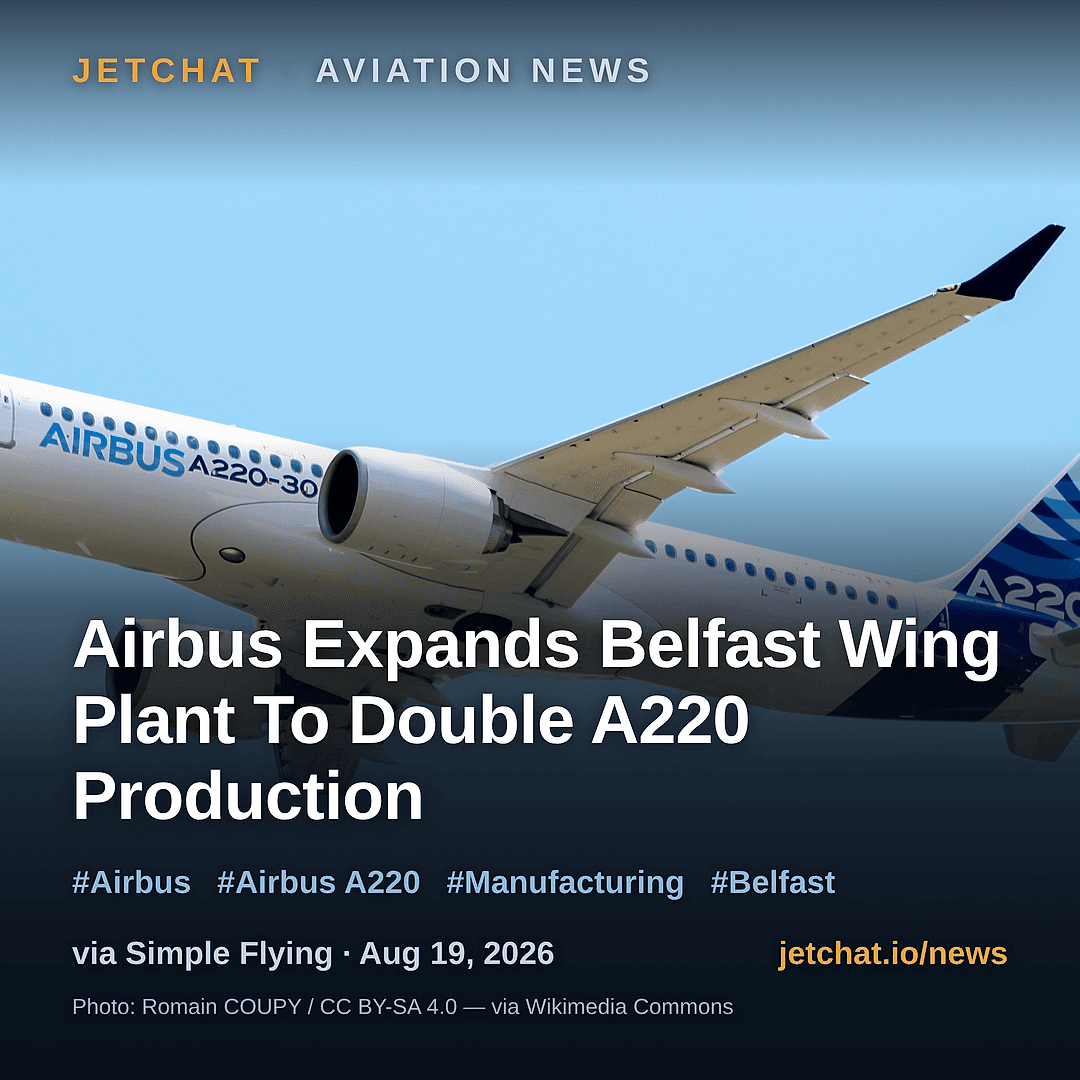
Photo: Romain COUPY / CC BY-SA 4.0 — via Wikimedia Commons (CC BY-SA 4.0) · source
The European aerospace manufacturer is adding nearly 70,000 square feet to its wing fabrication plant in Northern Ireland to support a massive ramp-up of its narrowbody aircraft assembly. Construction is currently underway, with the expanded footprint expected to become fully operational during the first half of 2028. Once complete, the upgraded site will allow the company to output thirteen of the single-aisle jets every month. For aspiring airline aviators, this manufacturing acceleration means a steady pipeline of modern cockpits requiring trained flight crews in the coming decade.
Read the full take
The decision to heavily invest in the Northern Ireland wing fabrication center highlights the broader industry shift toward highly efficient, lower-capacity narrowbody airframes. The twin-engine jet has become a favorite among regional operators and major mainline carriers alike, bridging the gap between large regional jets and traditional single-aisle workhorses. Pushing assembly rates to thirteen units per month represents a near doubling of the current output rhythm, signaling immense confidence in the sustained backlog of orders. This infrastructure project is not just about pouring concrete and expanding factory floors; it represents a long-term commitment to a platform that is actively reshaping domestic route networks. For the pilot community, the aggressive production schedule is a highly positive indicator. More airframes rolling off the final assembly line translates directly into more flying jobs, faster upgrade times, and increased seniority movement. Transitioning to this specific flight deck is becoming an increasingly common career step for first officers moving up from regional flying or joining a mainline roster. Observing manufacturing trends provides a reliable forecast for future hiring waves, and the massive capital being injected into the supply chain proves that this particular aircraft family will remain a cornerstone of commercial fleet strategies for decades to come. As the 2028 target approaches, flight training departments at major airlines will likely scale up their simulator capacities to prepare for the influx of new metal arriving on the ramp.