Airbus Prepares for 1,200 Aircraft Deliveries to Indian Airlines
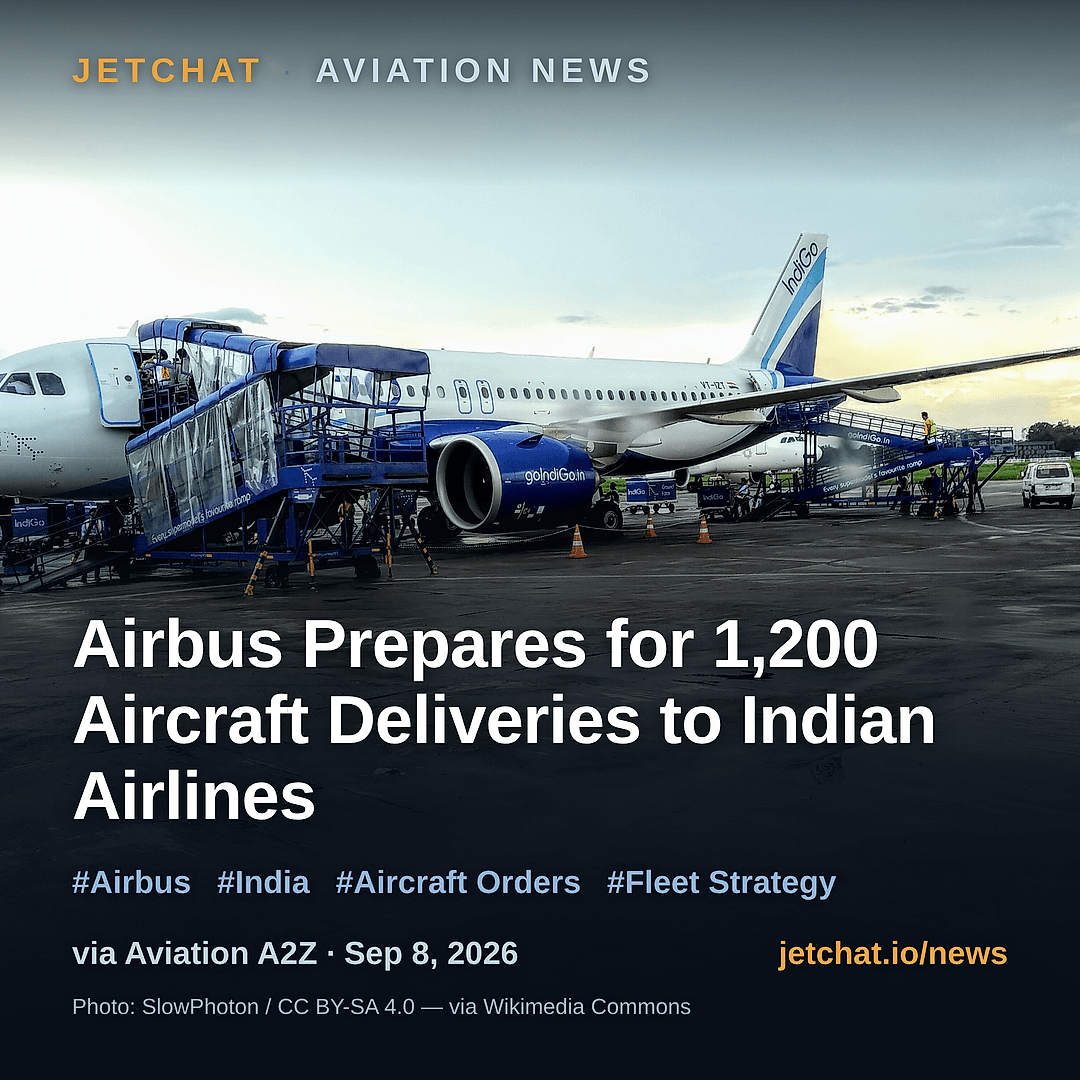
Photo: SlowPhoton / CC BY-SA 4.0 — via Wikimedia Commons (CC BY-SA 4.0) · source
Airbus is gearing up to fulfill a massive backlog of 1,200 commercial aircraft for Indian operators over the next decade. To meet this demand, the European aerospace company will deliver an average of two jets per week to the rapidly expanding South Asian market. The manufacturer is also investing heavily in local maintenance infrastructure to support this fleet growth. For aspiring airline pilots, India's unprecedented fleet expansion signals a massive global shift in hiring demand and long-term career opportunities in international markets.
Read the full take
The sheer volume of Airbus's order book in India reflects a historic transformation in global aviation. Out of roughly 800 active commercial airplanes currently flying in the country, Airbus already accounts for more than 500. Adding another 1,200 airframes over a ten-year span requires a logistical triumph not just in manufacturing, but in lifecycle support. Recognizing that fleet growth outpaces existing infrastructure, the manufacturer is proactively scaling its regional maintenance footprint. Partnering with domestic firms to establish specialized avionics and radome repair centers means Indian carriers can keep their jets flying without routing components across the globe. This localized ecosystem minimizes aircraft downtime, a crucial metric for low-cost and legacy operators alike. Furthermore, the influx is not limited to the ubiquitous narrowbody market. Indian carriers are aggressively acquiring widebody jets to launch long-haul international routes, seeking to capture traffic currently routed through Middle Eastern hubs. For the aviation workforce, particularly student pilots and instructors tracking career prospects, this regional explosion represents a structural shift in global hiring. As Indian airlines absorb two new factory-fresh jets every week, the parallel demand for type-rated flight crews, ground personnel, and simulator instructors will skyrocket. Even for pilots who never plan to fly for an overseas carrier, the absorption of thousands of aviators into the South Asian market will tighten global crew supplies, likely sustaining strong domestic hiring dynamics and competitive compensation packages worldwide for the foreseeable future.