Airbus workers in Spain launch indefinite strike over pay
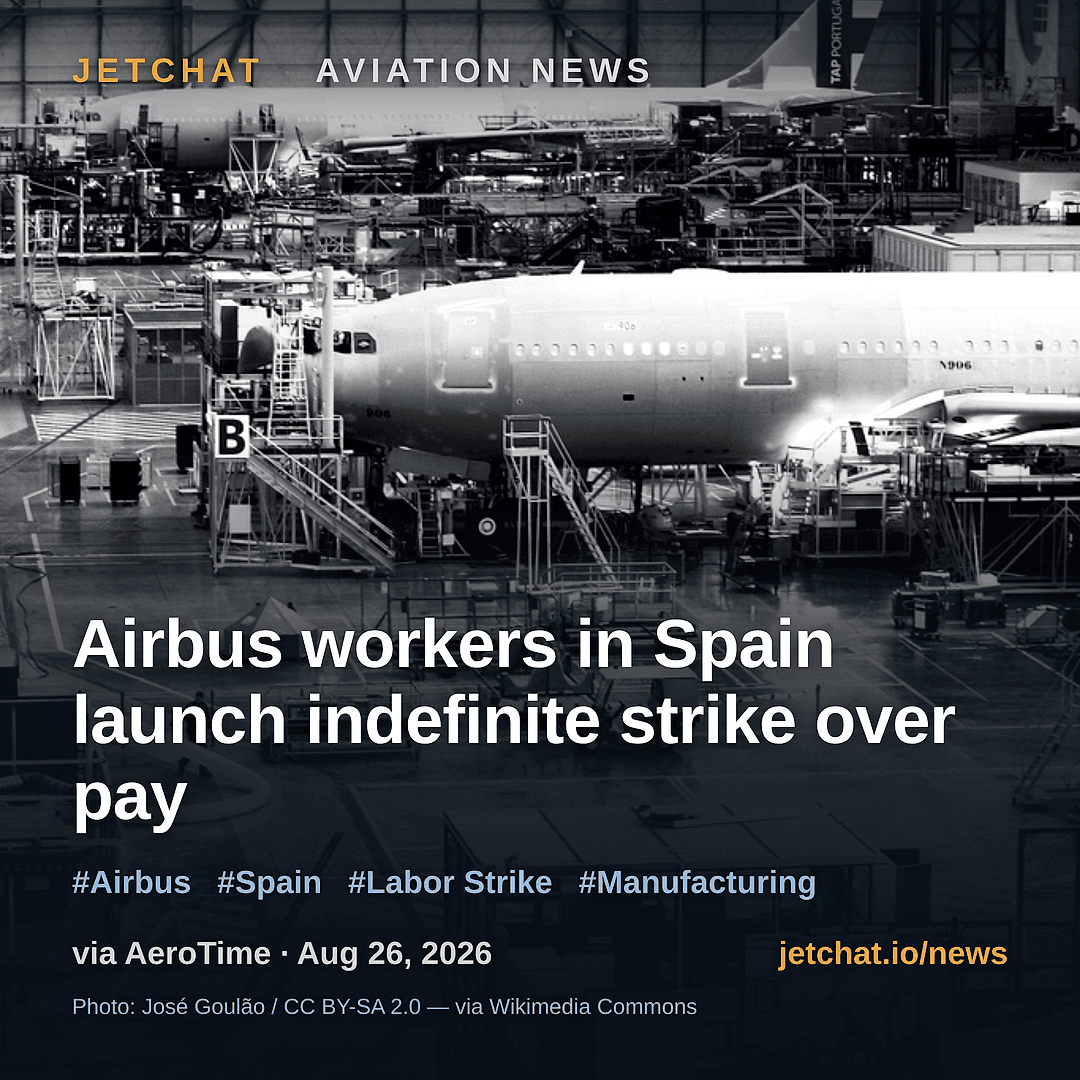
Photo: José Goulão / CC BY-SA 2.0 — via Wikimedia Commons (CC BY-SA 2.0) · source
Thousands of Airbus employees across Spain have initiated an indefinite strike following failed negotiations over wages and workplace policies. The walkout, which began on August 25, 2026, impacts major manufacturing sites responsible for critical structural components across the manufacturer's commercial, defense, and space divisions. While management proposed inflation-adjusted pay bumps, union members voted to continue the stoppage pending further mediation. For the aviation community, this labor dispute threatens to exacerbate existing supply chain bottlenecks and further delay new aircraft deliveries.
Read the full take
Airbus relies heavily on its Spanish workforce of roughly 14,000 employees to maintain its global production cadence. Facilities in Getafe, Illescas, and Cadiz are vital to the assembly of commercial airliners, producing essential composite structures, engine fan cowls, and horizontal stabilizers for the A320, A330, and A350 programs. A prolonged work stoppage at these plants could ripple outward, straining an already fragile aerospace supply chain and pushing back delivery timelines for airlines awaiting fresh metal. The core of this labor dispute centers on compensation and workplace policies. Employees are demanding robust wage increases to offset inflation, alongside guarantees protecting jobs amid organizational shifts in the company's space sector. Workers are also pushing back against specific attendance tracking metrics and seeking equitable pay progression for newer hires. Although Airbus recently floated a compromise featuring inflation-linked raises and the resolution of a sick-leave legal battle, the workforce opted to hold the line, citing a lack of firm deadlines and concrete commitments. Union officials report robust participation in the walkout, estimating that nine out of ten eligible workers have joined the picket lines. As mediators attempt to bridge the gap between management and labor, the broader aviation industry will be watching closely. Any significant manufacturing delays in Spain could directly impact fleet modernization plans worldwide, ultimately affecting pilot hiring and training timelines at carriers banking on those new jets.