Boeing Aircraft Deliveries Slow in July, Falling Behind Airbus
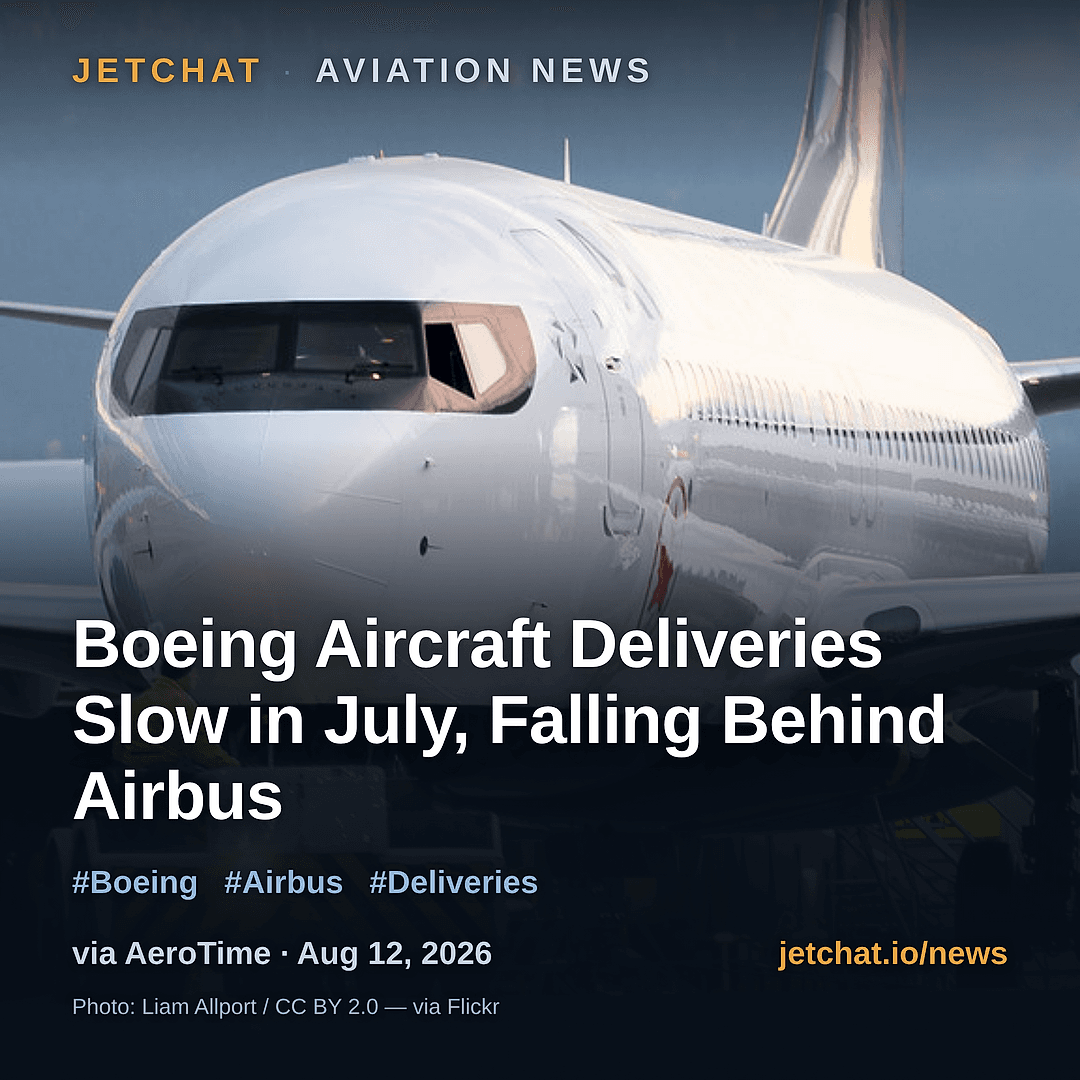
Photo: Liam Allport / CC BY 2.0 — via Flickr (CC BY 2.0) · source
Boeing handed over 53 commercial aircraft to customers in July 2026, marking a slowdown from its stronger output in May and June. The dip widens the manufacturer's gap with European competitor Airbus, which delivered 67 airframes during the same month. Despite the monthly drop, Boeing's year-to-date total of 367 deliveries outpaces its performance over the same period last year, tracking closely with industry recovery trends. For aspiring airline pilots, consistent widebody and narrowbody production remains a leading indicator of future hiring waves at major carriers.
Read the full take
While a single month of sluggish delivery numbers does not signal a crisis, July's output of 53 aircraft highlights the ongoing supply chain volatility still plaguing aerospace manufacturing. Boeing had just celebrated a notable post-2018 peak in its first-half delivery metrics, pumping out 64 jets in June and 60 in May. Dropping back to the low 50s underscores how sensitive production lines remain to component shortages and logistical bottlenecks. For the aviation workforce, particularly commercial pilots climbing the seniority ladder, these delivery figures are more than just corporate scorecards. Every new Boeing 737 MAX or 787 Dreamliner entering a fleet translates directly into seat vacancies, upgrade opportunities, and new hire classes. Customers like United Airlines, Lufthansa, and AerCap are depending on these scheduled airframes to execute ambitious route expansions and replace aging, less fuel-efficient metal. Interestingly, the July numbers showed continued movement of the 787-9 Dreamliner, with 10 units making their way to international carriers. Although slightly lower than June's widebody output, the steady handover of twin-aisle jets indicates that long-haul fleet modernization is still progressing. As Boeing aims to push its monthly rates back into the 60s, industry observers will be watching to see if the manufacturer can stabilize its assembly lines. Steady aircraft production ultimately keeps the pilot hiring ecosystem healthy, ensuring that training pipelines stay active and career progression remains on track for those currently logging hours in the right seat.