Composite Plant Issues Jeopardize Airbus A350 Production Targets
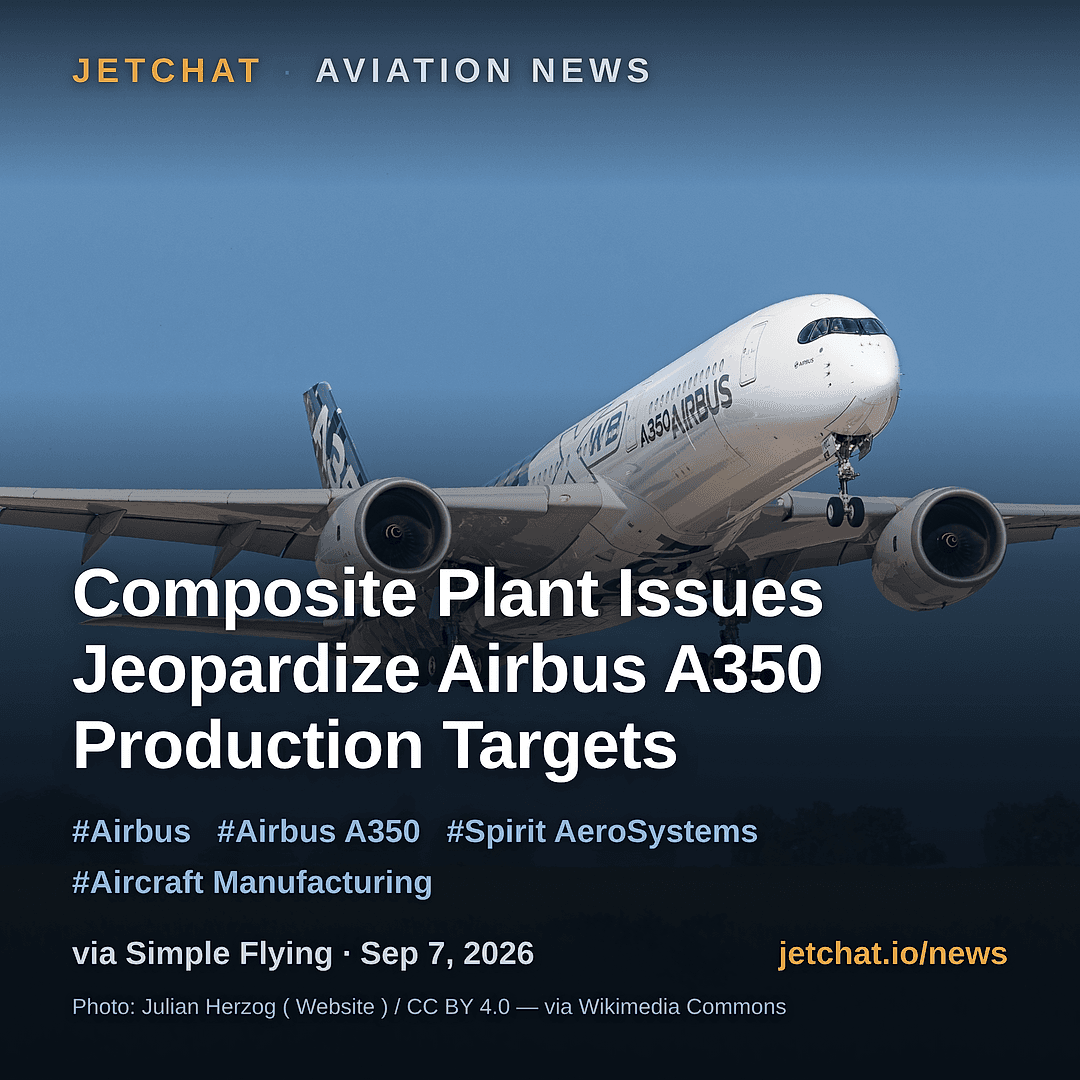
Photo: Julian Herzog ( Website ) / CC BY 4.0 — via Wikimedia Commons (CC BY 4.0) · source
Airbus is struggling to meet its ambitious manufacturing goal of rolling out twelve A350 widebodies a month by 2028. The aerospace giant recently warned airlines to anticipate delivery setbacks stretching well into the late 2020s. These bottlenecks stem from a newly acquired composite structure factory in North Carolina, where manufacturing hiccups are creating cascading slowdowns down the assembly line. For aspiring airline pilots, deferred widebody deliveries could translate to a slower pace of heavy jet transitions and captain upgrades at major international carriers.
Read the full take
The long-haul commercial aviation sector relies heavily on predictable aircraft deliveries, and the latest production hiccups at Airbus highlight how fragile the global aerospace supply chain remains. At the center of the current bottleneck is a manufacturing site in Kinston, North Carolina. Airbus recently took over this facility to secure its supply of vital composite fuselage and airframe components for the A350 program. However, integrating and scaling up this factory is proving more difficult than anticipated, threatening the broader corporate objective of building twelve of the widebody jets monthly by 2028. When major composite structures face delays early in the build process, the timeline for every subsequent step of final assembly inevitably slips. This localized manufacturing challenge carries significant implications for the broader aviation industry. Major airlines carefully coordinate their pilot hiring, training footprints, and fleet retirement schedules around anticipated delivery dates from manufacturers. If a carrier expects five new widebodies in a given year and only receives two, they must often retain older, less efficient jets longer than planned. For career-minded aviators, fleet growth dictates seniority progression. Widebody aircraft represent the pinnacle of airline flying, offering the highest pay scales and most desirable international schedules. When heavy jet deliveries stall, it creates a traffic jam in pilot career progression. First officers wait longer for captain bids, and narrowbody pilots wait longer to transition to the widebody fleet. Industry observers will be watching closely to see if management can resolve the composite fabrication bottlenecks in North Carolina before the delays severely disrupt the long-term strategic plans of legacy global airlines.