Lengthy high-altitude taxi triggered 737 Max takeoff tire blowout
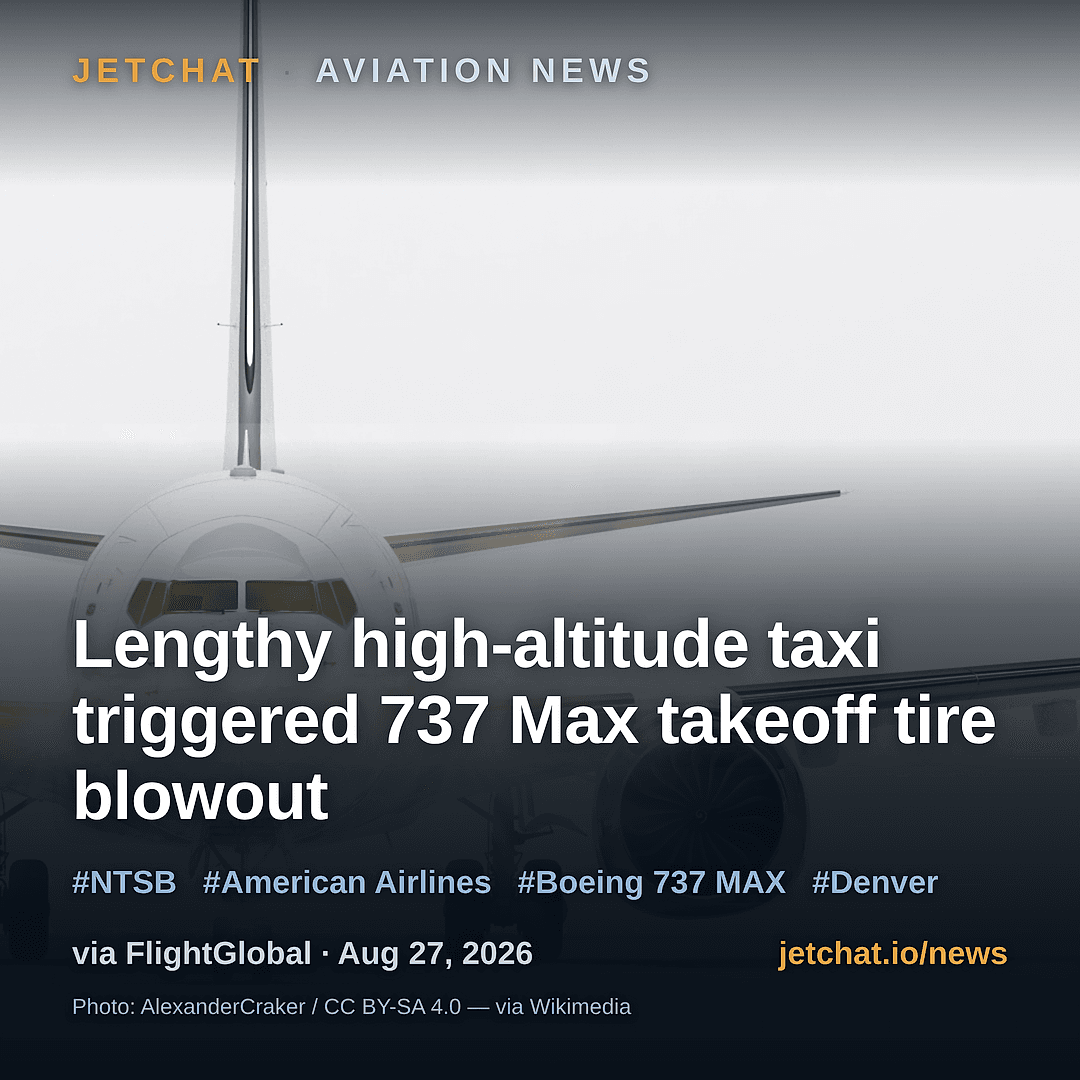
Photo: AlexanderCraker / CC BY-SA 4.0 — via Wikimedia (CC BY-SA 4.0) · source
An American Airlines Boeing 737 Max 8 suffered a dual tire blowout during its takeoff roll in Denver last July after a six-nautical-mile taxi on a hot summer day. The National Transportation Safety Board determined that the extended taxi time, combined with high ambient temperatures, a heavy aircraft, and multiple runway changes due to shifting winds, caused the main gear thermal relief plugs to melt. The subsequent high-speed abort and evacuation underscore the real-world impact of brake energy accumulation during prolonged ground operations.
Read the full take
Ground operations rarely receive the same scrutiny as airborne maneuvers, but this incident serves as a stark reminder of the thermal limits governing landing gear systems. When the American Airlines crew pushed back in Denver, they faced a demanding combination of operational stressors: a hot afternoon, high field elevation, and an aircraft loaded near its maximum performance thresholds. Shifting winds forced the pilots to switch runways three times in search of a safe headwind, resulting in a prolonged ground journey and over half an hour of taxi delays. All that rolling translates directly to friction and heat. Modern transport-category aircraft like the 737 Max utilize thermal relief plugs in their wheels, designed specifically to melt and release tire pressure before extreme heat causes a catastrophic structural explosion. In this case, the system functioned precisely as engineered, but it activated during the critical acceleration phase near one hundred knots. The asymmetric drag from the blown left main tires caused a severe directional control issue, prompting a high-speed rejected takeoff and subsequent emergency evacuation. For professional aviators, this investigation highlights the necessity of monitoring brake temperature and energy buildup during irregular ground operations. Standard operating procedures often dictate specific cooling periods after heavy braking, but lengthy continuous taxiing in hot weather can sneak up on a crew, especially when compounded by mounting duty-time pressures and low-fuel concerns. Understanding your aircrafts specific thermal limitations during extended ground routing is just as vital as calculating runway performance data before advancing the thrust levers.