LGA controllers face termination for leaving before fatal runway crash
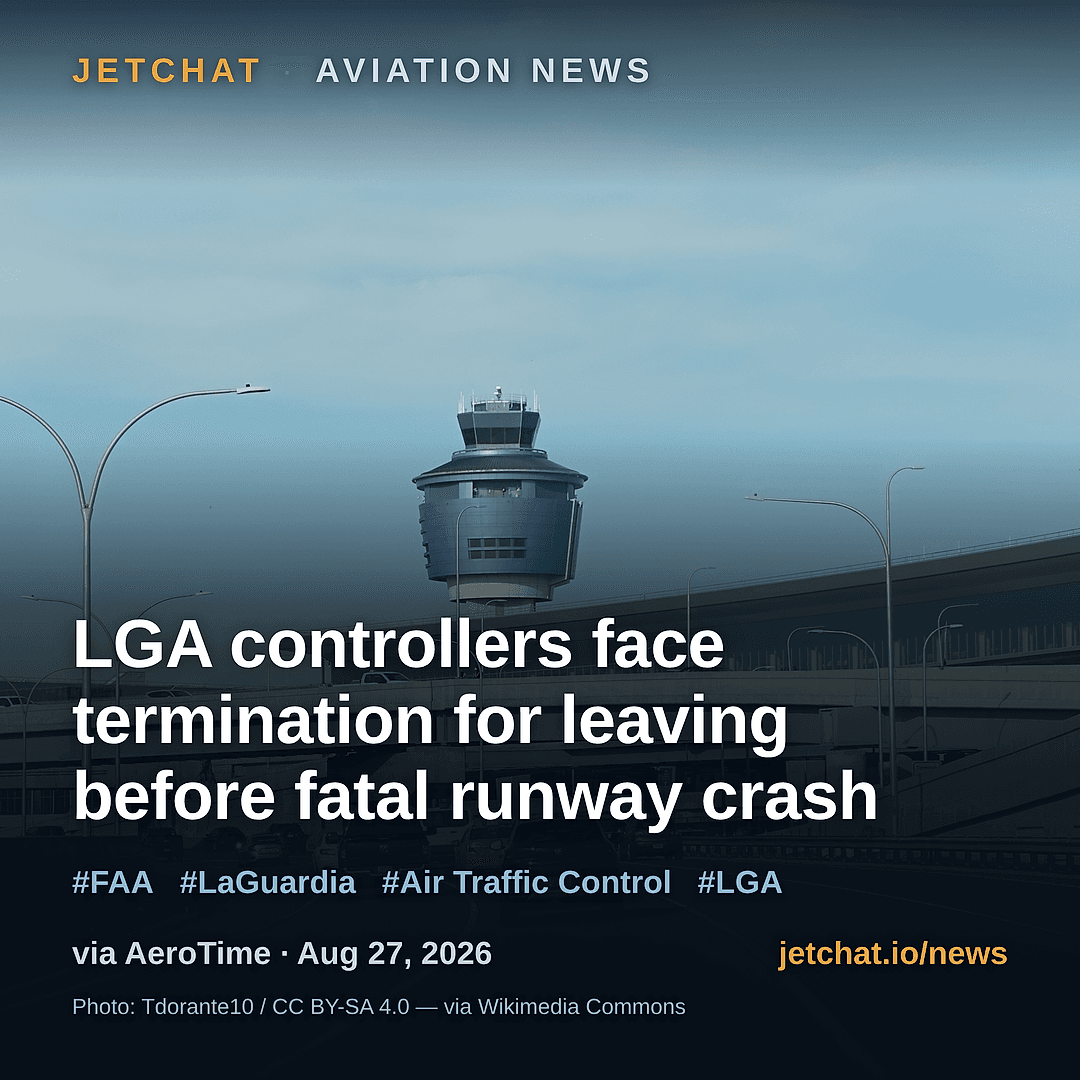
Photo: Tdorante10 / CC BY-SA 4.0 — via Wikimedia Commons (CC BY-SA 4.0) · source
Federal regulators are seeking to fire two LaGuardia air traffic controllers who vacated their posts prior to the end of their shifts on the evening of a fatal March 2026 runway accident. Their premature exit left just two remaining personnel in the tower to manage a massive surge in delayed traffic. Later that night, a landing regional jet collided with a crossing rescue vehicle, killing both flight crew members. This severe disciplinary move signals a strict agency crackdown on unauthorized absences, ensuring vital backup personnel remain on site to manage operational emergencies.
Read the full take
The Department of Transportation and the Federal Aviation Administration are taking an uncompromising stance on a scheduling practice historically overlooked by local facility managers. Known informally as an early shove, departing a shift prematurely when traffic appears light is now being treated as timecard fraud by federal officials. This severe disciplinary approach at LaGuardia marks a significant escalation in regulatory accountability, contrasting sharply with past incidents where similar behavior resulted in minimal pushback. For the pilot community, this tragedy underscores the absolute necessity of personnel redundancy inside the tower cab. The national airspace system relies on layered safety buffers. When controllers are technically on a scheduled break, they remain physically present in the building, ready to plug in during unexpected weather deviations or emergency scenarios. By departing the airport entirely on a stormy night, the two controllers removed that essential safety buffer just as delayed traffic volume spiked. The remaining local and ground controllers were forced to consolidate their duties during a complex period, right before an arriving regional aircraft struck an active emergency vehicle. While the controllers union continues to highlight the chronic, systemic understaffing and extreme fatigue plaguing the workforce, the government is drawing a hard line. Despite aggressive federal hiring campaigns aimed at stabilizing the system, administrators are making it clear that compromising the structural safety net will not be tolerated. Moving forward, aviation professionals can expect local facilities to strictly enforce shift schedules, ensuring that necessary backup personnel are always available to handle the sudden chaos of abnormal operations.