JetChat Newsjetchat.io ↗
safety

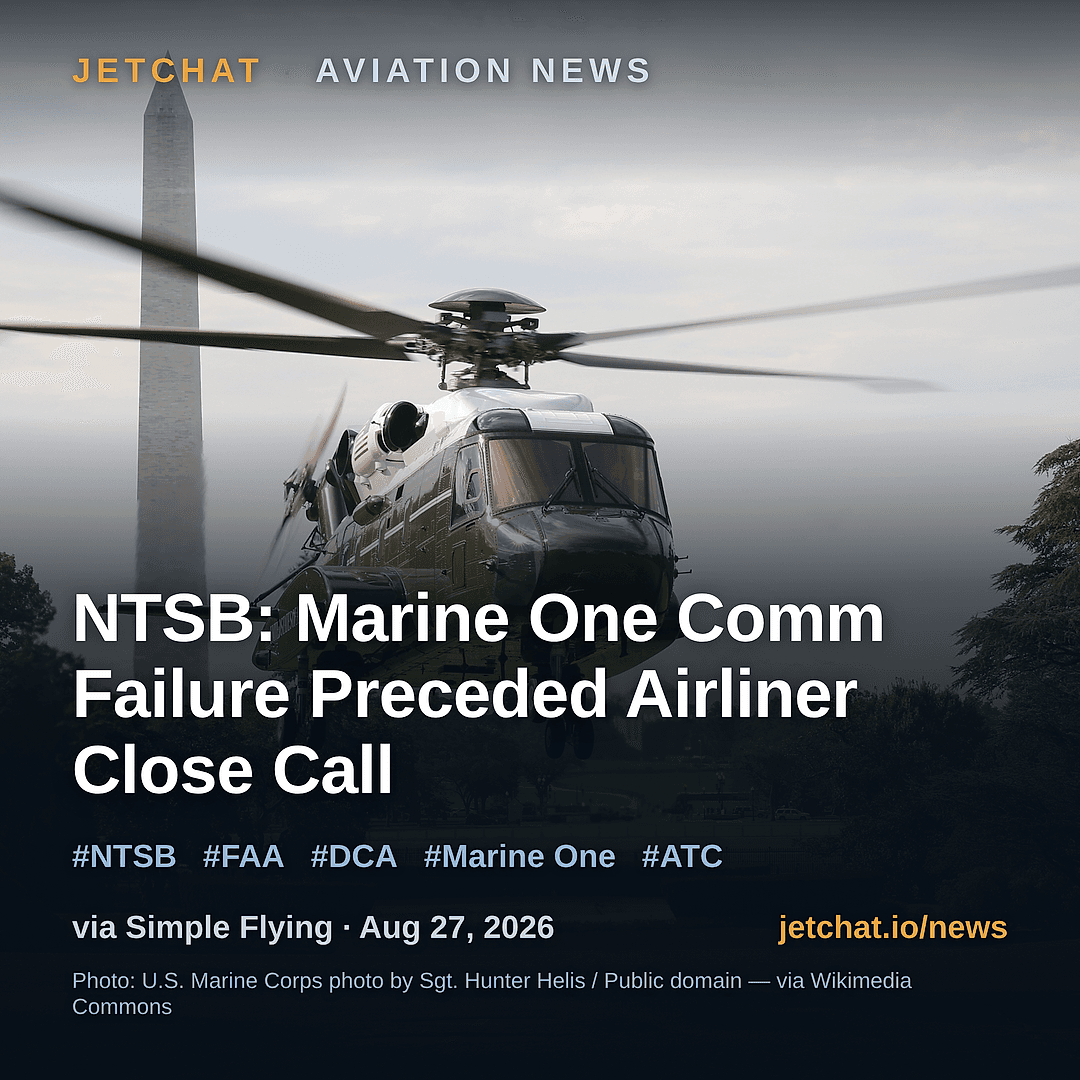
NTSB: Marine One Comm Failure Preceded Airliner Close Call

The National Transportation Safety Board reports that a Sikorsky VH-3D Sea King operating as Marine One experienced a near-miss with a commercial airliner after departing without establishing communication with air traffic control. Radio issues prevented the military flight crew from checking in with controllers prior to takeoff while transporting the president earlier this month. This incident serves as a stark reminder for all aviators about the critical dangers of operating in congested airspace during a loss of communication.

safety

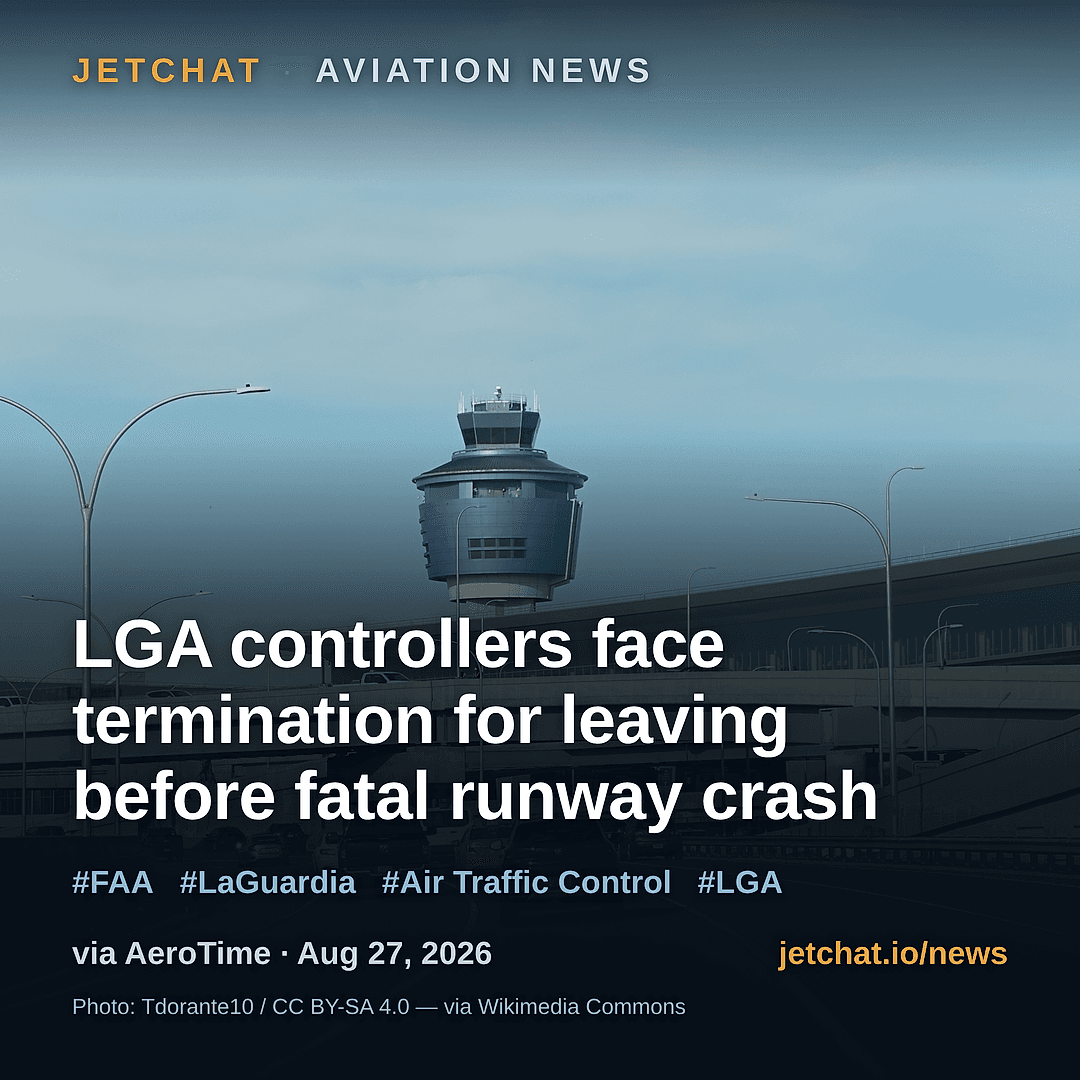
LGA controllers face termination for leaving before fatal runway crash

Federal regulators are seeking to fire two LaGuardia air traffic controllers who vacated their posts prior to the end of their shifts on the evening of a fatal March 2026 runway accident. Their premature exit left just two remaining personnel in the tower to manage a massive surge in delayed traffic. Later that night, a landing regional jet collided with a crossing rescue vehicle, killing both flight crew members. This severe disciplinary move signals a strict agency crackdown on unauthorized absences, ensuring vital backup personnel remain on site to manage operational emergencies.

industry

New Maryland Facility to Produce Digital ATC Voice Switches

The FAA recently broke ground on a $40 million Maryland manufacturing plant that will produce digital communication switches for air traffic control. The facility will build Voice over Internet Protocol systems to replace aging analog switchboards nationwide, an upgrade spearheaded by a $5 billion contract with Rohde & Schwarz USA. For pilots, this transition to internet-based communications means a more resilient airspace, as the new technology allows the agency to instantly reassign controllers to handle understaffed sectors or weather events without requiring them to change physical locations.

safety

Chicago O'Hare Records Fifth Aircraft Tire Incident In Two Weeks

An American Airlines Boeing 737 suffered a double tire blowout while taxiing for departure at Chicago O'Hare International Airport on Wednesday afternoon. The aircraft, scheduled to fly to Charlotte, was immobilized on the taxiway following the sudden failure. Remarkably, this marks the fifth tire-related abnormality at the major Illinois hub over a span of just fourteen days. For flight crews operating in high-traffic environments, this cluster of events underscores the critical importance of rigorous preflight walkarounds and heightened situational awareness during all surface movements.

airlines

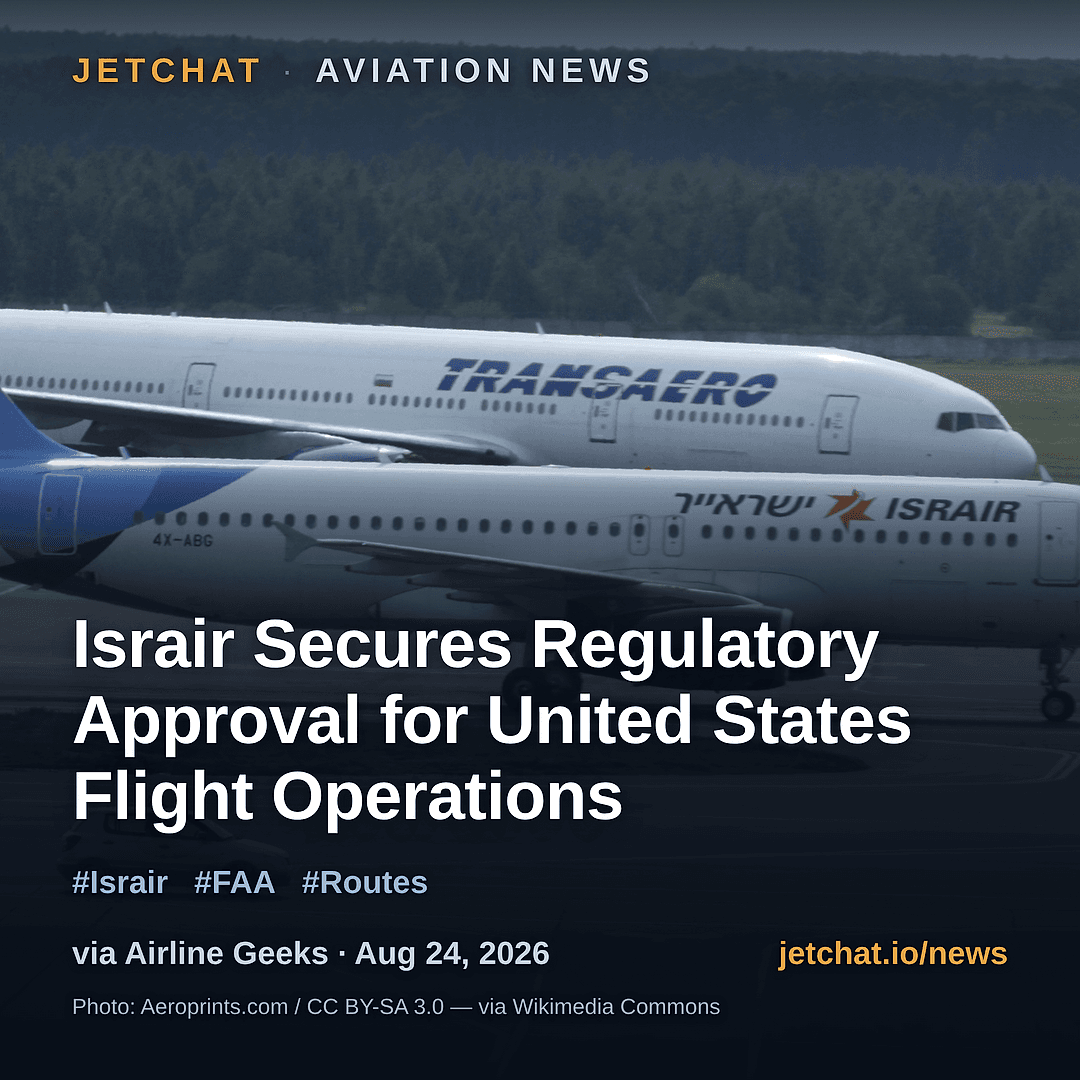
Israir Secures Regulatory Approval for United States Flight Operations

Israeli carrier Israir has successfully obtained the necessary regulatory clearances to begin commercial passenger service to the United States. The airline anticipates launching these new transatlantic flights as early as October, marking a significant expansion of its current network. For commercial aviators and industry professionals, this route expansion highlights ongoing growth in international long-haul markets, signaling potential future opportunities in widebody fleet operations and transatlantic route flying.

safety

FAA Opens Public Comment on Priority Space Launch Corridors

The Federal Aviation Administration has opened a sixty-day public comment period to gather industry input on managing dedicated airspace for spacecraft launch corridors. Prompted by the 2026 National Space Transportation Policy, the agency is exploring how to transition from temporary hazard areas to formalized corridors as domestic launches rapidly increase. With projections of up to ten thousand space operations annually by 2035, this process matters to pilots because establishing permanent priority launch zones will directly impact daily routing and airspace efficiency near major spaceports.

industry

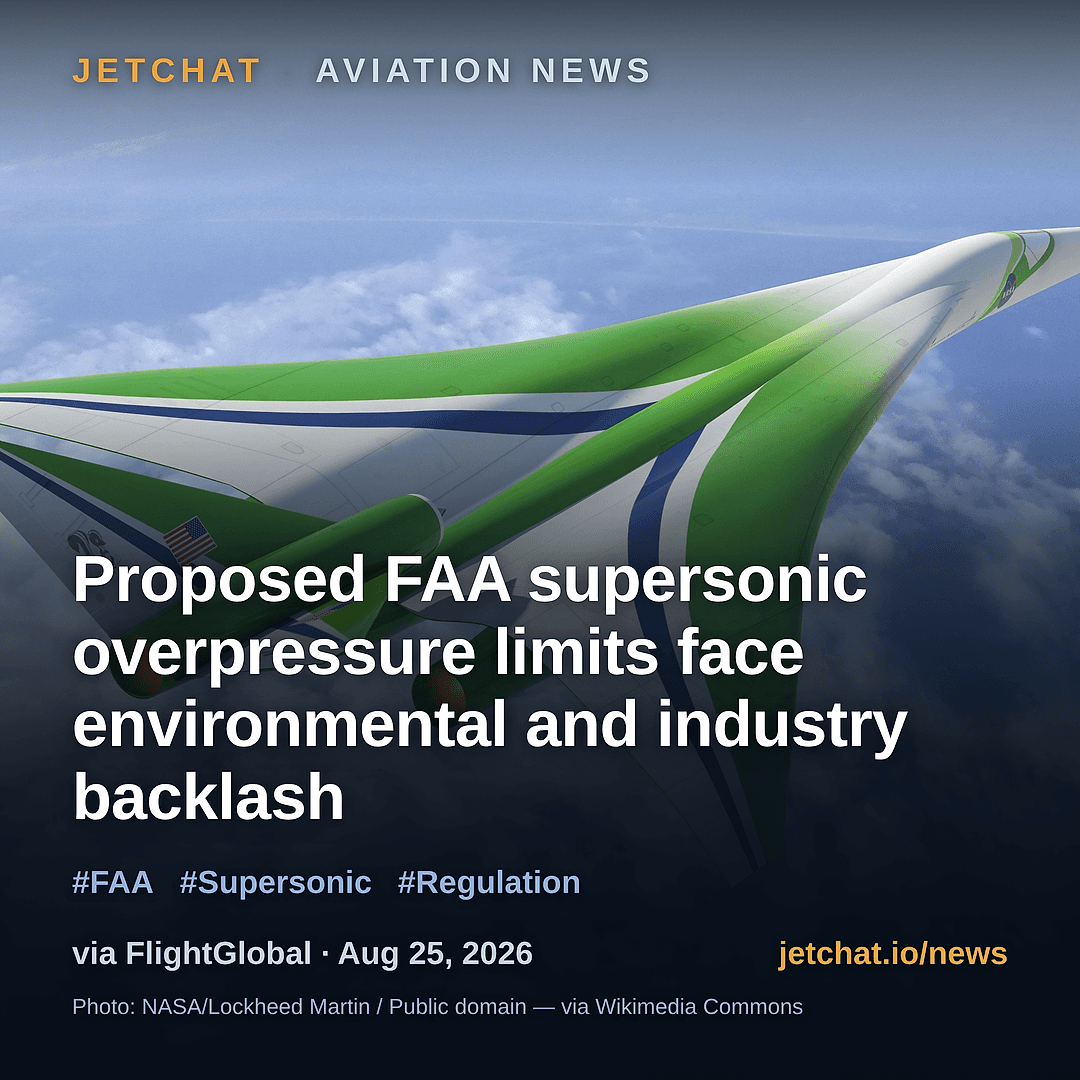
Proposed FAA supersonic overpressure limits face environmental and industry backlash

The FAA’s proposal to replace the decades-old civilian supersonic flight ban with a pressure-based noise metric is facing steep resistance from environmental groups and aviation stakeholders. The plan would permit supersonic flight over land if the resulting shockwave remains below 0.11 pounds per square foot of overpressure at ground level. However, critics argue this metric fails to capture human annoyance and fluctuates unpredictably with atmospheric conditions, meaning future supersonic pilots could face significant operational liabilities when managing these profiles in shifting weather.

safety

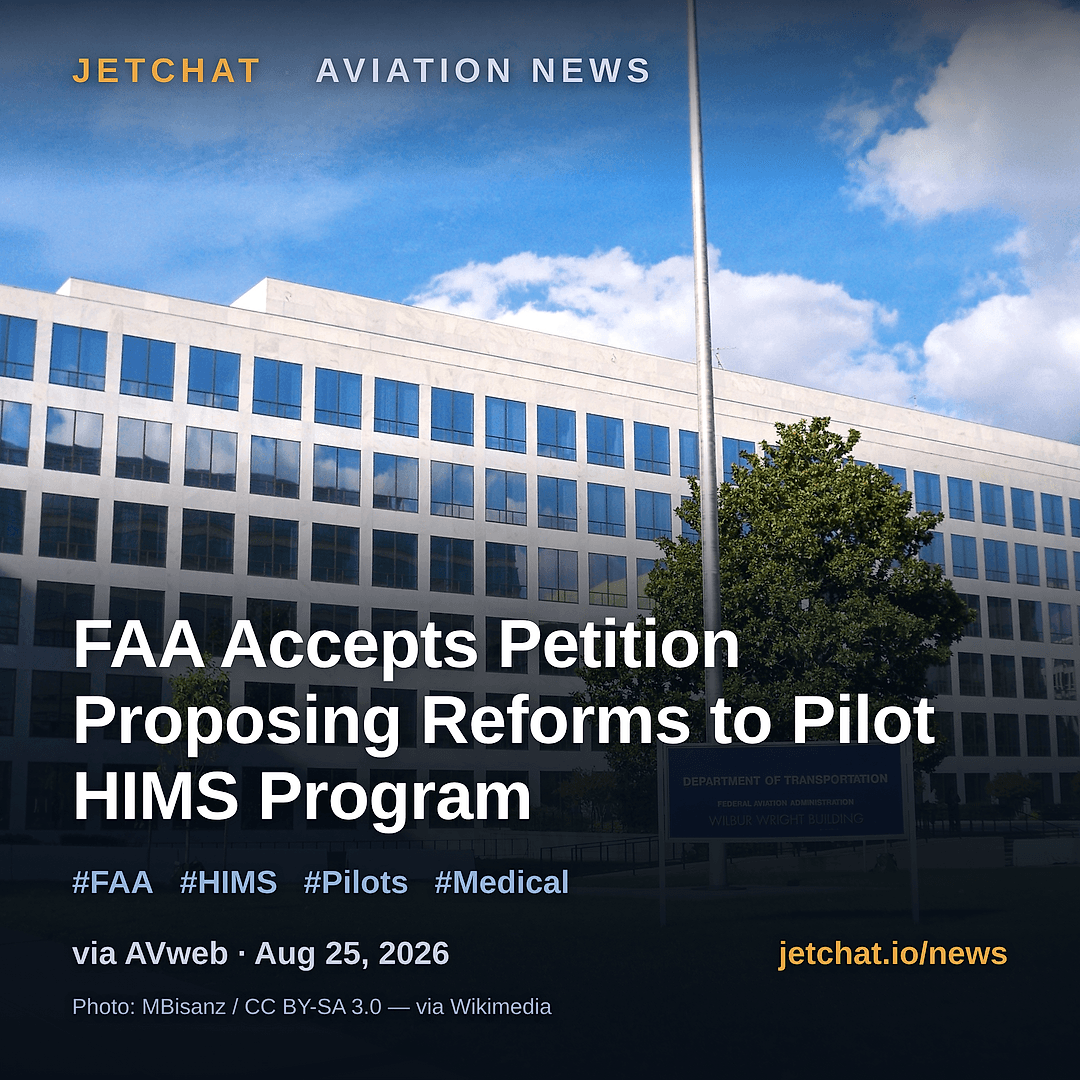
FAA Accepts Petition Proposing Reforms to Pilot HIMS Program

The Federal Aviation Administration has formally agreed to review a petition seeking significant overhauls to the Human Intervention Motivation Study program. The proposal demands standardized monitoring timelines, clear pathways to unrestricted medical certificates, and independent appeals for disputed medical decisions. While the agency’s acceptance only guarantees a review rather than immediate rule changes, the move coincides with an ongoing federal audit of the aeromedical system. For pilots navigating complex mental health or substance evaluations, these potential reforms could mean faster processing and more transparent standards.

safety

FAA Orders Fuselage Inspections for 470 Boeing 737 MAXs

The Federal Aviation Administration has directed airlines to inspect over 470 Boeing 737 MAX aircraft following recent discoveries of fuselage cracking. Commencing next month, operators of three specific MAX variants must perform targeted structural examinations to ensure continued airworthiness. For professional aviators and mechanics, this latest regulatory directive underscores the ongoing necessity of vigilant preflight walkarounds and rigorous adherence to evolving maintenance protocols.

safety

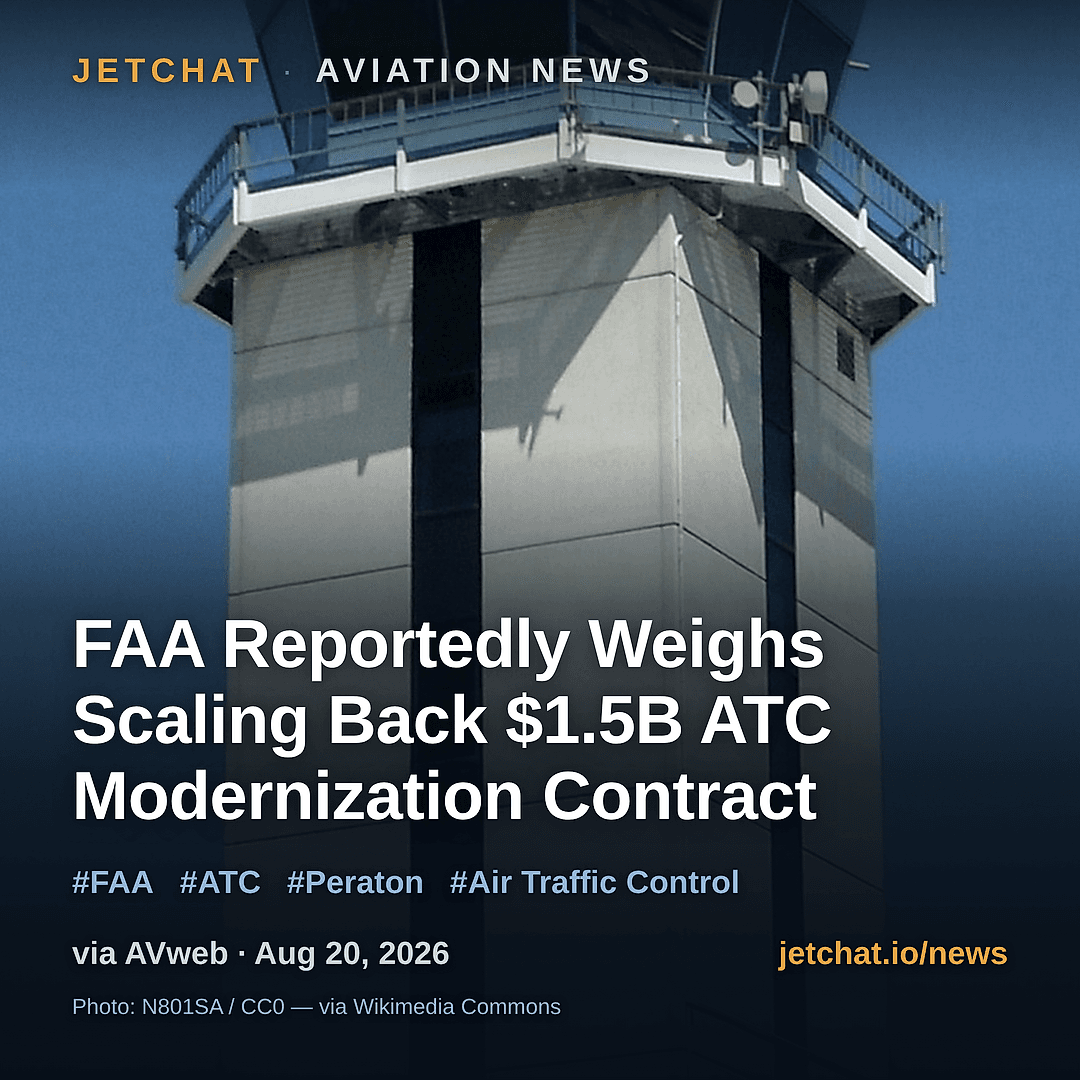
FAA Reportedly Weighs Scaling Back $1.5B ATC Modernization Contract

Just eight months after securing a $1.5 billion deal to spearhead federal air traffic control upgrades, contractor Peraton may see its responsibilities reduced. Anonymous sources suggest the firm has struggled with project schedules and subcontractor management, though insiders also blame the aviation agency for restricting the integrator's autonomy. Both organizations publicly deny any friction or formal warnings regarding the agreement. This alleged turbulence threatens the 2028 timeline for replacing aging radar and communications equipment, potentially delaying much-needed airspace reliability improvements for daily flight operations.

industry

FAA Awards AT&T $74.3 Million to Modernize ATC Network

The FAA has issued a $74.3 million initial contract to AT&T to develop the agency's new communications infrastructure, known as FAA Enterprise Network Services. This initial task order will fund the design and engineering of a secure network connecting thousands of facilities ahead of a December 2028 air traffic control modernization deadline. For pilots, a successful network overhaul means more reliable communication with controllers and fewer system-wide delays caused by aging infrastructure.

industry

Boeing Completes Natural Icing Flight Tests for 777X and 737-10

Boeing recently flew its upcoming 777-9 and 737-10 aircraft into supercooled clouds to evaluate handling characteristics during natural ice accumulation. Flight crews targeted up to two inches of buildup on critical aerodynamic surfaces, successfully verifying that both airframes maintain stable performance in adverse weather. Test pilots reported the aircraft flew so normally that the accretion was barely noticeable without onboard instrumentation. For aspiring airline crews, these milestones signal that next-generation flight controls are becoming increasingly resilient to hazardous atmospheric conditions.

safety

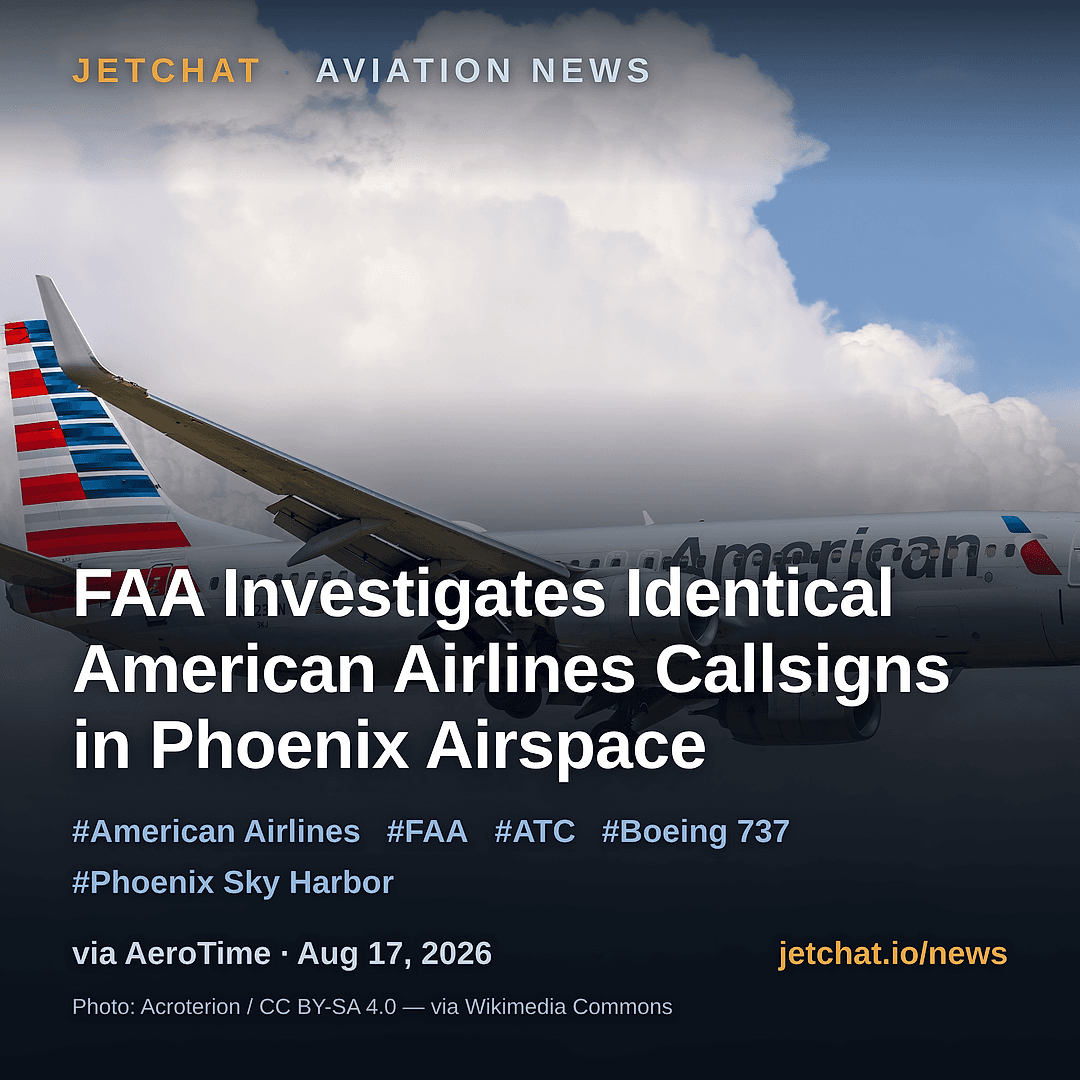
FAA Investigates Identical American Airlines Callsigns in Phoenix Airspace

The FAA is investigating an August 14 incident where two American Airlines Boeing 737s operated simultaneously on the same frequency near Phoenix under the identical callsign American 2482. One aircraft was arriving from Chicago while a substitute aircraft departed for the return leg, creating a hazardous overlap when neither flight plan was modified. Air traffic control recognized the error and restricted altitudes to safely separate the converging jets, underscoring the critical importance of active radio listening and callsign verification for professional pilots.

safety

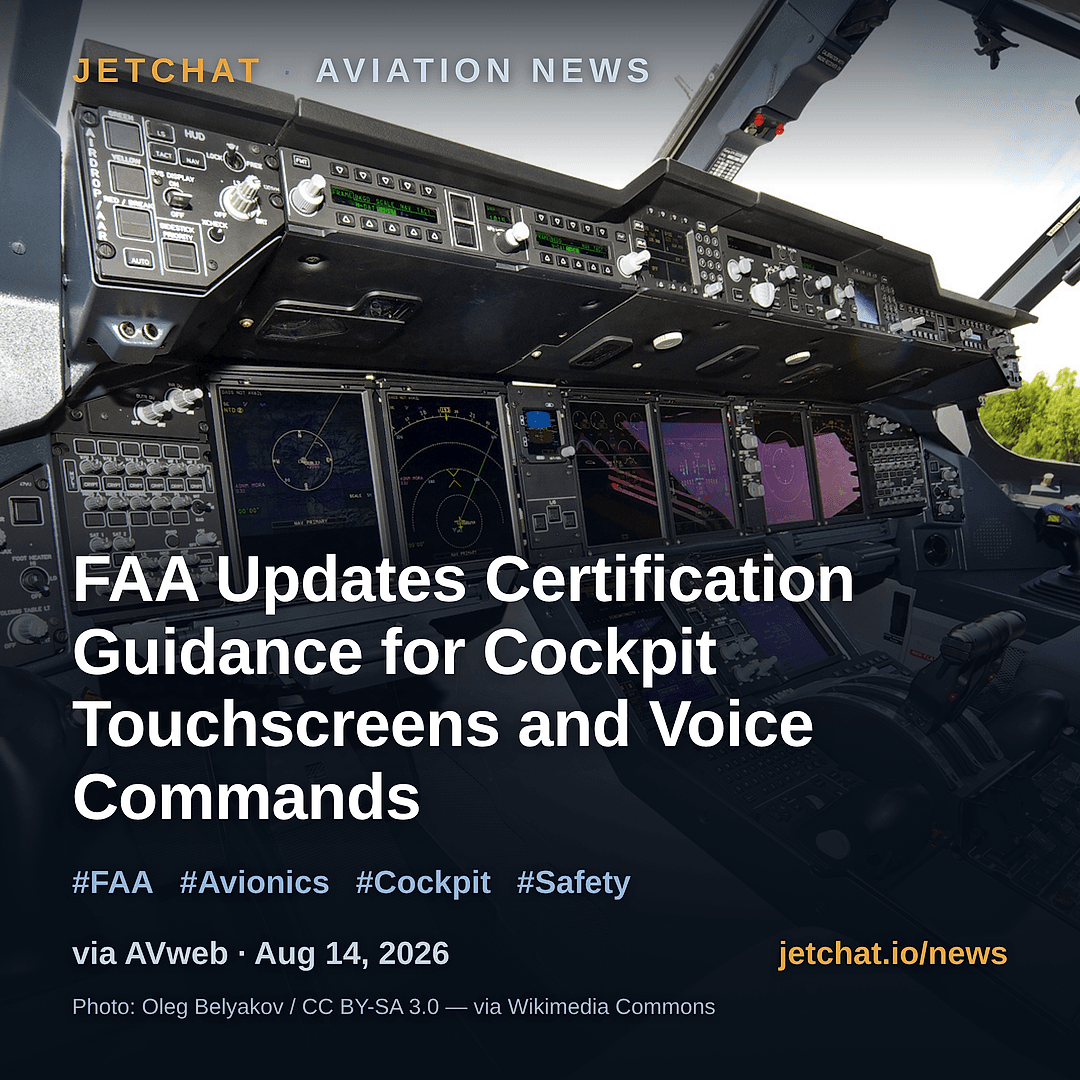
FAA Updates Certification Guidance for Cockpit Touchscreens and Voice Commands

The Federal Aviation Administration is seeking public comments through late September on updated certification guidelines for modern cockpit interfaces, including touchscreens and speech recognition. The proposed draft replaces a decade-old document, introducing strict standards for voice command success rates, manual control overrides, and touchscreen usability during turbulence. For pilots navigating increasingly digital flight decks, these proposed standards ensure that critical avionics remain reliably accessible when workload increases and that everyday cockpit hazards will not disable primary flight displays.

safety

Researchers detail 60-second physical hack targeting Boeing 737 avionics

Security researchers have revealed a proof-of-concept hardware attack capable of manipulating avionics data on Boeing 737 Next Generation and MAX aircraft. By accessing a dormant maintenance port in the forward electronics bay, an infiltrator could theoretically install a malicious device in just one minute to secretly alter critical flight plan and performance calculations. While Boeing maintains that existing operational safeguards severely limit real-world feasibility, this demonstration underscores the growing importance of aviation cybersecurity and the necessity for commercial flight crews to consistently cross-check automation inputs.

safety

Identical Callsigns Place Two American Jets on Same Frequency

On August 13, a scheduling delay resulted in two American Airlines Boeing 737s operating under the exact same callsign on the same Phoenix air traffic control frequency. Flight 2482 is used for both directions of the carrier's Chicago-Phoenix route, and a delayed inbound flight overlapped with an on-time outbound departure. A veteran controller safely managed the conflict by explicitly distinguishing the aircraft as either arriving or departing. This incident highlights why pilots must maintain strict radio discipline and situational awareness when operating common hub routes.

industry

FAA faces massive funding shortfall for next-generation ATC platform

The Federal Aviation Administration is actively soliciting proposals to combine its terminal and high-altitude air traffic software into a unified interface, yet remains billions of dollars short of the required budget. Several major defense and aerospace firms, including Thales and Collins Aerospace, are pitching custom cloud-based solutions to secure the lucrative development contract. Lawmakers have yet to allocate the estimated ten billion dollars needed just for the software overhaul. For pilots, this matters because a modernized automation platform could drastically reduce controller workload and minimize systemic routing delays.

safety

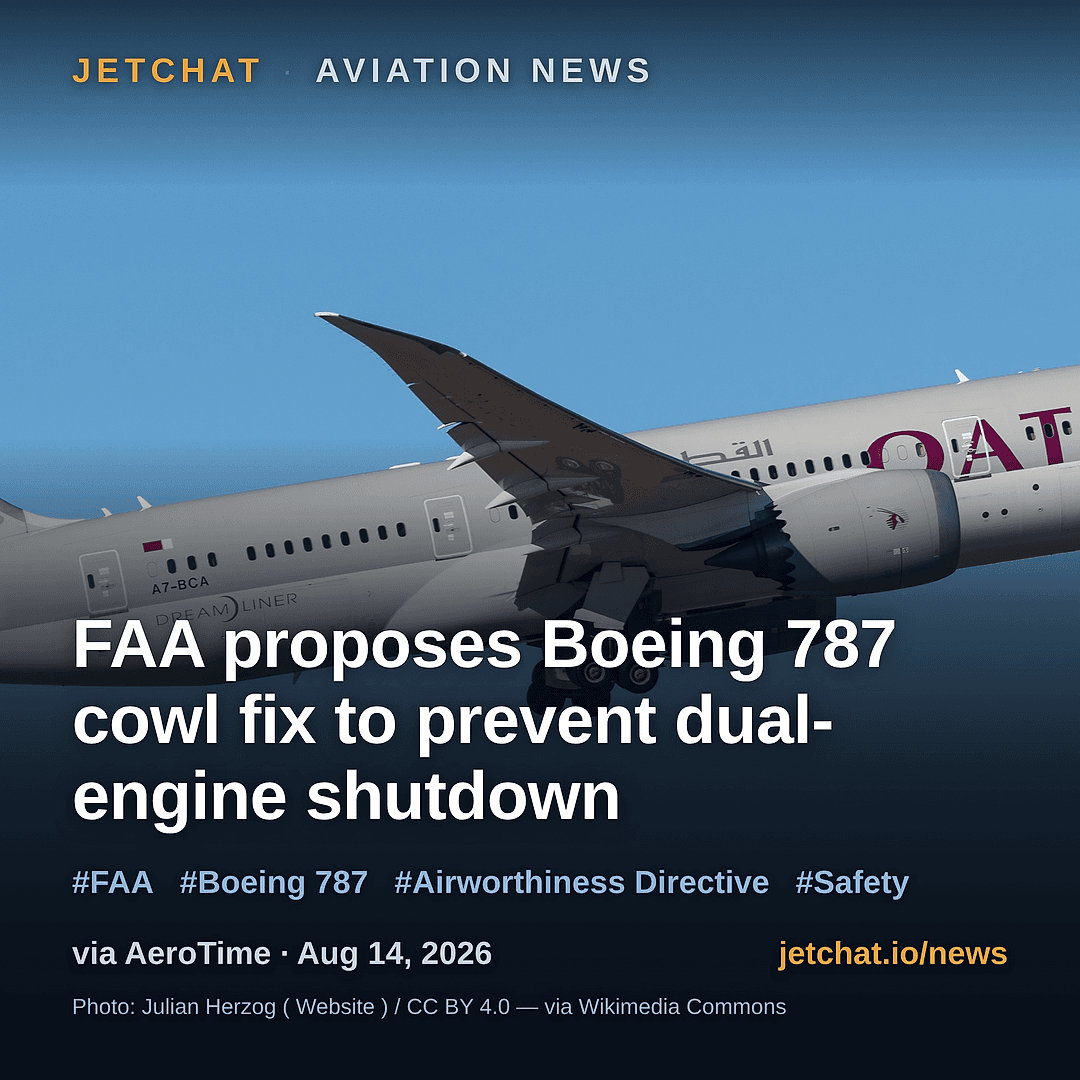
FAA proposes Boeing 787 cowl fix to prevent dual-engine shutdown

The FAA is proposing a new airworthiness directive for Boeing 787 Dreamliners equipped with Rolls-Royce Trent 1000 engines to address a shielding vulnerability. Boeing discovered that an uncontained failure in the left engine could launch debris into the right engine's oil lines, potentially triggering a catastrophic dual-engine shutdown. The rule would mandate inspections and part modifications for 22 affected US-registered aircraft. For pilots, this underscores the vital importance of system redundancy and the intense engineering scrutiny required to maintain safety in twin-engine operations.

safety

American Airlines and Feds Reach Secret DCA Midair Settlement

American Airlines and federal officials have finalized an undisclosed financial settlement to apportion liability costs stemming from a deadly midair collision near Washington National Airport. The crash, which claimed 67 lives, was previously attributed by the National Transportation Safety Board to errors by an Army helicopter crew and air traffic control, clearing the airline's flight crew of fault. The sealed agreement resolves pending financial disputes over passenger and crew lawsuits, highlighting how complex liability disputes are resolved behind closed doors long after the NTSB concludes its safety investigation.

industry

FAA Unveils Newark Radar, Seeks $10B for AI ATC System

Transportation and FAA officials inaugurated a modern surface movement radar at Newark Liberty International Airport, replacing obsolete 30-year-old equipment. The deployment coincides with urgent requests from the Department of Transportation for an additional $10 billion to fund further air traffic control modernization, including a new artificial intelligence-assisted airspace management tool. For pilots, these infrastructure and software upgrades mean increased situational awareness on congested ramps and potentially fewer weather-related routing delays as the national airspace system handles growing traffic volumes.