JetChat Newsjetchat.io ↗
safety

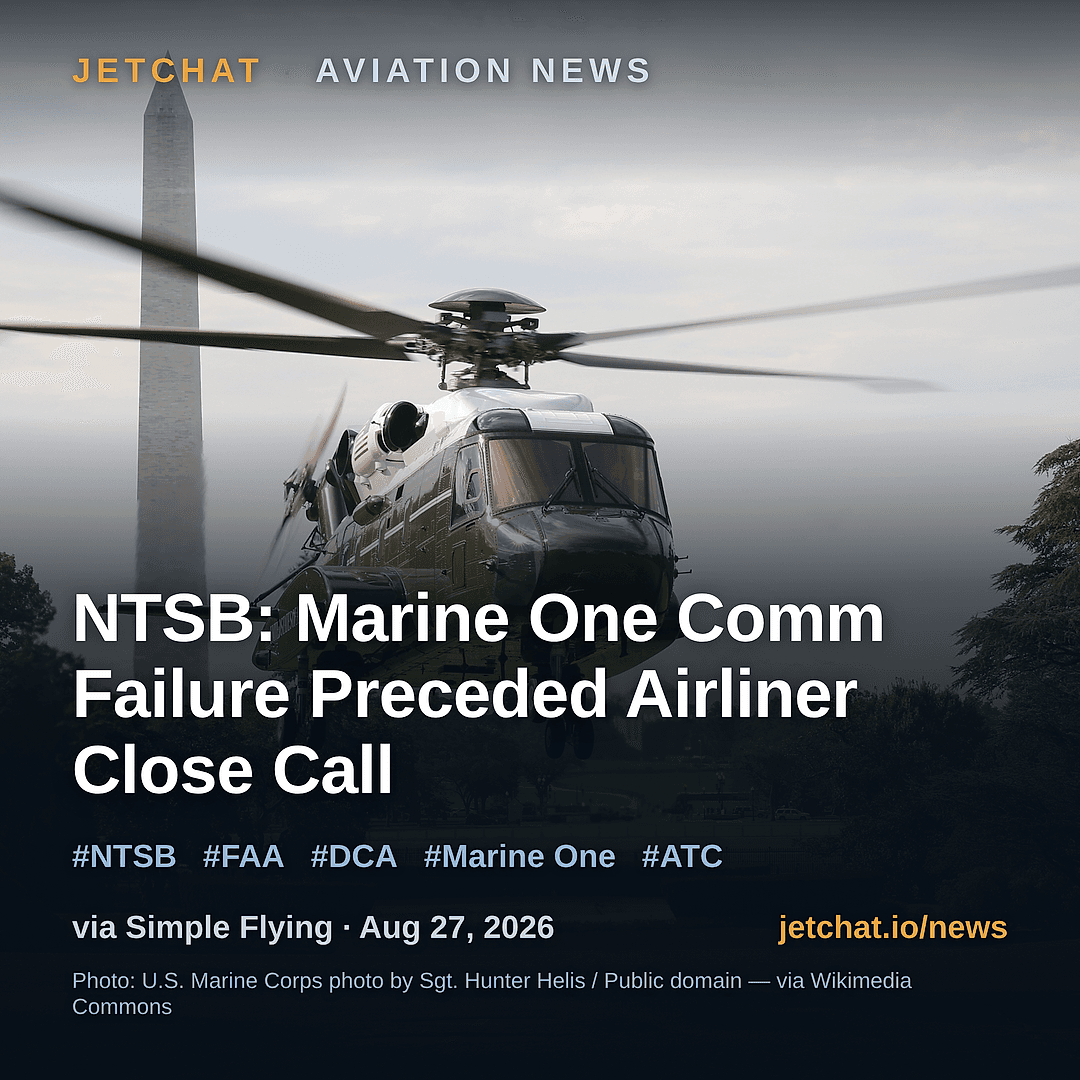
NTSB: Marine One Comm Failure Preceded Airliner Close Call

The National Transportation Safety Board reports that a Sikorsky VH-3D Sea King operating as Marine One experienced a near-miss with a commercial airliner after departing without establishing communication with air traffic control. Radio issues prevented the military flight crew from checking in with controllers prior to takeoff while transporting the president earlier this month. This incident serves as a stark reminder for all aviators about the critical dangers of operating in congested airspace during a loss of communication.
industry

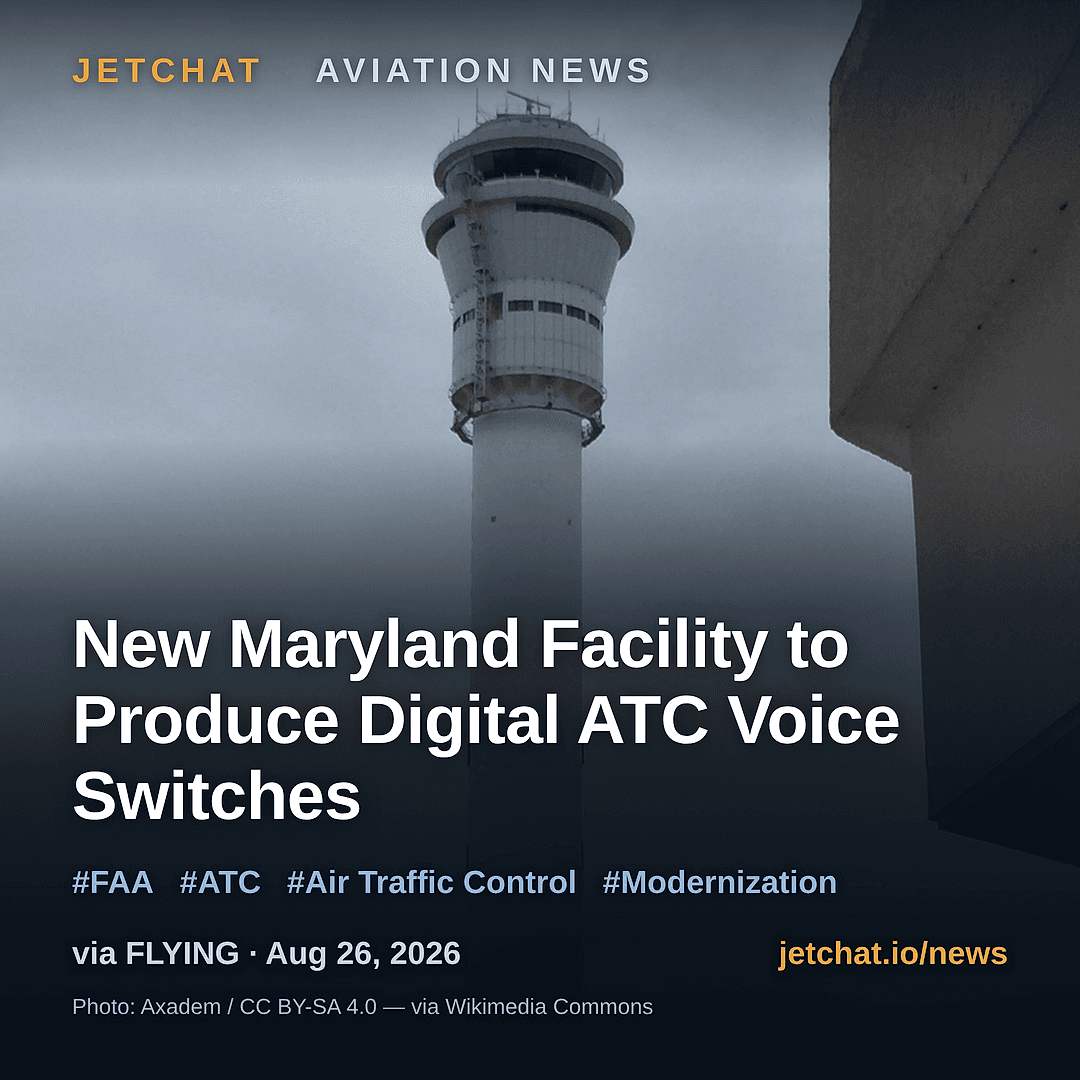
New Maryland Facility to Produce Digital ATC Voice Switches

The FAA recently broke ground on a $40 million Maryland manufacturing plant that will produce digital communication switches for air traffic control. The facility will build Voice over Internet Protocol systems to replace aging analog switchboards nationwide, an upgrade spearheaded by a $5 billion contract with Rohde & Schwarz USA. For pilots, this transition to internet-based communications means a more resilient airspace, as the new technology allows the agency to instantly reassign controllers to handle understaffed sectors or weather events without requiring them to change physical locations.

safety

FAA Opens Public Comment on Priority Space Launch Corridors

The Federal Aviation Administration has opened a sixty-day public comment period to gather industry input on managing dedicated airspace for spacecraft launch corridors. Prompted by the 2026 National Space Transportation Policy, the agency is exploring how to transition from temporary hazard areas to formalized corridors as domestic launches rapidly increase. With projections of up to ten thousand space operations annually by 2035, this process matters to pilots because establishing permanent priority launch zones will directly impact daily routing and airspace efficiency near major spaceports.

safety

FAA Reportedly Weighs Scaling Back $1.5B ATC Modernization Contract

Just eight months after securing a $1.5 billion deal to spearhead federal air traffic control upgrades, contractor Peraton may see its responsibilities reduced. Anonymous sources suggest the firm has struggled with project schedules and subcontractor management, though insiders also blame the aviation agency for restricting the integrator's autonomy. Both organizations publicly deny any friction or formal warnings regarding the agreement. This alleged turbulence threatens the 2028 timeline for replacing aging radar and communications equipment, potentially delaying much-needed airspace reliability improvements for daily flight operations.

industry

FAA Awards AT&T $74.3 Million to Modernize ATC Network

The FAA has issued a $74.3 million initial contract to AT&T to develop the agency's new communications infrastructure, known as FAA Enterprise Network Services. This initial task order will fund the design and engineering of a secure network connecting thousands of facilities ahead of a December 2028 air traffic control modernization deadline. For pilots, a successful network overhaul means more reliable communication with controllers and fewer system-wide delays caused by aging infrastructure.

safety

FAA Investigates Identical American Airlines Callsigns in Phoenix Airspace

The FAA is investigating an August 14 incident where two American Airlines Boeing 737s operated simultaneously on the same frequency near Phoenix under the identical callsign American 2482. One aircraft was arriving from Chicago while a substitute aircraft departed for the return leg, creating a hazardous overlap when neither flight plan was modified. Air traffic control recognized the error and restricted altitudes to safely separate the converging jets, underscoring the critical importance of active radio listening and callsign verification for professional pilots.

airlines

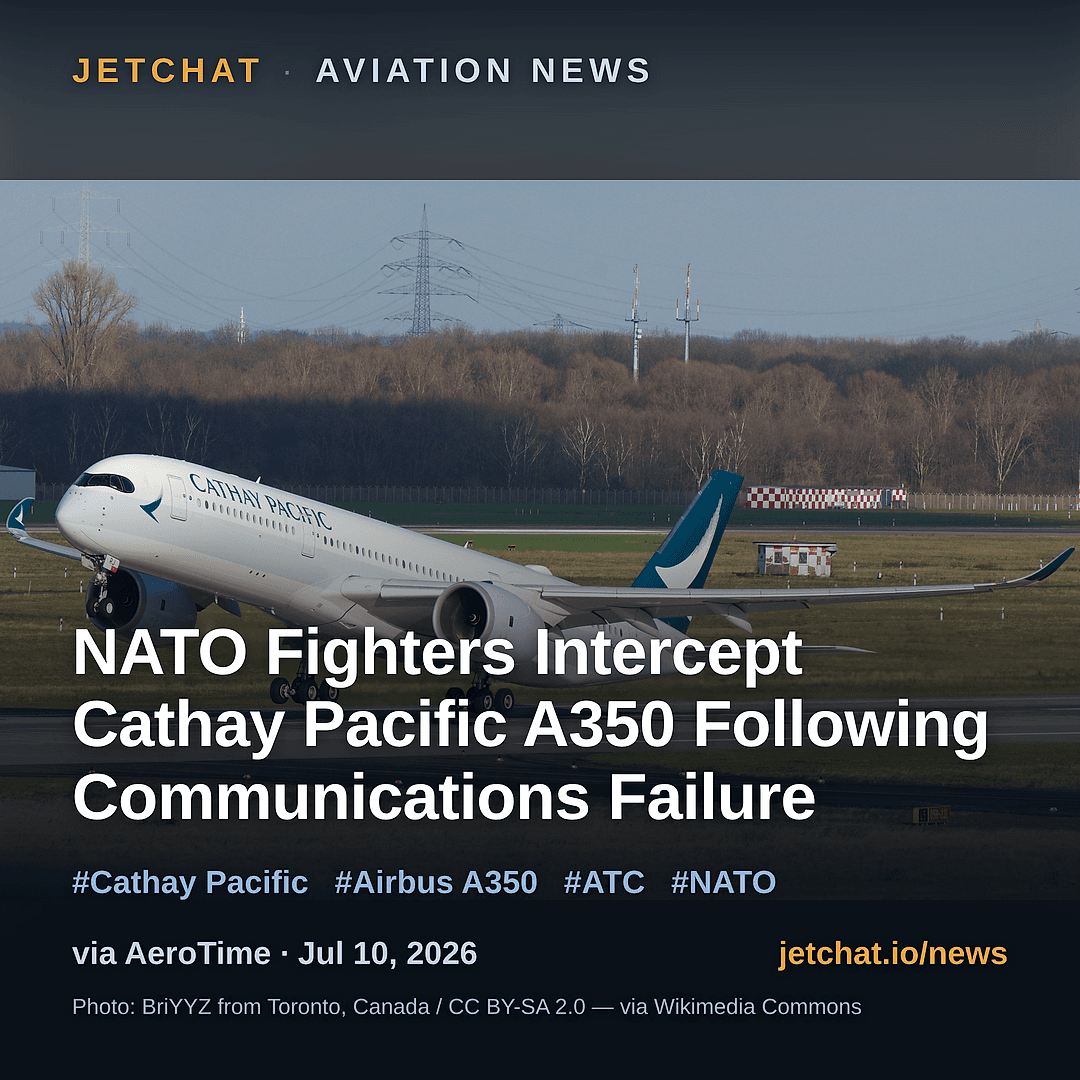
Frequency Error Triggers NATO Intercept of Cathay Pacific A350

A Cathay Pacific Airbus A350 flying from Hong Kong to London lost communication over Romania after the flight crew accidentally tuned into an incorrect radio frequency. Responding to instructions intended for another aircraft, the pilots missed the error, creating a NORDO situation that prompted Hungarian fighter jets to intercept the widebody. The crew restored communications following a visual warning and landed safely. This event underscores the critical necessity of verifying callsigns during busy frequency changes and maintaining strict radio discipline when crossing international boundaries.

safety

Identical Callsigns Place Two American Jets on Same Frequency

On August 13, a scheduling delay resulted in two American Airlines Boeing 737s operating under the exact same callsign on the same Phoenix air traffic control frequency. Flight 2482 is used for both directions of the carrier's Chicago-Phoenix route, and a delayed inbound flight overlapped with an on-time outbound departure. A veteran controller safely managed the conflict by explicitly distinguishing the aircraft as either arriving or departing. This incident highlights why pilots must maintain strict radio discipline and situational awareness when operating common hub routes.

industry

FAA faces massive funding shortfall for next-generation ATC platform

The Federal Aviation Administration is actively soliciting proposals to combine its terminal and high-altitude air traffic software into a unified interface, yet remains billions of dollars short of the required budget. Several major defense and aerospace firms, including Thales and Collins Aerospace, are pitching custom cloud-based solutions to secure the lucrative development contract. Lawmakers have yet to allocate the estimated ten billion dollars needed just for the software overhaul. For pilots, this matters because a modernized automation platform could drastically reduce controller workload and minimize systemic routing delays.

industry

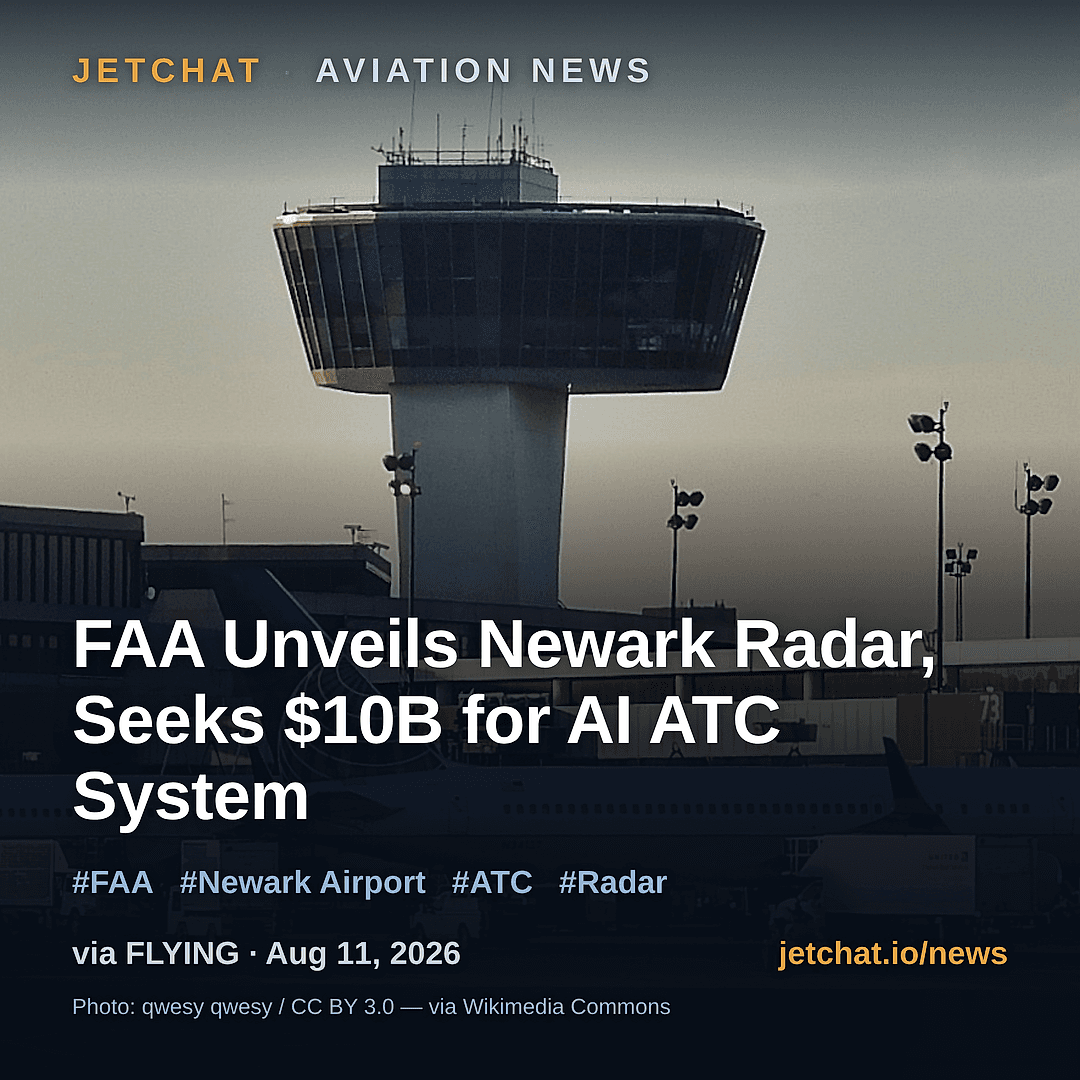
FAA Unveils Newark Radar, Seeks $10B for AI ATC System

Transportation and FAA officials inaugurated a modern surface movement radar at Newark Liberty International Airport, replacing obsolete 30-year-old equipment. The deployment coincides with urgent requests from the Department of Transportation for an additional $10 billion to fund further air traffic control modernization, including a new artificial intelligence-assisted airspace management tool. For pilots, these infrastructure and software upgrades mean increased situational awareness on congested ramps and potentially fewer weather-related routing delays as the national airspace system handles growing traffic volumes.

safety

Midwest Flights Grounded After Minneapolis Center ATC Outage

A widespread air traffic control outage disrupted flight operations across nine Midwestern states on Thursday, leaving airborne aircraft without controller communication for approximately two hours. The disruption centered on the Minneapolis airspace, prompting immediate ground stops and forcing crews already in the air to rely on contingency procedures until services were successfully restored. For pilots at every level, this event underscores the vital importance of maintaining acute situational awareness and mastering lost-communication protocols when operating in congested skies.

safety

FAA Investigates TCAS Event Between Two Delta Flights

The FAA has launched an investigation into a loss of separation at Atlanta's Hartsfield-Jackson International Airport after two Delta Air Lines aircraft converged on intersecting flight paths. A Boeing 737 executing a go-around from Runway 26R climbed alongside an Airbus A321 departing from parallel Runway 26L, prompting a Traffic Collision Avoidance System (TCAS) Resolution Advisory. The crews successfully maintained separation, coming within 1,800 feet of one another. For pilots, this event underscores the vital importance of strict adherence to TCAS commands during high-workload parallel runway operations.

safety

FAA Warns of Major East Coast Flight Delays Amid Storms

Severe weather sweeping across the eastern United States has prompted the Federal Aviation Administration to issue widespread alerts regarding anticipated flight delays and cancellations. The agency is strongly urging passengers to verify their itineraries with carriers before heading to the airport as convective activity disrupts major routing structures. For pilots navigating these congested corridors, this airspace compression highlights the importance of carrying extra holding fuel and thoroughly reviewing alternate airport options before departure.

safety

NTSB: Controller Forgot Takeoff Clearance In Boston Runway Incursion

A recently released preliminary report from the National Transportation Safety Board indicates that an air traffic controller at Boston Logan International Airport forgot they had cleared an American Airlines Boeing 737 for takeoff, leading to a close call with an arriving Delta Air Lines Airbus A319. The incident, which occurred late last month, was narrowly avoided thanks to the prompt reaction of the incoming Delta flight crew. This serves as a stark reminder for pilots to always maintain high situational awareness and independently verify clearances during surface operations.

industry

Aviation Groups Push Congress for $20B to Modernize ATC

Aviation leaders are petitioning lawmakers for an additional $20 billion to finish overhauling the national airspace infrastructure. Speaking at AirVenture, FAA, ALPA, and NATCA representatives emphasized that the previously allocated $12.5 billion is just a down payment on a $32 billion necessity. Without full funding, controllers must manage record traffic using a disjointed mix of obsolete and modern technology. For pilots, fully funding these upgrades means fewer systemic delays, clearer communication, and an enhanced margin of safety during peak operations.

safety

San Diego Ground Controller Clashes With United, Southwest Pilots

A congested morning departure sequence at San Diego International Airport recently devolved into unprofessional radio exchanges between a ground controller and airline flight crews. Frustrated by early arrivals blocking limited taxiways, the controller abandoned standard phraseology to argue with United and Southwest pilots requesting pushback clearances. The incident escalated into open bickering, culminating in one crewmember suggesting the controller be replaced. For professional aviators, the leaked audio serves as a stark reminder of how quickly frequency discipline can deteriorate under operational stress.

safety

Missed Readback Leads To TCAS RA Between Hawker And 787

A Hawker 800XP departing Teterboro triggered a traffic resolution advisory for an arriving United Airlines Boeing 787 near Newark after a critical communication breakdown. The private jet pilot incorrectly read back an initial heading assignment, which the busy air traffic controller missed, initiating a chain of airspace deviations. The incident highlights the unforgiving nature of the congested New York airspace. For pilots, it serves as a stark reminder that strict radio discipline and verifying clearances are the ultimate safeguards against collision.

safety

NATO Fighters Intercept Cathay Pacific A350 Following Communications Failure

A Cathay Pacific Airbus A350 flying from Hong Kong to London lost contact with Romanian air traffic control on July 4, prompting a NATO quick reaction alert. Two Hungarian fighter jets successfully intercepted the airliner, using visual signals to help the crew re-establish communications before returning to base. The flight landed safely at Heathrow, and Hong Kong regulators have demanded a full investigation report. For pilots, this incident reinforces the critical importance of maintaining situational awareness and strictly adhering to NORDO protocols in congested international airspace.

safety

NetJets Crew Refuses Las Vegas Go-Around Citing Low Fuel

A NetJets flight crew on approach to Las Vegas rejected an air traffic control instruction to go around, stating they were unable due to low fuel. The crew had not previously declared a minimum fuel state, which forced controllers to quickly clear the business jet to land and instead order a trailing Alaska Airlines widebody to execute a missed approach. This incident underscores the critical necessity of proactive fuel state communication to prevent unexpected sequencing conflicts on final approach.