Identical Callsigns Place Two American Jets on Same Frequency
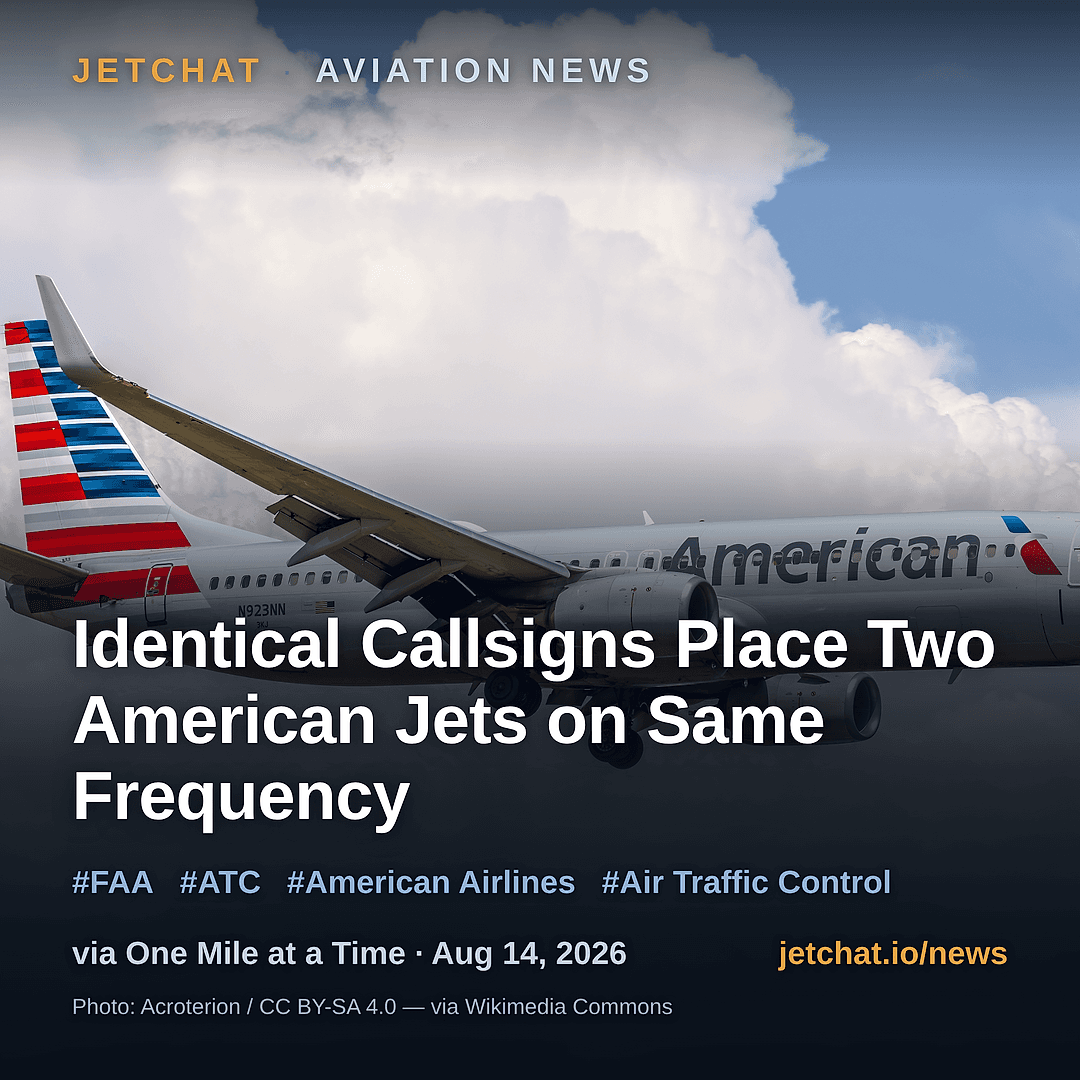
Photo: Acroterion / CC BY-SA 4.0 — via Wikimedia Commons (CC BY-SA 4.0) · source
On August 13, a scheduling delay resulted in two American Airlines Boeing 737s operating under the exact same callsign on the same Phoenix air traffic control frequency. Flight 2482 is used for both directions of the carrier's Chicago-Phoenix route, and a delayed inbound flight overlapped with an on-time outbound departure. A veteran controller safely managed the conflict by explicitly distinguishing the aircraft as either arriving or departing. This incident highlights why pilots must maintain strict radio discipline and situational awareness when operating common hub routes.
Read the full take
The overlapping of two identical callsigns on a single air traffic control frequency is an exceedingly rare event that underscores the critical nature of radio discipline. Commercial carriers frequently use the same flight number for outbound and return legs of a route. Under normal circumstances, schedule separation prevents the two aircraft from ever sharing the same airspace. When delays occur and flights overlap, airline dispatchers typically append an alphanumeric suffix to the delayed flight's callsign to distinguish it within the national airspace system. In this instance, the dispatch system designed to flag overlapping schedules evidently failed, placing two Boeing 737s operating as American 2482 into the Phoenix terminal area simultaneously. Fortunately, the human element caught what the computers missed. A veteran radar controller identified the duplication and immediately implemented a manual workaround, directly addressing the crews as either the arriving or departing aircraft. For aspiring aviators and current professionals, this event is a potent reminder of the dangers of expectation bias on the flight deck. It is remarkably easy to hear your callsign and instinctively accept a clearance meant for someone else, especially during high-workload phases of flight like terminal departures and arrivals. The incident reinforces the necessity of full-length readbacks and maintaining absolute certainty before executing an instruction. When operating in congested hub airspace, pilots must always listen not just for their callsign, but for the context of the clearance, verifying it makes logical sense for their current phase of flight before taking action.