NATO Fighters Intercept Cathay Pacific A350 Following Communications Failure
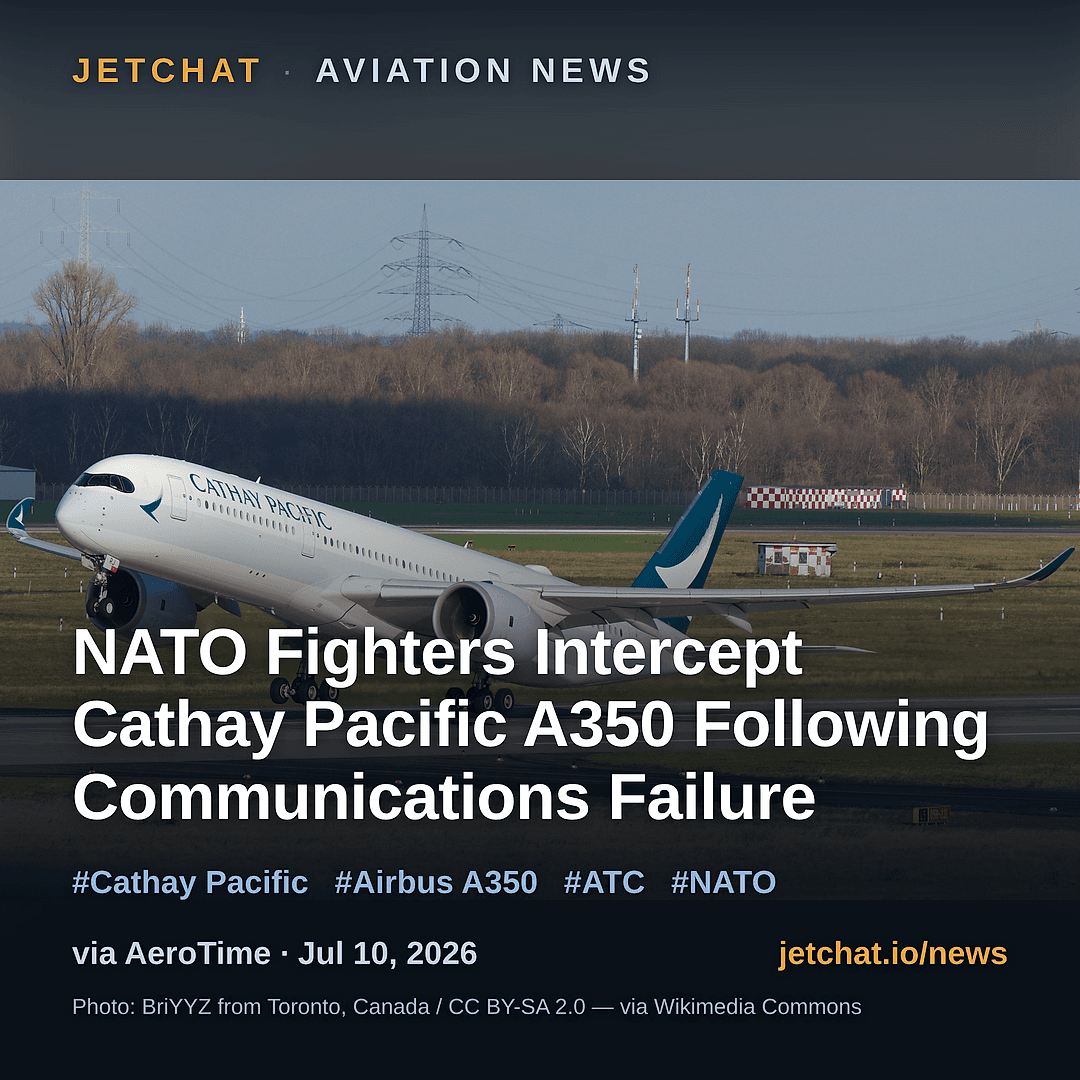
Photo: BriYYZ from Toronto, Canada / CC BY-SA 2.0 — via Wikimedia Commons (CC BY-SA 2.0) · source
A Cathay Pacific Airbus A350 flying from Hong Kong to London lost contact with Romanian air traffic control on July 4, prompting a NATO quick reaction alert. Two Hungarian fighter jets successfully intercepted the airliner, using visual signals to help the crew re-establish communications before returning to base. The flight landed safely at Heathrow, and Hong Kong regulators have demanded a full investigation report. For pilots, this incident reinforces the critical importance of maintaining situational awareness and strictly adhering to NORDO protocols in congested international airspace.
Read the full take
While a total loss of two-way radio communication is a rare event for modern commercial airliners, the rapid military response to Flight CX257 highlights the heightened security posture currently maintained across European airspace. NATO's quick reaction alert system is designed to respond within minutes to unresponsive aircraft, treating any NORDO event as a potential security threat until proven otherwise. In this case, Hungarian fighter crews launched just nine minutes after the initial alert, demonstrating the efficiency of the integrated air defense network. For commercial flight crews, a loss of communication over foreign airspace triggers specific procedures. Pilots are trained to squawk 7600, monitor guard frequency 121.5 MHz, and follow established visual interception signals if military aircraft arrive. The Cathay Pacific crew's prompt recognition of the intercepting jets and subsequent restoration of ATC contact reflects standard operating procedures working exactly as intended. Hong Kong's Civil Aviation Department is treating the communications failure with serious concern, requiring an investigation report from Cathay Pacific within a week. Investigators will likely focus on whether the radio silence was caused by a technical failure on the Airbus A350, a frequency mismanagement error by the flight crew, or a ground-based transmission issue in the Romanian sector. As international airspace becomes increasingly complex, understanding the root cause of this failure will be essential for airlines looking to prevent similar airspace disruptions and ensure continuous flight tracking.