NTSB: Controller Forgot Takeoff Clearance In Boston Runway Incursion
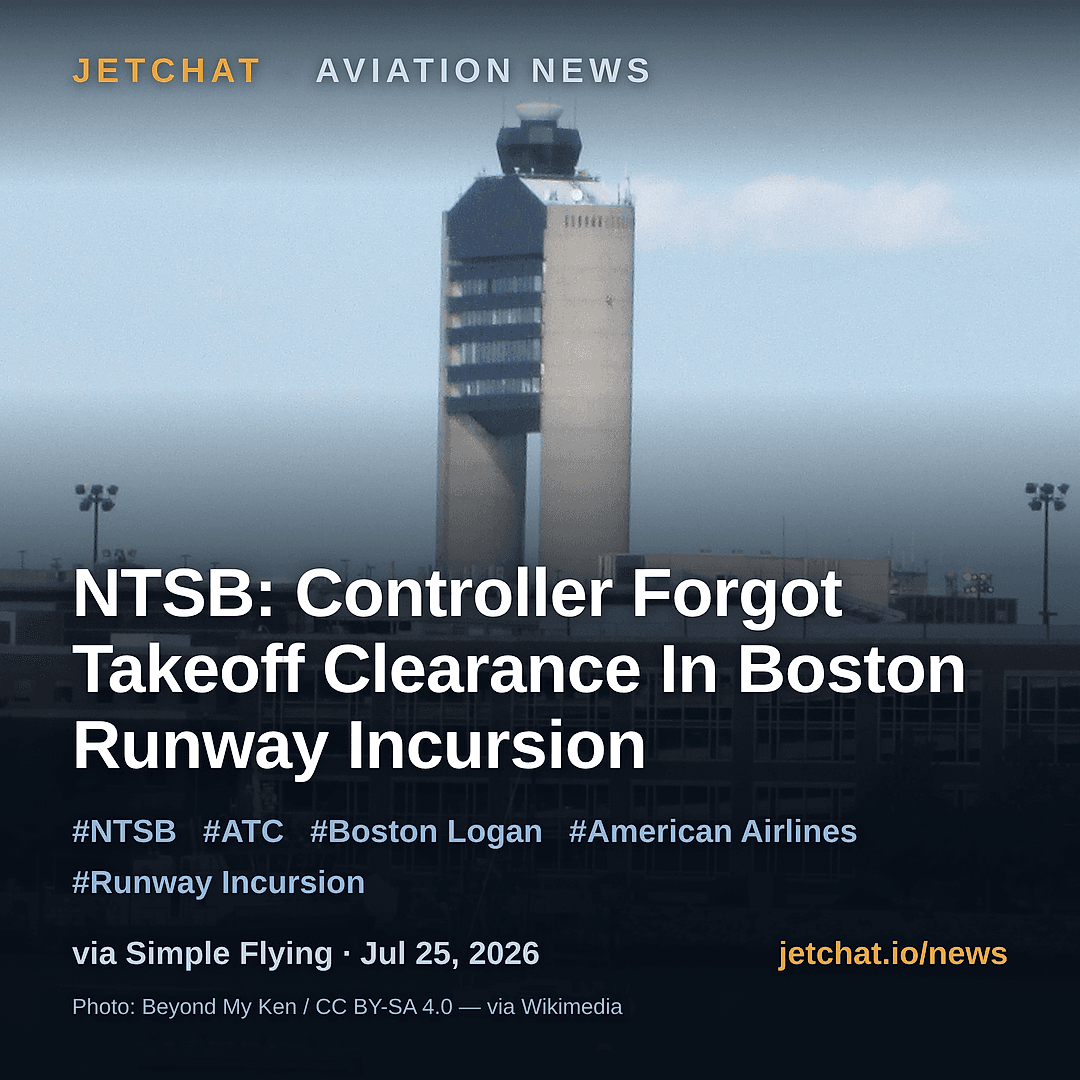
Photo: Beyond My Ken / CC BY-SA 4.0 — via Wikimedia (CC BY-SA 4.0) · source
A recently released preliminary report from the National Transportation Safety Board indicates that an air traffic controller at Boston Logan International Airport forgot they had cleared an American Airlines Boeing 737 for takeoff, leading to a close call with an arriving Delta Air Lines Airbus A319. The incident, which occurred late last month, was narrowly avoided thanks to the prompt reaction of the incoming Delta flight crew. This serves as a stark reminder for pilots to always maintain high situational awareness and independently verify clearances during surface operations.
Read the full take
The recent near-miss at Boston Logan International Airport highlights a vulnerability in the national airspace system that every aviator must respect: human error within air traffic control. According to preliminary findings from the National Transportation Safety Board, a local controller simply forgot that they had already issued a takeoff clearance to a departing American Airlines Boeing 737-800. As a result, the jet was rolling down the runway just as a Delta Air Lines Airbus A319 was on short final for an intersecting runway. Disaster was averted primarily because the Delta crew recognized the conflict and swiftly initiated a go-around. This event underscores an ongoing string of high-profile runway incursions at major commercial airports across the country, a trend that has drawn intense scrutiny from regulatory agencies. For student pilots, flight instructors, and airline veterans alike, the fundamental takeaway is clear. While air traffic controllers are highly trained professionals who keep the airspace organized and safe, they are not infallible. The ultimate safety of the flight rests on the flight deck. Maintaining an active mental picture of the airport environment is an absolute necessity. Pilots should continuously monitor tower frequencies to track the positions of other aircraft, visually scan active and intersecting runways before committing to a landing or takeoff roll, and never assume that a clearance guarantees a sterile runway. As the Federal Aviation Administration continues to investigate systemic solutions like advanced surface movement tracking technologies, the last line of defense remains an attentive, proactive crew ready to execute a go-around at the first sign of a conflict.