Aviation Groups Push Congress for $20B to Modernize ATC
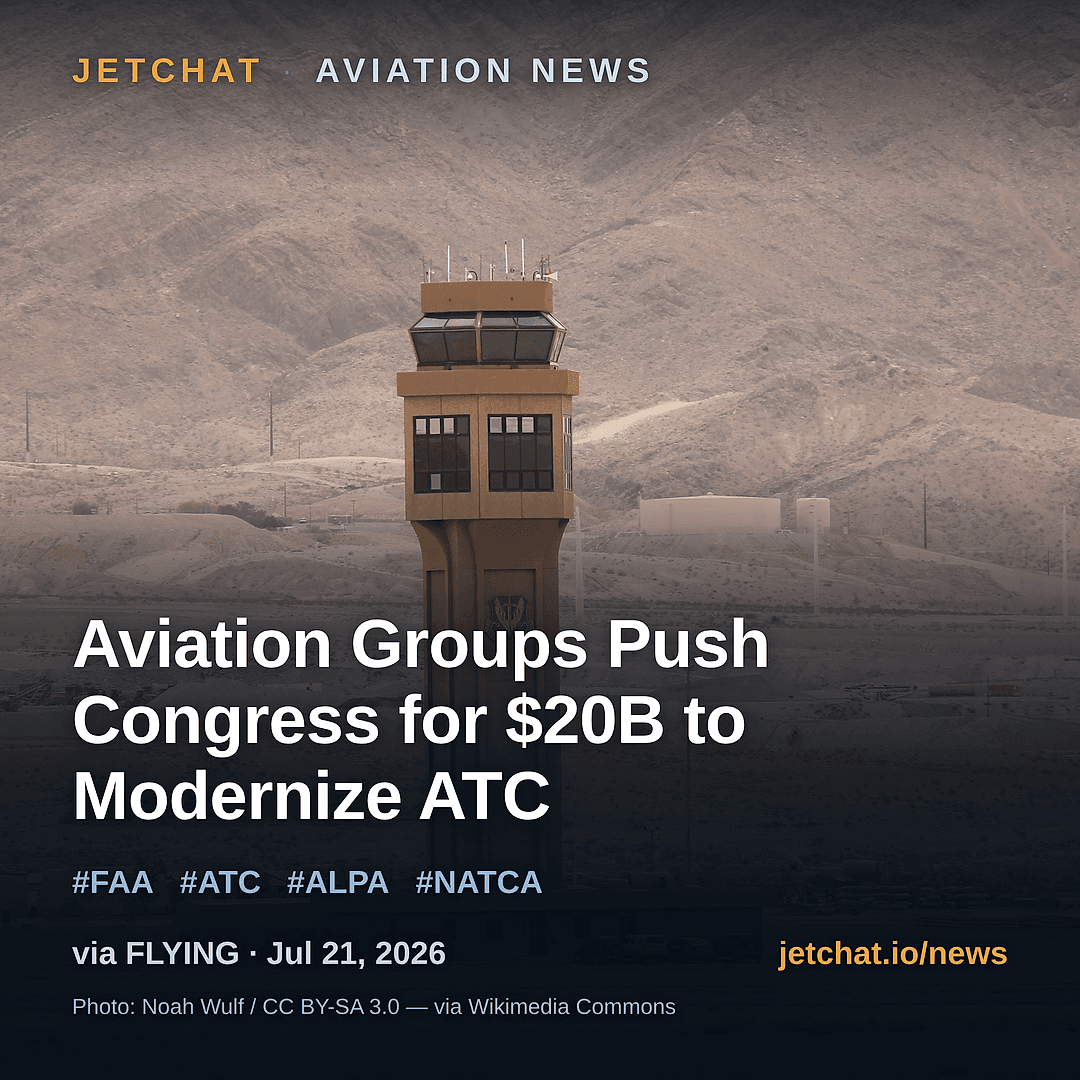
Photo: Noah Wulf / CC BY-SA 3.0 — via Wikimedia Commons (CC BY-SA 3.0) · source
Aviation leaders are petitioning lawmakers for an additional $20 billion to finish overhauling the national airspace infrastructure. Speaking at AirVenture, FAA, ALPA, and NATCA representatives emphasized that the previously allocated $12.5 billion is just a down payment on a $32 billion necessity. Without full funding, controllers must manage record traffic using a disjointed mix of obsolete and modern technology. For pilots, fully funding these upgrades means fewer systemic delays, clearer communication, and an enhanced margin of safety during peak operations.
Read the full take
The push for robust infrastructure funding highlights a critical juncture in the national airspace system. While recent legislative efforts provided an initial injection to jumpstart facility upgrades and equipment modernization, aviation officials argue that stopping there creates operational hazards. Leaving the upgrade cycle half-finished means controllers must navigate the friction between newly installed digital tools and legacy analog equipment. This technological divide exacerbates the strain on an already overworked controller workforce currently managing historic flight volumes. Union representatives point out that staffing shortages remain a severe headwind. Managing record-breaking traffic with only three-quarters of the optimal workforce requires mandatory overtime, leading to grueling schedules. This reality places a massive emphasis on both technological reliability and aeromedical reform regarding mental health, as controllers and pilots alike operate in a zero-tolerance environment for errors. The initial wave of funding has yielded tangible results, such as replacing aging copper wires with advanced fiber-optic networks and transitioning hundreds of radio sites to digital formats. However, the next phase demands a substantial $20 billion to harmonize automation platforms across all facilities and construct entirely new control towers. Securing this capital depends heavily on congressional action, which remains uncertain ahead of upcoming elections. For flight crews and student pilots navigating busy terminal areas, the success of this funding drive will dictate the reliability of the communication and surveillance networks they depend on every day.