Boeing Quietly Pays $3.1 Million FAA Fine for Quality Violations
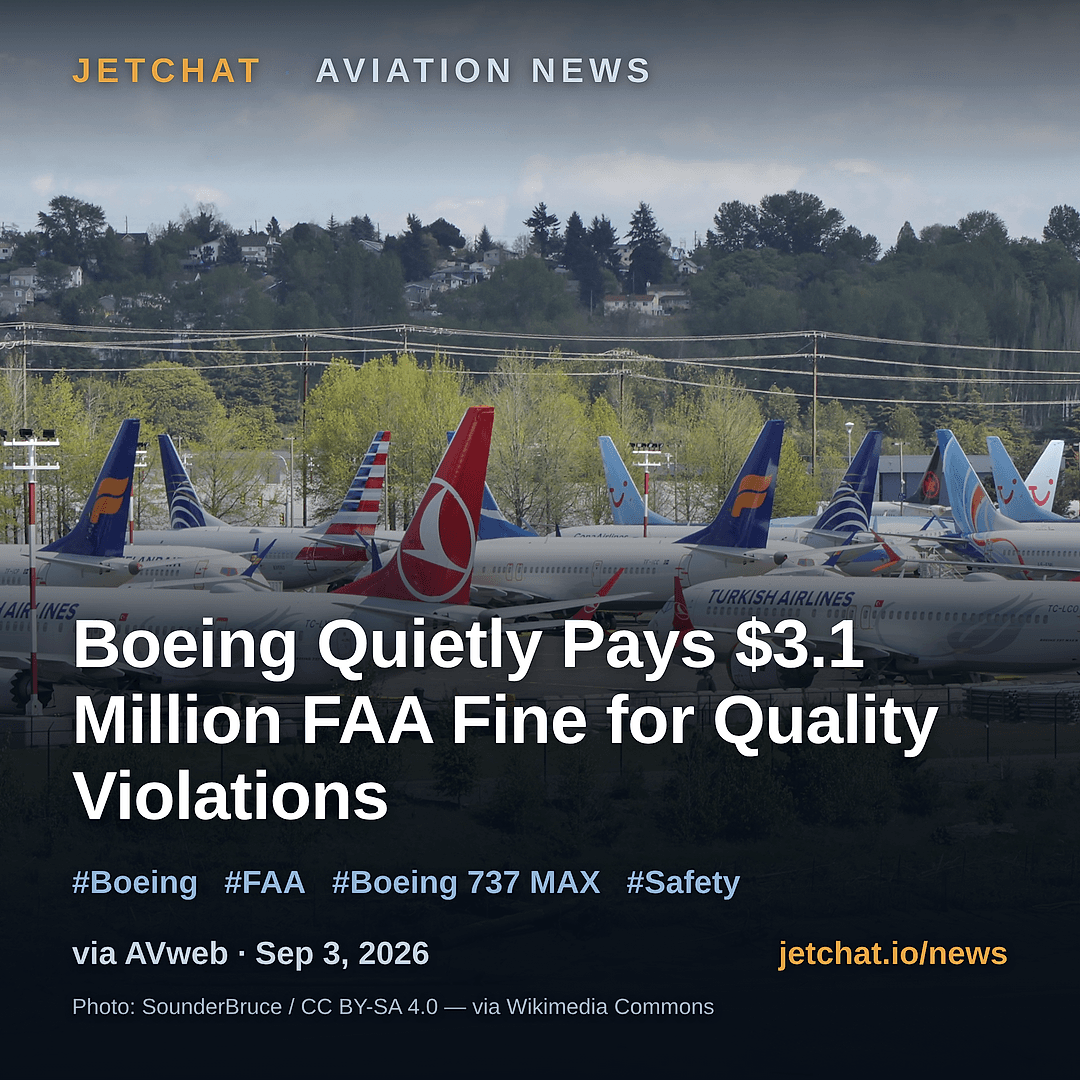
Photo: SounderBruce / CC BY-SA 4.0 — via Wikimedia Commons (CC BY-SA 4.0) · source
In January, Boeing settled a $3.1 million civil penalty levied by the FAA over widespread production and quality-control lapses. The fine stems from a sweeping investigation into both the manufacturer's Washington assembly plant and its primary fuselage supplier following a midair structural failure on an Alaska Airlines flight. While the agency recently eased caps on assembly rates, this maximum-allowable penalty underscores a shifting regulatory environment. For pilots climbing the seniority ladder, these ongoing manufacturer struggles directly impact fleet growth and upgrade timelines.
Read the full take
The recent revelation that Boeing satisfied a massive FAA civil penalty earlier this year highlights the sustained regulatory pressure on the aerospace giant. Following the highly publicized rapid decompression event aboard a 737 MAX 9, federal inspectors uncovered systemic shortcomings spanning multiple facilities, from the initial fuselage construction in Kansas to final assembly lines in Washington state. The penalty also addressed troubling reports of undue pressure placed on designated inspectors, a critical vulnerability in the delegated oversight model that has historically defined aircraft certification. For the aviation community, this financial penalty is more than just a regulatory slap on the wrist; it represents a fundamental reset in how federal authorities interact with major manufacturers. Historically, the FAA relied heavily on corporate self-reporting and internal compliance networks. The decision to enforce the maximum statutory fine signals an era of intensive, hands-on audits. What does this mean on the flight deck? Aspiring airline pilots and current crewmembers are watching these manufacturing bottlenecks dictate the pace of hiring and equipment upgrades. While federal regulators have recently begun allowing modest increases in production volume, the lingering effects of these quality assurance overhauls mean delivery backlogs will persist. Carriers are being forced to adjust their route networks and defer retirement of older airframes to compensate for delayed deliveries. As the industry watches Boeing work to restore confidence and reform its internal safety culture, pilots can expect the downstream effects on fleet logistics and career progression to continue for the foreseeable future.