JetChat Newsjetchat.io ↗

Topic

#Safety

← All briefs
safety

Chicago O'Hare Records Fifth Aircraft Tire Incident In Two Weeks

An American Airlines Boeing 737 suffered a double tire blowout while taxiing for departure at Chicago O'Hare International Airport on Wednesday afternoon. The aircraft, scheduled to fly to Charlotte, was immobilized on the taxiway following the sudden failure. Remarkably, this marks the fifth tire-related abnormality at the major Illinois hub over a span of just fourteen days. For flight crews operating in high-traffic environments, this cluster of events underscores the critical importance of rigorous preflight walkarounds and heightened situational awareness during all surface movements.

safety

Bulgaria dismantles vehicle-mounted GPS jammer disrupting Sofia airspace

Security forces in Bulgaria successfully located and dismantled a vehicle-mounted GPS jammer on August 21 that disrupted navigation signals across Sofia airspace for several days. Air traffic controllers noticed the interference when arriving and departing aircraft lost satellite reception near Sofia Airport. Flight operations continued without delay as crews safely transitioned to conventional ground-based navigational aids. For pilots operating in Eastern Europe, this incident highlights the critical importance of maintaining proficiency with traditional VOR and ILS procedures when GNSS signals are compromised.

safety

Aer Lingus Passenger Pleads Guilty to Flight Crew Interference

A passenger who forced an entire seven-person cabin crew to restrain him on a June transatlantic Aer Lingus flight has pleaded guilty to federal interference charges. James Bradley Noble assaulted a flight attendant and repeatedly disrupted the Dublin-to-Seattle flight, leading pilots to authorize the use of handcuffs. He now faces a maximum penalty of 20 years in prison and a $250,000 fine, although prosecutors are expected to recommend time served. For flight crews, the guilty plea reinforces the federal justice system's ongoing crackdown on severe inflight disruptions.

safety

E170 suffers severe overrun following deep tailwind touchdown

Preliminary reports indicate an Enugu Air Embraer 170 floated well past the halfway point of a wet Benin Airport runway before touching down, eventually sliding off the pavement and collapsing its gear. The flight crew pressed on with a tailwind approach despite deteriorating weather and known autobrake issues, crossing the threshold at nearly twice the standard height. While all 68 people evacuated safely, the destroyed twinjet serves as a harsh reminder for flight crews about the compounding dangers of unstabilized approaches, tailwinds, and wet runways.

safety

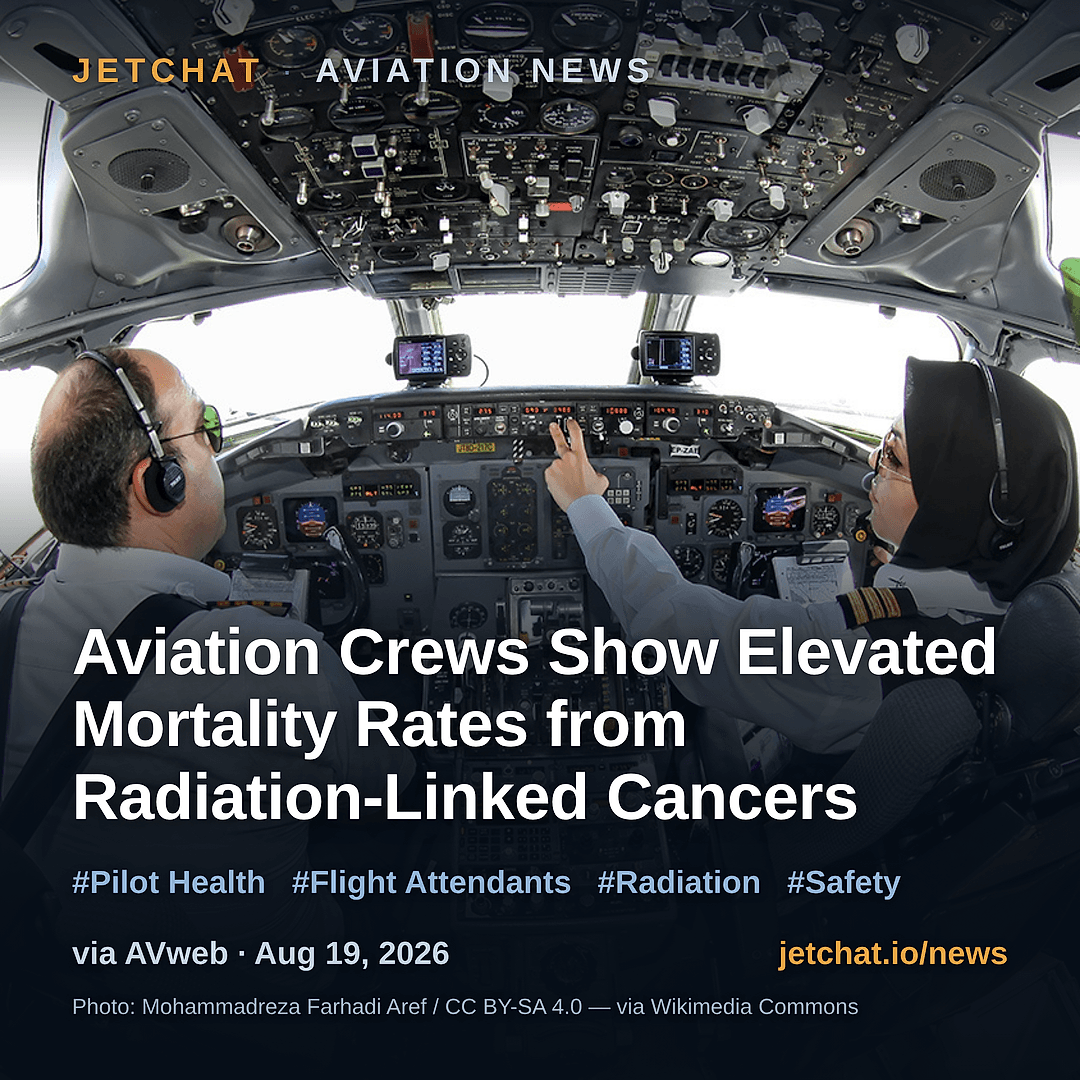
Aviation Crews Show Elevated Mortality Rates from Radiation-Linked Cancers

A recent analysis of U.S. mortality data published in JAMA Internal Medicine reveals that commercial flight crews suffer the highest mortality rates from radiation-linked malignancies across hundreds of professions. Reviewing millions of records from 2020 to 2024, researchers discovered that pilots face a significantly higher probability of dying from diseases like melanoma and leukemia compared to the average worker. For career aviators spending thousands of hours at high altitudes, these findings emphasize the critical need to prioritize aggressive preventative health screenings and routine dermatological checks.

safety

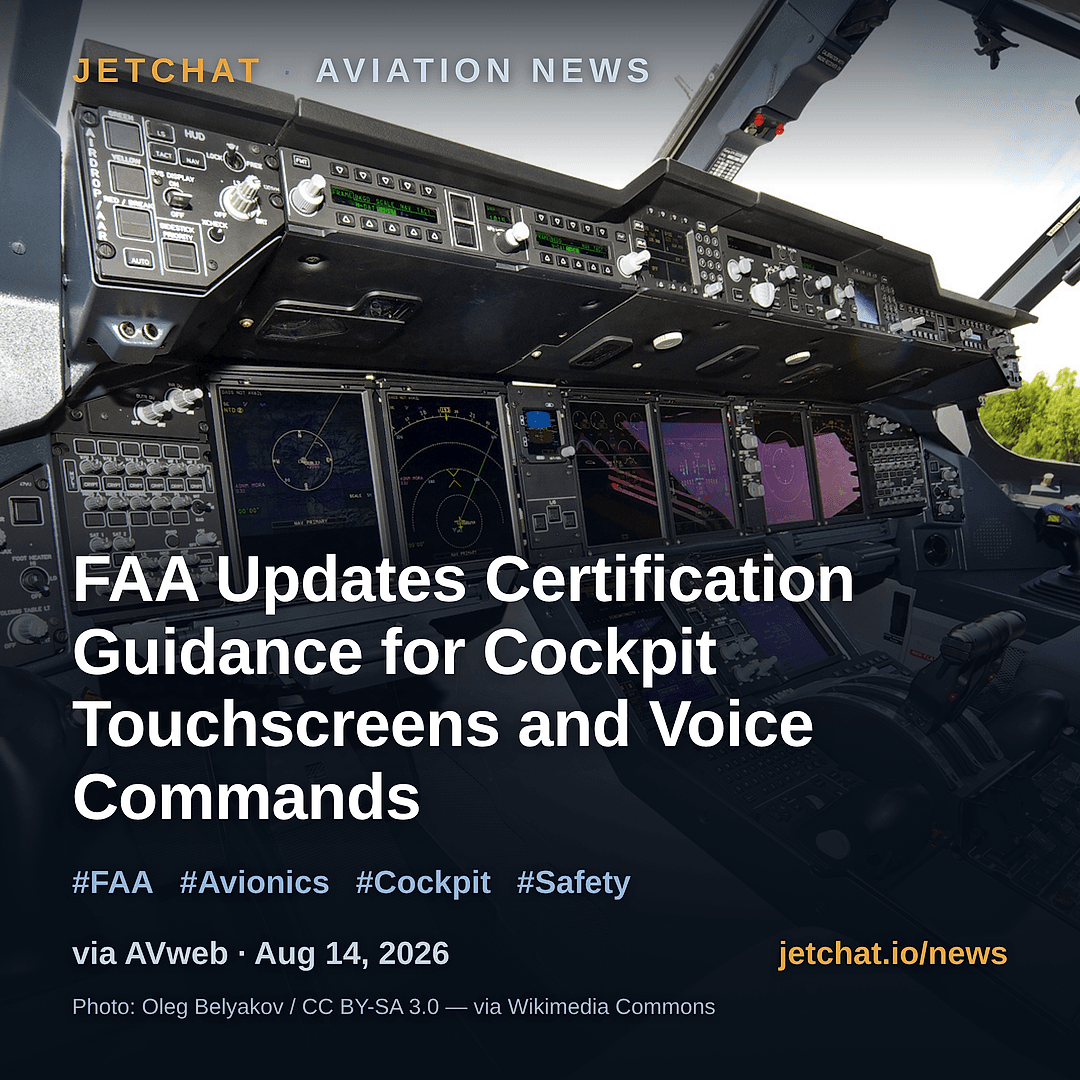
FAA Updates Certification Guidance for Cockpit Touchscreens and Voice Commands

The Federal Aviation Administration is seeking public comments through late September on updated certification guidelines for modern cockpit interfaces, including touchscreens and speech recognition. The proposed draft replaces a decade-old document, introducing strict standards for voice command success rates, manual control overrides, and touchscreen usability during turbulence. For pilots navigating increasingly digital flight decks, these proposed standards ensure that critical avionics remain reliably accessible when workload increases and that everyday cockpit hazards will not disable primary flight displays.

safety

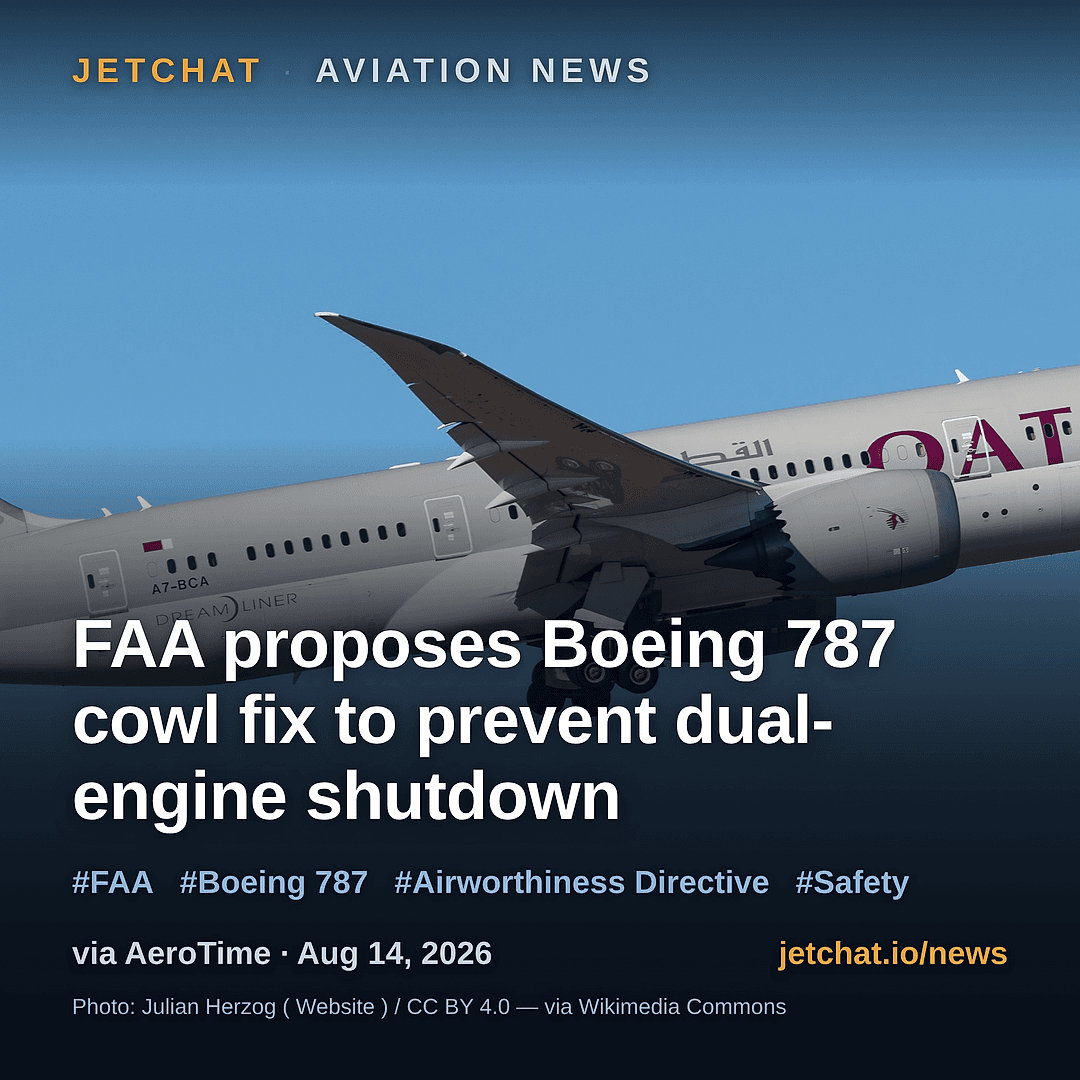
FAA proposes Boeing 787 cowl fix to prevent dual-engine shutdown

The FAA is proposing a new airworthiness directive for Boeing 787 Dreamliners equipped with Rolls-Royce Trent 1000 engines to address a shielding vulnerability. Boeing discovered that an uncontained failure in the left engine could launch debris into the right engine's oil lines, potentially triggering a catastrophic dual-engine shutdown. The rule would mandate inspections and part modifications for 22 affected US-registered aircraft. For pilots, this underscores the vital importance of system redundancy and the intense engineering scrutiny required to maintain safety in twin-engine operations.

safety

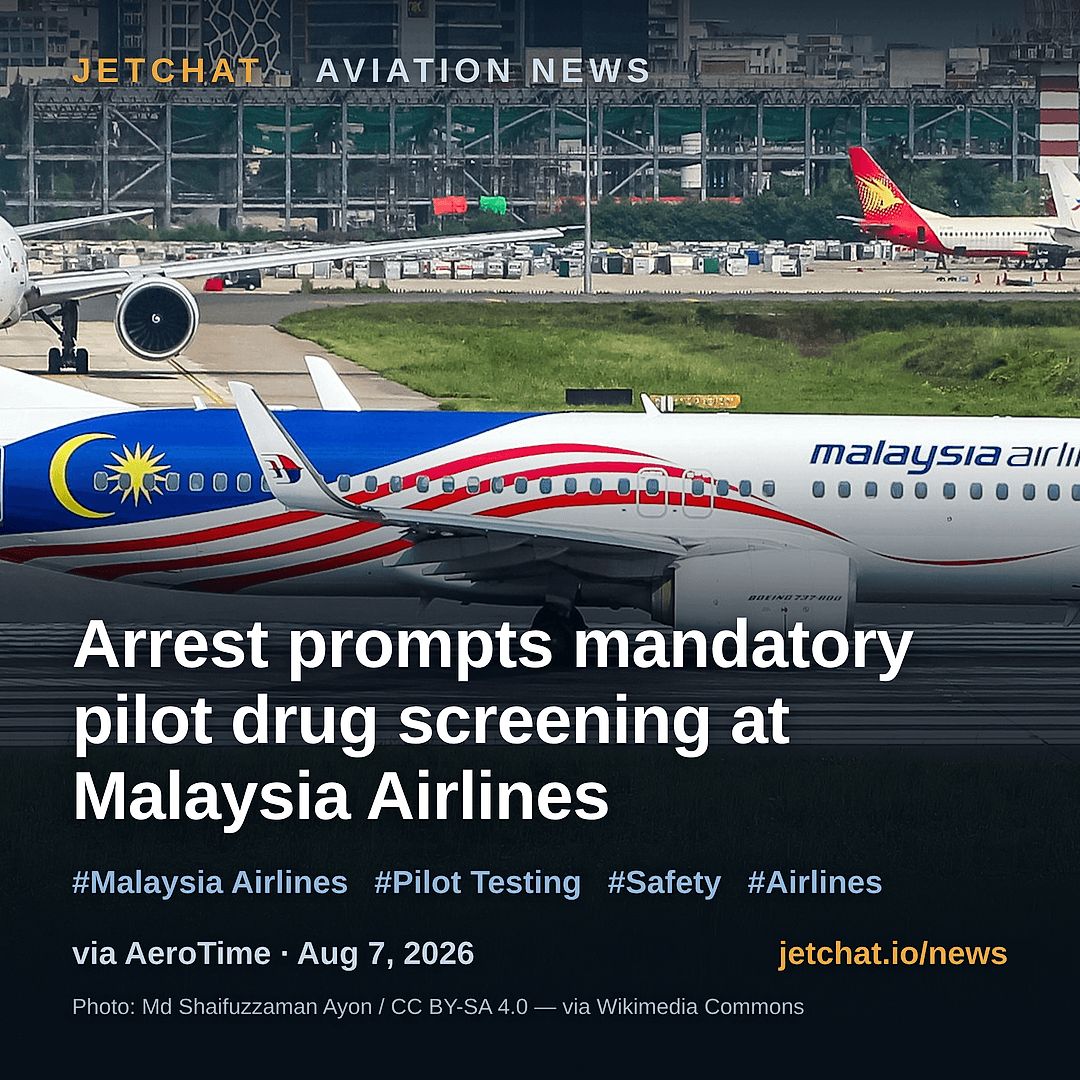
Arrest prompts mandatory pilot drug screening at Malaysia Airlines

Malaysia Airlines is initiating mandatory drug screenings for its entire roster of 1,260 pilots following the arrest of a second officer in Indonesia on suspected smuggling charges. Authorities in Jakarta allege the off-duty pilot, who was traveling in the jumpseat, carried 25 kilograms of illicit substances in his luggage. The testing program will eventually extend to all cabin crew members as well. For professional aviators, this incident underscores how individual off-duty conduct can instantly trigger sweeping, fleet-wide policy changes and heightened regulatory scrutiny across an entire airline.

safety

Air India 300-Foot Altitude Drop Points to Technical Fault

An Air India flight recently experienced a sudden 300-foot loss of altitude that resulted in cabin damage and injuries to seventeen passengers. While the incident was initially attributed to severe weather phenomena, the carrier has since revised its public statements regarding the cause. Aviation safety authorities are now reportedly investigating the possibility of a transient systems malfunction rather than atmospheric disturbances. For flight crews, this underscores the importance of not immediately assuming turbulence is the culprit when sudden altitude deviations occur, as automation anomalies require distinct troubleshooting procedures.

safety

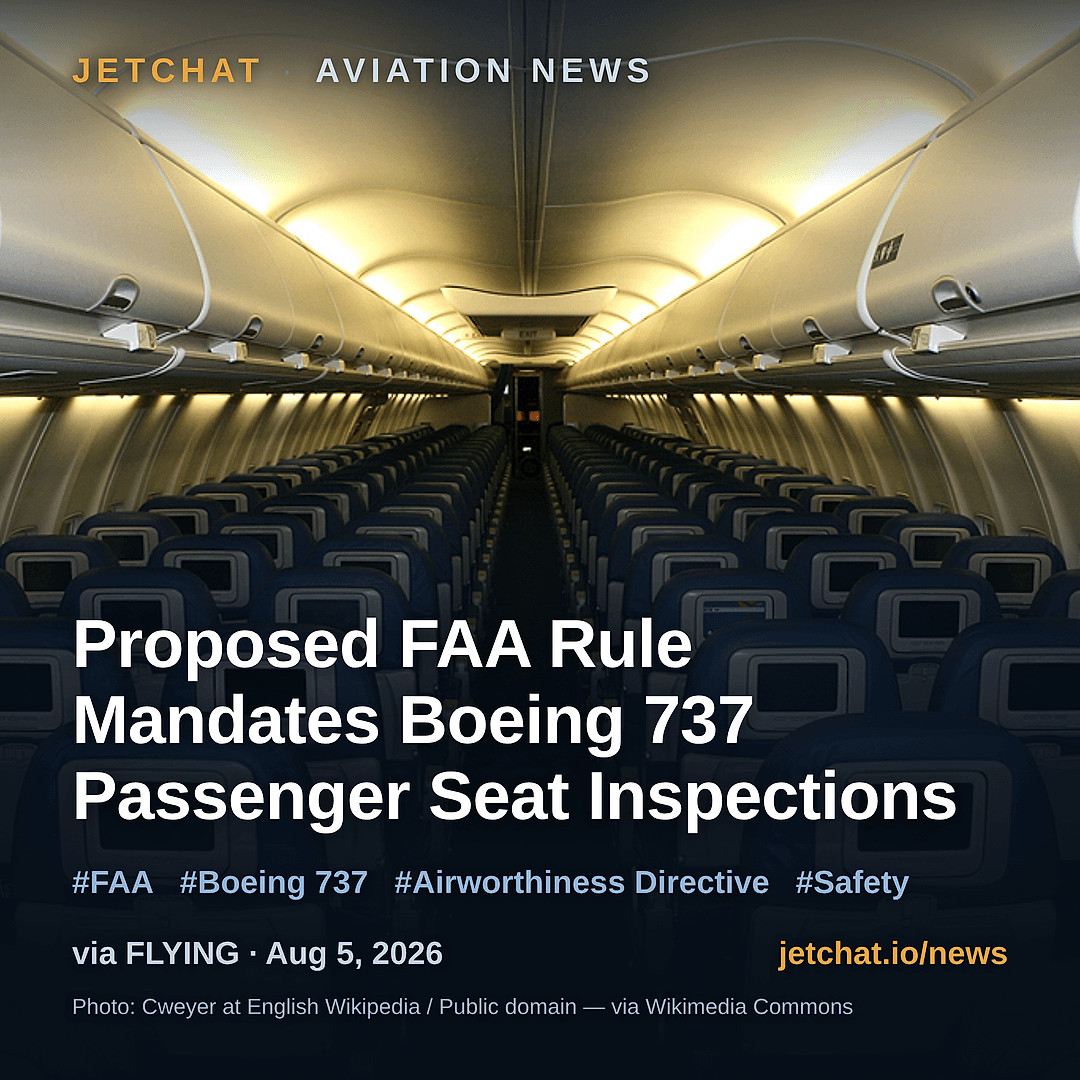
Proposed FAA Rule Mandates Boeing 737 Passenger Seat Inspections

The Federal Aviation Administration is proposing an airworthiness directive to mandate inspections of passenger seats on hundreds of Boeing 737 MAX aircraft. The agency warns that improperly secured seat tracks could cause assemblies to break loose during severe turbulence or an emergency landing, potentially injuring occupants and obstructing evacuation routes. For commercial crews and flight instructors alike, this development underscores the critical importance of rigorous preflight cabin checks and maintaining strict adherence to manufacturing safety tolerances.

safety

Virgin Atlantic Grounds 787 After Fatal Heathrow Maintenance Accident

Virgin Atlantic has removed a Boeing 787-9 from active service at London Heathrow Airport following a fatal workplace accident. A company maintenance engineer died after reportedly being crushed while performing duties on the widebody aircraft. Authorities and the airline have launched a comprehensive investigation to determine the exact sequence of events that led to the tragedy. For flight crews and ground personnel alike, this devastating event highlights the severe risks inherent in aircraft maintenance and the critical importance of situational awareness on the ramp.

safety

Passenger power bank ignites in A320 overhead bin after landing

A China Eastern Airlines Airbus A320 crew successfully extinguished a lithium-ion power bank fire that ignited inside an overhead bin shortly after landing in Guiyang, China, on July 24, 2026. The device caught fire as the aircraft taxied to the gate, prompting flight attendants to intervene before airport fire rescue arrived. No passengers were injured during the event. This incident serves as a critical reminder for flight crews to maintain strict vigilance regarding portable electronic devices and thermal runaway hazards in the cabin.

safety

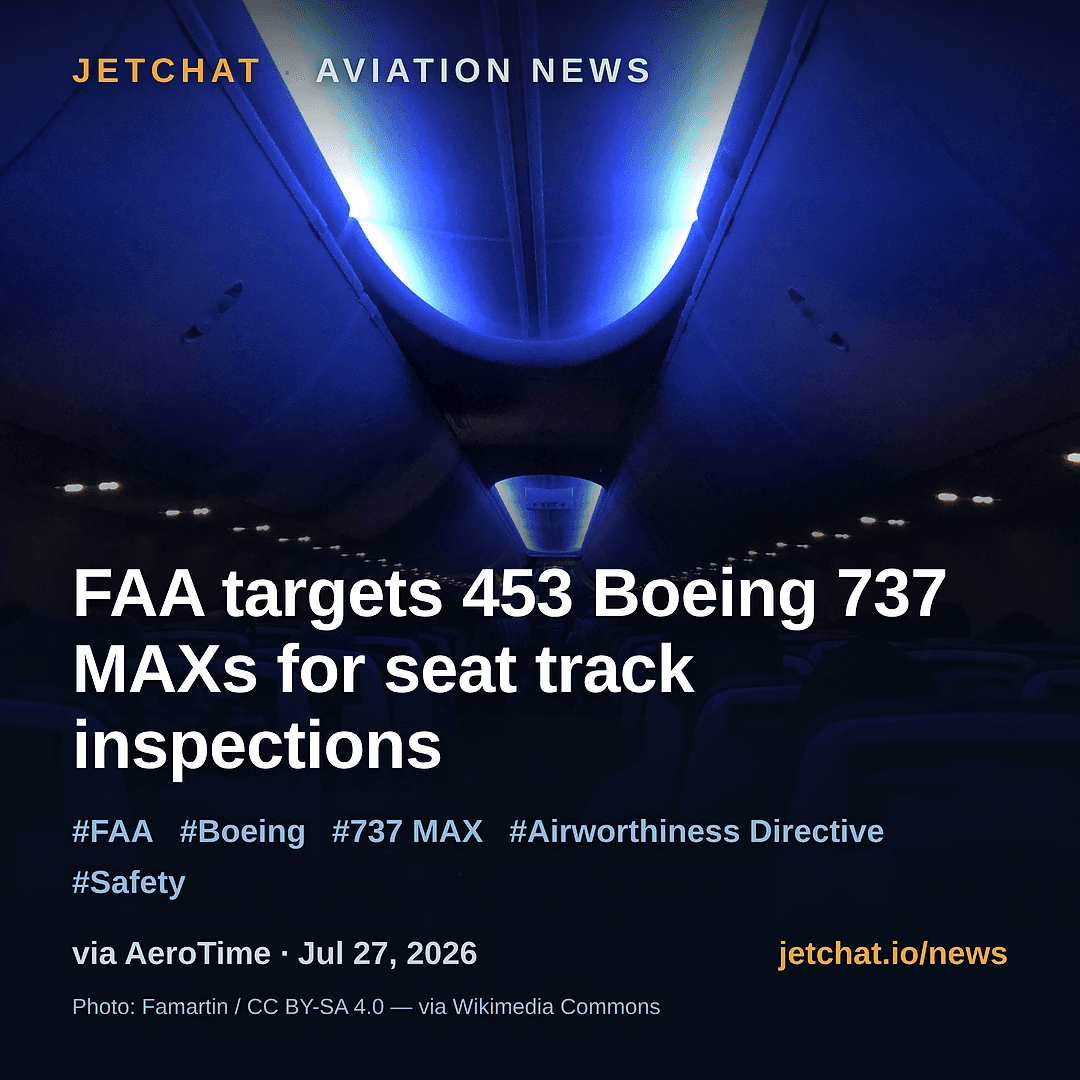
FAA targets 453 Boeing 737 MAXs for seat track inspections

The Federal Aviation Administration is proposing a new airworthiness directive for 453 Boeing 737 MAX aircraft to address improperly installed passenger seats. Regulators discovered that certain seat track plungers may not be fully engaged, creating a risk of seats breaking loose during severe turbulence or emergency landings. The proposed rule mandates detailed inspections across MAX 8, MAX 9, and MAX 8200 variants. For flight crews, this potential hazard underscores the critical importance of thorough cabin security checks during preflight preparations.