Proposed FAA Rule Mandates Boeing 737 Passenger Seat Inspections
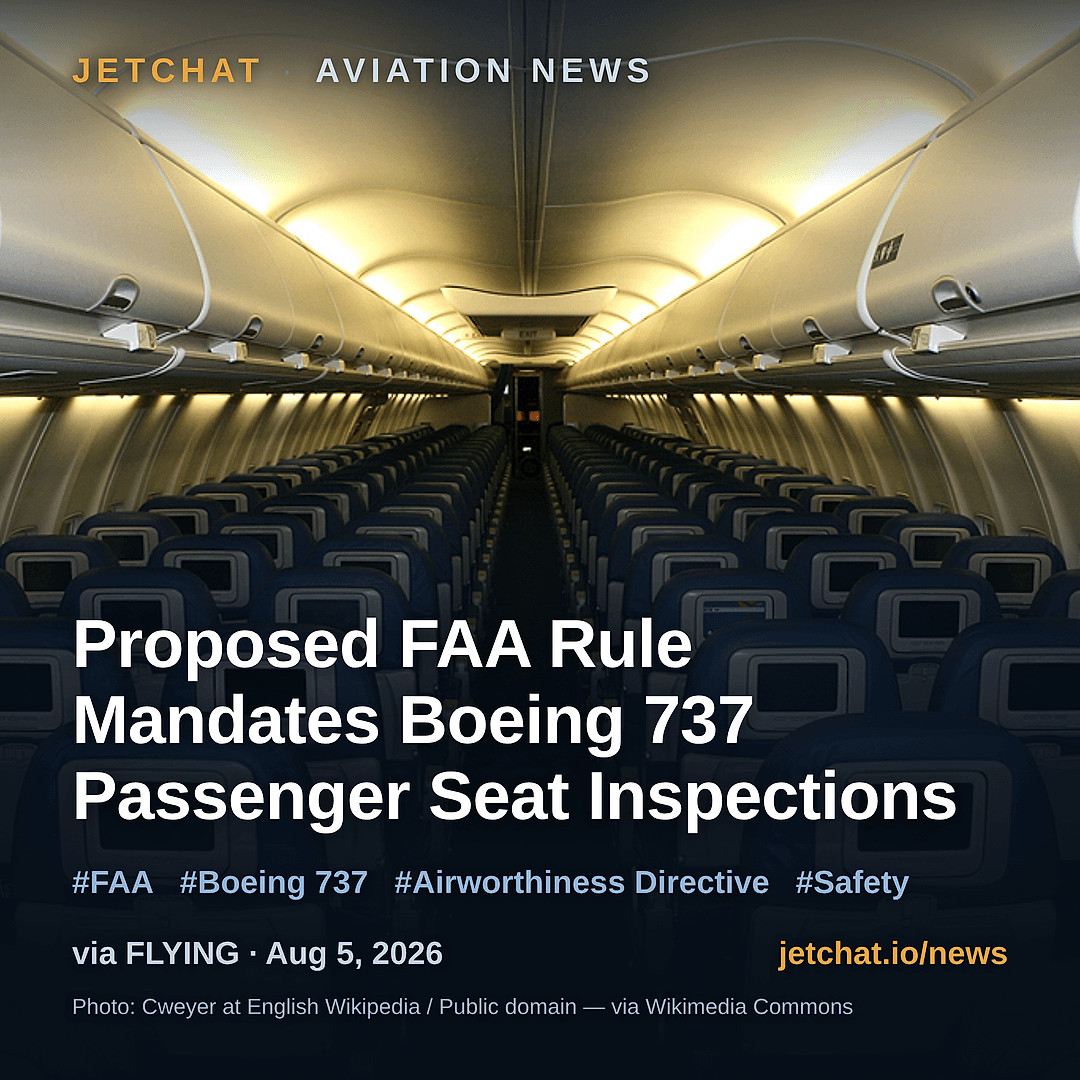
Photo: Cweyer at English Wikipedia / Public domain — via Wikimedia Commons (Public domain) · source
The Federal Aviation Administration is proposing an airworthiness directive to mandate inspections of passenger seats on hundreds of Boeing 737 MAX aircraft. The agency warns that improperly secured seat tracks could cause assemblies to break loose during severe turbulence or an emergency landing, potentially injuring occupants and obstructing evacuation routes. For commercial crews and flight instructors alike, this development underscores the critical importance of rigorous preflight cabin checks and maintaining strict adherence to manufacturing safety tolerances.
Read the full take
While this proposed rulemaking formally affects airline maintenance departments, it serves as a potent reminder for aviators at all levels about the downstream effects of production oversights. The Federal Aviation Administration specifically targets the Boeing 737-8, 737-9, and high-density 737-8200 variants, citing concerns that aft fitting shear plungers on passenger seats might not be fully engaged. If an aircraft hits extreme turbulence or undergoes a forced landing, these unanchored seats could detach. Loose cabin equipment instantly transforms from a passenger comfort item into a deadly projectile or an evacuation blockade. Boeing has reportedly already addressed the manufacturing process and issued guidance to operators, meaning most active aircraft have likely been inspected. However, the move to codify these checks into an airworthiness directive highlights the regulatory agency's current zero-tolerance posture toward Boeing's assembly line discrepancies. Total compliance costs across the estimated four hundred and fifty-three domestic airplanes could top two and a half million dollars, though warranty claims might absorb the financial hit for carriers. For aspiring airline pilots observing the industry, this situation emphasizes how heavily commercial aviation relies on a flawless chain of safety. A single skipped step on the factory floor can prompt millions of dollars in mandated inspections and introduce severe in-flight risks. The public comment period remains open into early September, setting the stage for the final directive and ensuring that rigorous oversight remains a permanent fixture of modern fleet management.