Proposed Airbus A220-500 stretch could challenge the A320neo
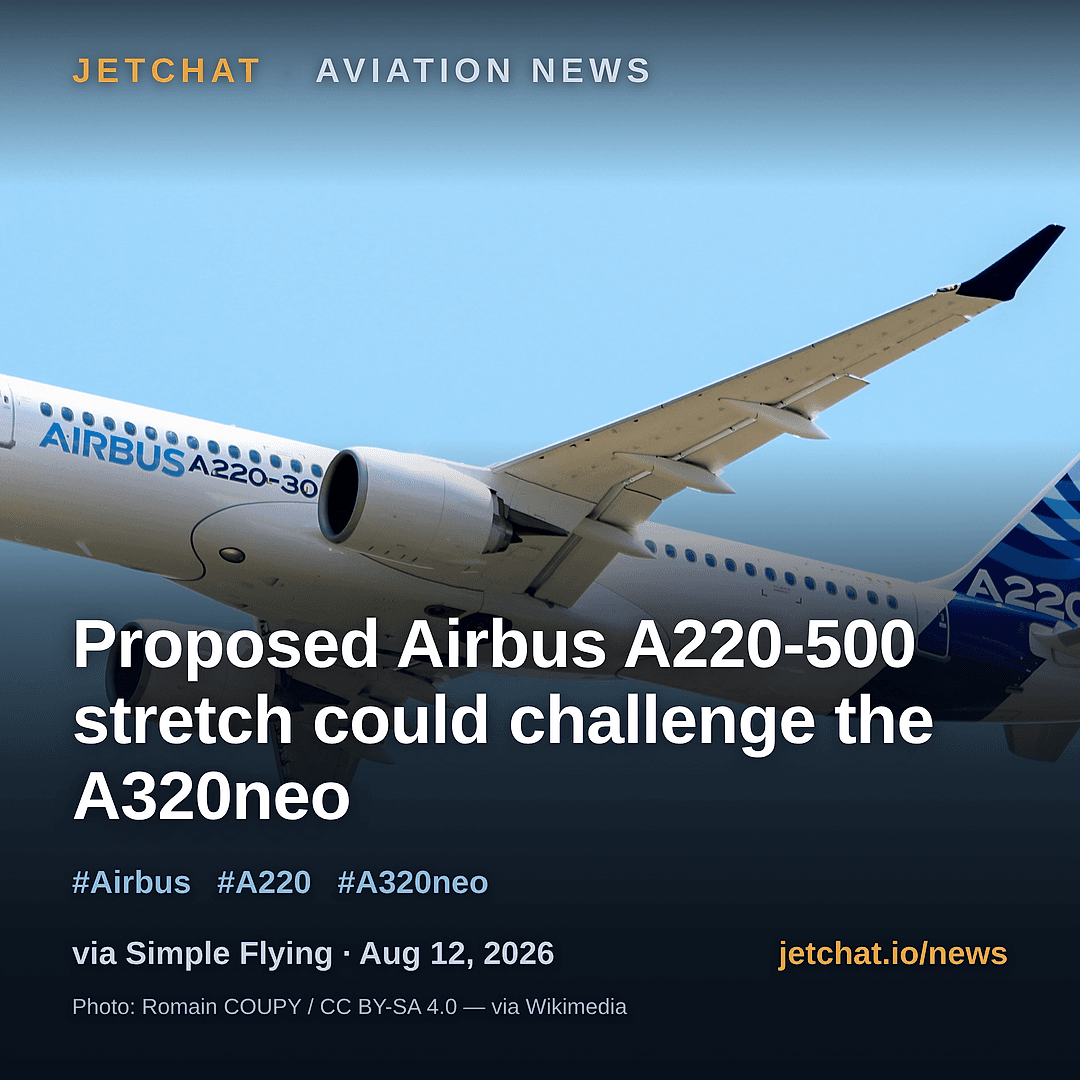
Photo: Romain COUPY / CC BY-SA 4.0 — via Wikimedia (CC BY-SA 4.0) · source
The European manufacturer is exploring a stretched, 180-seat version of its popular A220 narrowbody. Dubbed the A220-500, this proposed variant aims to maximize efficiency but could end up cannibalizing sales of the company's own best-selling A320neo family. While the A320 series has been a massive revenue driver for decades, airline demand for lighter, next-generation composite aircraft continues to grow. For aspiring airline pilots, this potential shift in fleet composition signals that A220 type ratings might become just as valuable as the ubiquitous A320 certification.
Read the full take
The aviation industry is closely watching Airbus as it navigates a fascinating internal dilemma: whether to launch a larger A220-500 and risk cutting into the market share of its immensely profitable A320neo. The current A220 family, originally designed by Bombardier as the CSeries, has earned high marks from airlines for its fuel efficiency, passenger comfort, and advanced composite construction. Expanding the airframe to accommodate around 180 passengers would place it squarely in the same capacity category as the standard A320neo. For Airbus, the trade-off is complex. The A320neo family remains a foundational pillar of its global revenue, boasting a massive backlog and a highly established pilot training pipeline worldwide. However, an A220-500 would likely offer superior operating economics due to its clean-sheet, lighter design compared to the decades-old A320 airframe. If Airbus delays the launch, it risks leaving a gap that competitors might exploit. If it proceeds, airlines currently operating legacy A320s might transition directly to the stretched A220 instead of the neo. For the pilot community, particularly those planning long-term airline careers, this evolution represents a potential shift in standard fleet paths. The A320 type rating has long been the gold standard for narrowbody jobs outside of the Boeing 737 ecosystem. Should the A220-500 launch and eventually replace the A320neo as the preferred 150-to-180-seat workhorse, commercial aviators will see a transition toward A220 flight decks. Watching how Airbus manages this transition will provide key insights into the narrowbody fleet strategies of the next decade.