Ryanair Affirms Fleet Safety After Uncontained Engine Failure Shatters Window
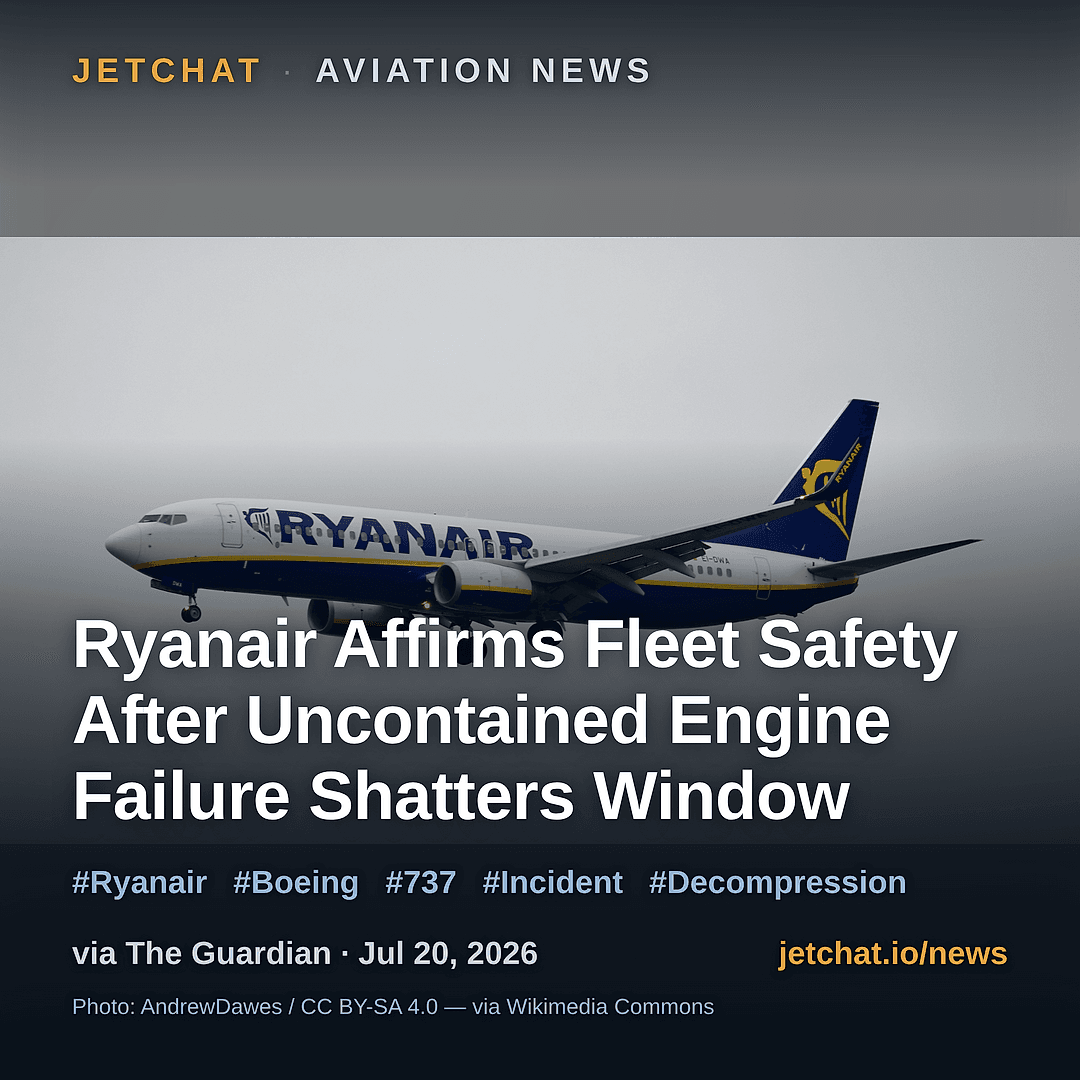
Photo: AndrewDawes / CC BY-SA 4.0 — via Wikimedia Commons (CC BY-SA 4.0) · source
Following a harrowing mid-flight emergency where a passenger was nearly pulled through a shattered window, Ryanair has publicly reaffirmed the safety of its fleet. The incident occurred on a flight from Greece to Germany when an engine failure propelled debris into the cabin fuselage, destroying an acrylic window pane. The flight crew successfully managed the rapid decompression, securing the passenger and landing safely. This serves as a vital reminder for pilots about the critical importance of immediate oxygen mask deployment and rapid descent procedures during explosive decompression events.
Read the full take
The recent uncontained engine failure on a Ryanair flight highlights a rare but severe risk in commercial aviation. When an engine component breaches its casing, the resulting high-velocity debris can act like shrapnel, posing catastrophic threats to the aircraft critical systems and pressurized cabin. In this specific event en route to Germany from Greece, debris shattered a passenger window, leading to a violent rapid decompression that nearly pulled a passenger outside the aircraft. For aviation professionals, this incident underscores the life-saving value of rigorous emergency training. The flight crew successfully recognized the decompression, donned their oxygen masks, initiated communication, and executed an emergency descent, which was paramount in preventing a fatal outcome. Uncontained engine failures challenge aircraft certification standards and maintenance protocols, drawing intense scrutiny from regulatory bodies. Investigators will now focus on the engine maintenance history, metallurgical analysis of the failed components, and the structural containment rings. For student pilots and seasoned captains alike, this serves as a sobering case study. It reinforces why simulator sessions relentlessly drill explosive decompression and single-engine operations. Moving forward, the industry will closely watch the investigative findings to see if airworthiness directives regarding engine fan blade inspections or window structural testing require immediate updates to prevent similar events.