FAA mandates 737 MAX door checks, 787 engine cowl updates
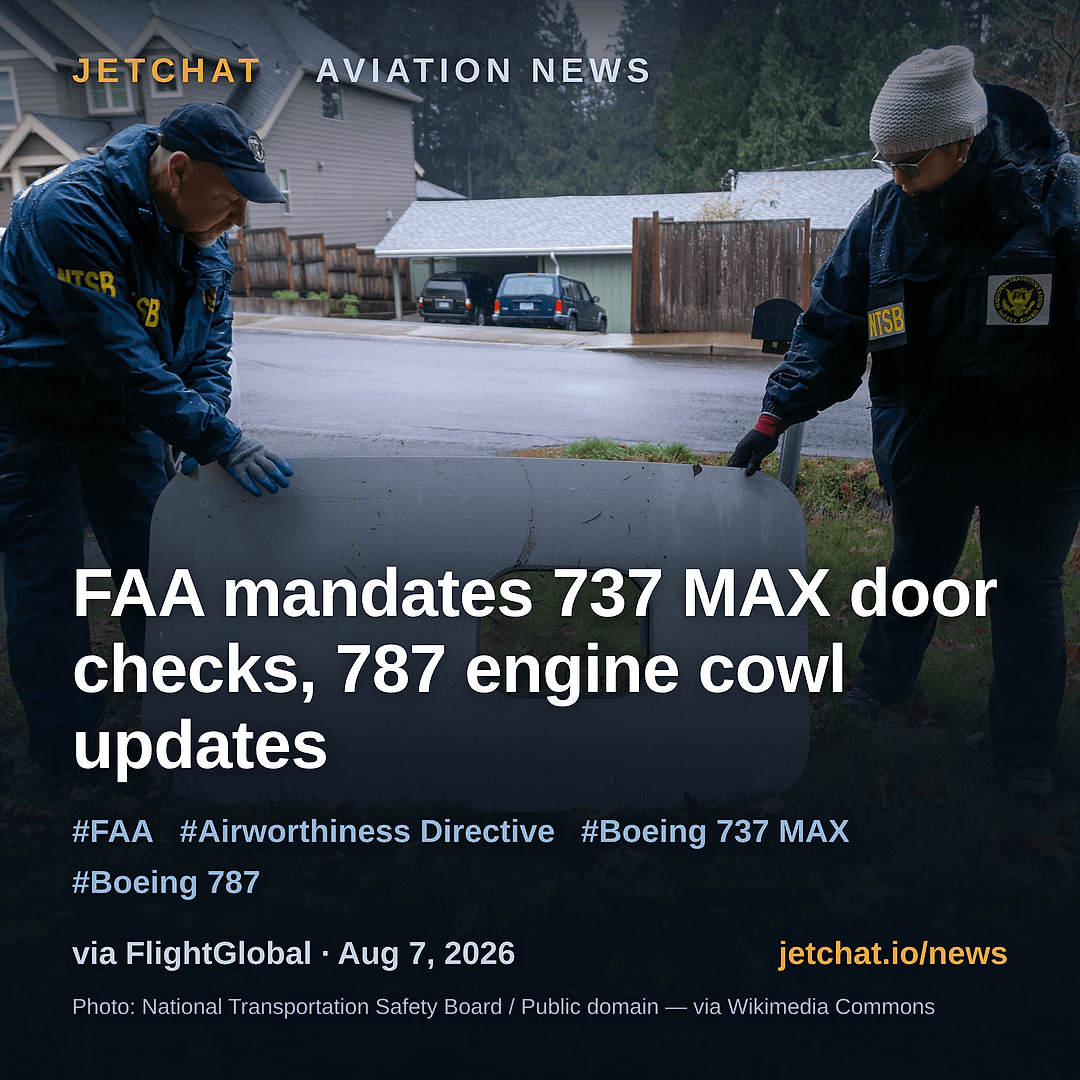
Photo: National Transportation Safety Board / Public domain — via Wikimedia Commons (Public domain) · source
The FAA has issued new regulatory directives targeting Boeing aircraft, mandating structural checks on the 737 MAX and proposing engine cowl updates for certain 787 Dreamliners. Operators must examine forward right-side doorframe components on the MAX for potential stress fracturing, a known issue on older 737 variants. Additionally, a proposed rule addresses a vulnerability where an uncontained left-engine failure could critically damage the right-side Rolls-Royce Trent 1000. For commercial crews, these directives highlight the ongoing operational scrutiny of legacy design inheritance and cross-engine debris risks.
Read the full take
Aviation safety regulators are demonstrating a highly proactive approach with these latest airworthiness directives, emphasizing preventative maintenance over reactive action. The 737 MAX doorframe inspections illustrate how deeply legacy engineering decisions affect modern variants. The components in question, known as bear straps, reinforce the upper corners of the forward right-side door. While no current-generation MAX airframes have shown signs of stress fracturing in this area, the foundational architecture is virtually identical to older generations. Because both the 737 Classic and Next Generation fleets required similar inspections over the past decade, the FAA is ensuring the MAX fleet does not develop the same metal fatigue under high structural loads. Meanwhile, the 787 Dreamliner proposal addresses a rare but catastrophic threat to extended-range twin-engine operations. If a left-mounted Rolls-Royce Trent 1000 powerplant suffers an uncontained turbine failure, high-velocity shrapnel could theoretically traverse the aircraft and penetrate the inboard side of the right engine. Regulators discovered that the right engine cowl lacks the structural shielding necessary to protect critical oil lines and pressure sensors from such a lateral impact. A debris strike could subsequently shut down the surviving engine, resulting in a total loss of thrust. Although replacing the right-side engine cowls will be mandatory if the rule is finalized, the domestic impact remains minimal. The vast majority of United States carriers opted for General Electric turbofans on their Dreamliner orders, leaving only a couple dozen domestically registered airframes subject to this specific Rolls-Royce vulnerability. Nonetheless, both regulatory actions underscore a relentless industry focus on mitigating inherited design flaws before they compromise flight safety.