JetChat Newsjetchat.io ↗

JetChat Aviation News

Short, human-curated aviation briefs for pilots and enthusiasts.

safety

Two American Airlines 777s Divert Successively on London Route

An American Airlines transatlantic flight originating in Massachusetts experienced two consecutive diversions due to unrelated mechanical failures on July 20. The initial Boeing 777-200ER relocated to New York after its landing gear failed to stow, prompting a swap to a second airframe which subsequently aborted its Atlantic crossing over an engine malfunction and returned to the original departure airport. For professional aviators, this unusual sequence highlights the logistical complexities of widebody dispatch reliability and the critical nature of standard operating procedures during cascading operational disruptions.

industry

Turbotech micro-turbine secures production deals for new light aircraft

A French-designed micro-turbine is transitioning from experimental prototypes to production airframes, securing agreements with manufacturers like Elixir Aircraft and CubCrafters. Turbotech’s regenerative engine captures exhaust heat to pre-warm incoming air, reducing fuel consumption to levels comparable with traditional piston powerplants. Offering multi-fuel capability, digital push-button starts, and a projected 3,000-hour time between overhauls, this technological shift promises flight schools and backcountry pilots significantly simplified engine management and lower maintenance downtime.

ga training

ATP JETS Inks Deal for Boeing 737NG Manuals and Simulators

ATP Flight School’s Part 142 training division has secured a licensing agreement with Boeing to utilize the manufacturer's official 737NG technical publications. Announced during EAA AirVenture, the deal also grants ATP JETS students access to Boeing’s Miami-based simulators for Airline Transport Pilot Certification Training Program and 737NG type rating courses. This marks the first time Boeing has licensed its 737NG course materials to an independent Part 142 center. For aspiring airline pilots, this means transitioning to the flight deck with direct exposure to authentic, OEM-standard procedures and high-fidelity simulator environments.

safety

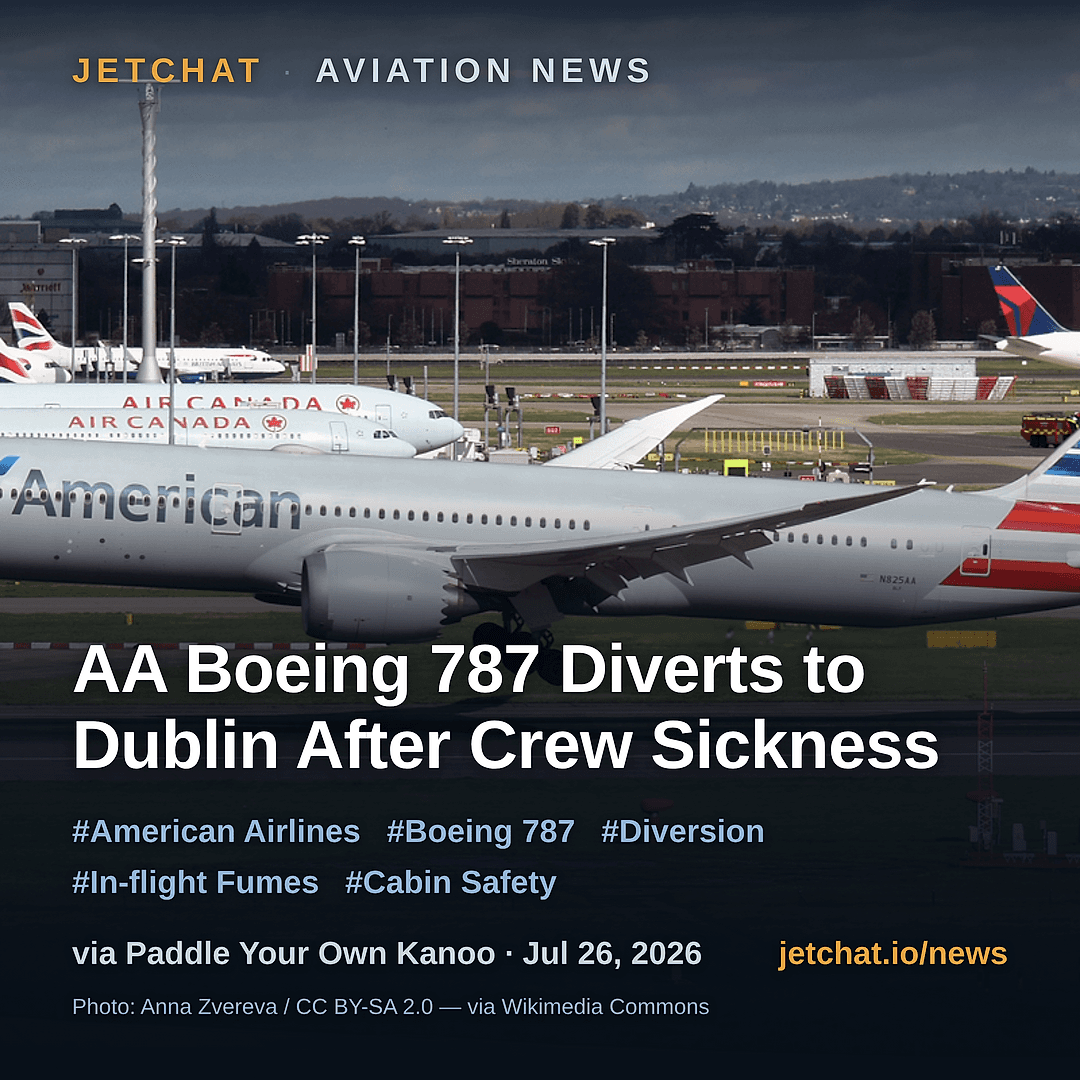
AA Boeing 787 Diverts to Dublin After Crew Sickness

An American Airlines Boeing 787-9 traveling from Rome to Philadelphia diverted to Dublin on Saturday when six flight attendants simultaneously reported dizziness and general illness. The aircraft was over the Atlantic Ocean roughly three hours into the flight before pilots initiated the diversion due to the medical emergency. With no replacement crew available in Ireland, the transatlantic leg was canceled. For flight crews, this incident highlights the subtle onset of environmental anomalies in flight and the importance of monitoring physiological symptoms among active crew members.

safety

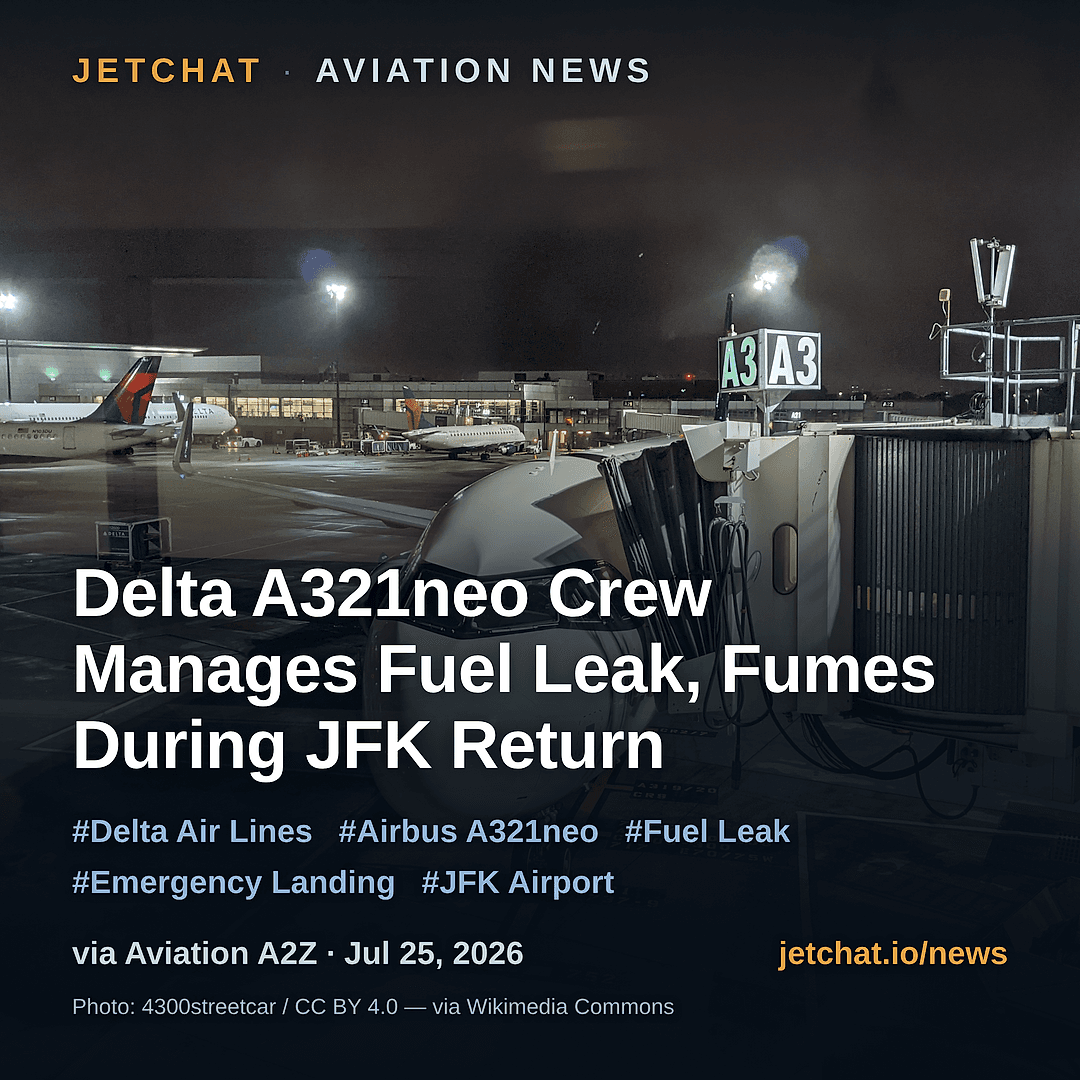
Delta A321neo Crew Manages Fuel Leak, Fumes During JFK Return

A Delta Air Lines Airbus A321neo bound for San Juan made an emergency return to New York's JFK airport after the flight crew detected a fuel leak and cockpit fumes. Capping their climb at 23,000 feet, the pilots donned oxygen masks and coordinated an overweight landing on Runway 31L without the use of thrust reversers. The aircraft safely vacated the runway where emergency crews inspected it for fire and overheating brakes. This incident highlights the critical importance of crew resource management when compounding failures escalate approach workloads.

safety

Aeroméxico Equips 737 Fleet With Honeywell Runway Collision Alerts

Aeroméxico is upgrading its Boeing 737 fleet with Honeywell surface alert technology to prevent runway incursions. The system utilizes real-time data to visually and aurally warn flight crews if they are on a collision course with another aircraft on the runway. As airport congestion increases globally, this cockpit-based technology provides a critical final layer of defense for pilots navigating complex taxiways and active runways.

safety

Eleven Survive Kenmore Air DHC-3 Otter Crash in San Juans

A Kenmore Air de Havilland DHC-3 Otter carrying 11 people crashed near Washington's Sucia Island on Thursday, with all aboard surviving despite the aircraft catching fire. The floatplane was en route from Seattle to Roche Harbor when it went down along the shoreline, leaving occupants with non-life-threatening injuries including broken bones and lacerations. For pilots operating in maritime environments, this accident underscores the critical importance of swift egress procedures and emergency preparedness during over-water operations near unforgiving terrain.

safety

Ryanair Captain Fired Over Crew Rest Extension, Union Protests

A Barcelona-based Ryanair captain was reportedly terminated after utilizing European Aviation Safety Agency provisions to extend a cabin crew's minimum rest period following operational delays. Spain's SEPLA pilots union strongly condemned the dismissal, arguing the airline penalized a commander for exercising legal authority to mitigate fatigue. The union is actively pursuing legal action for reinstatement. This dispute matters to pilots because it highlights the tension between operational scheduling pressures and a captain's ultimate authority to manage fatigue without fear of corporate retaliation.

safety

NTSB: Controller Forgot Takeoff Clearance In Boston Runway Incursion

A recently released preliminary report from the National Transportation Safety Board indicates that an air traffic controller at Boston Logan International Airport forgot they had cleared an American Airlines Boeing 737 for takeoff, leading to a close call with an arriving Delta Air Lines Airbus A319. The incident, which occurred late last month, was narrowly avoided thanks to the prompt reaction of the incoming Delta flight crew. This serves as a stark reminder for pilots to always maintain high situational awareness and independently verify clearances during surface operations.

airlines

IndiGo Signs Record Order for 1,000 CFM LEAP-1A Engines

India’s flagship low-cost carrier, IndiGo, has reached a monumental agreement with CFM International to acquire more than 1,000 LEAP-1A engines, equipping 510 upcoming Airbus A320neo family jets. Revealed during the Farnborough International Airshow, the historic deal also provisions for a dedicated maintenance, repair, and overhaul center to streamline the airline's future fleet upkeep. For aspiring airline pilots, this massive engine procurement guarantees sustained fleet expansion at one of the globe's fastest-growing carriers, translating directly to thousands of future flight deck opportunities on modern narrowbody equipment.

ga training

Elixir unveils three-tier trainer lineup and teases larger Equinox

French manufacturer Elixir Aircraft debuted its new Elixir+ family of composite two-seat trainers for the US market at EAA AirVenture 2026, offering three variants starting around $275,000. The lineup includes the primary-focused Essential, the IFR-capable Expert, and the turbocharged Elite designed for hot-and-high conditions and faster cruising. For flight schools and student pilots, this introduces a modern, purpose-built training alternative with integrated avionics that spans from first solo flights to advanced instrument ratings.

industry

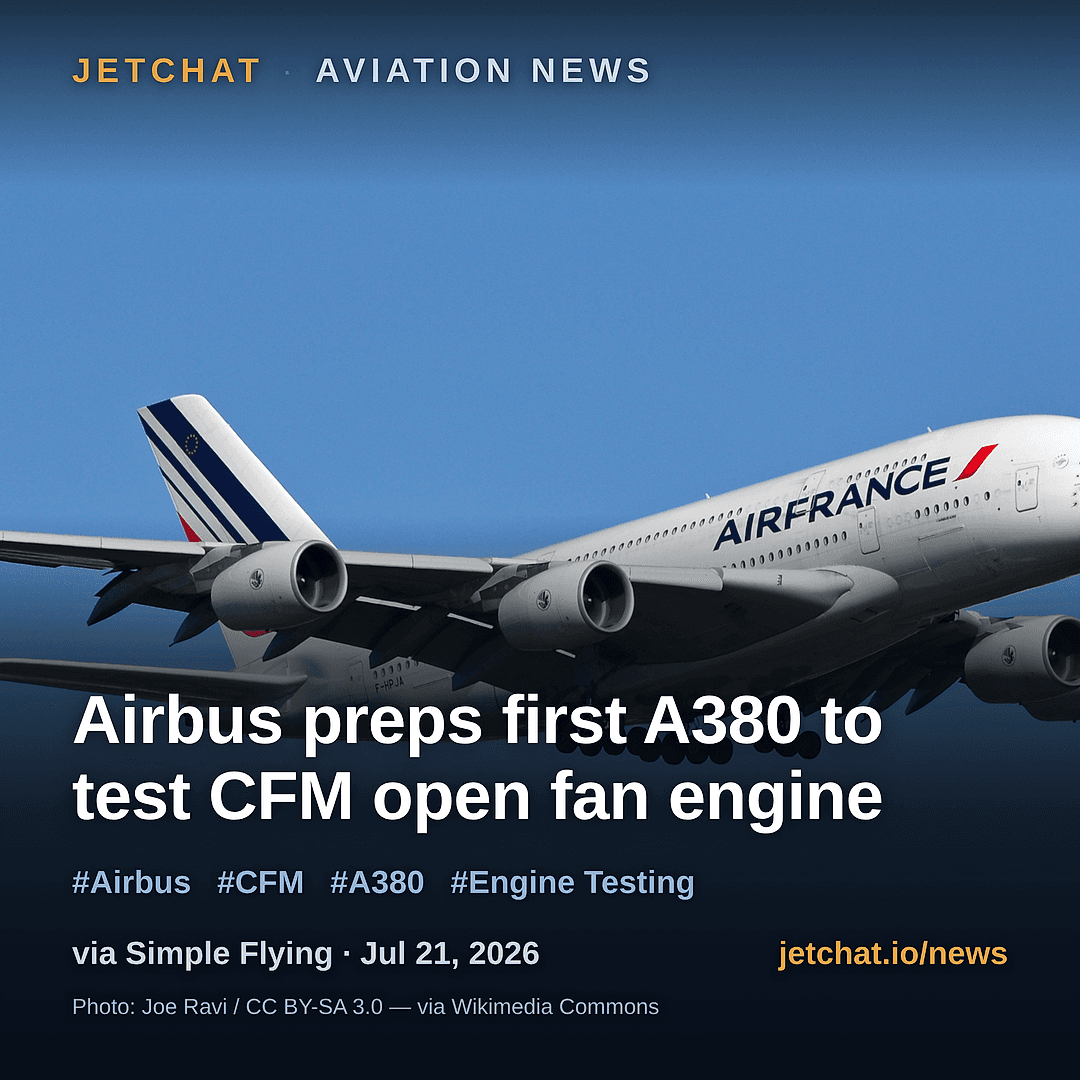
Airbus preps first A380 to test CFM open fan engine

The very first Airbus A380 ever manufactured is getting a second life as a flying testbed for a radical new propulsion system. Airbus is teaming up with engine maker CFM to evaluate an open-fan powerplant design, utilizing the superjumbo for its ample cabin volume and four-engine redundancy. Engineers will mount the futuristic engine on the massive double-decker to gather critical in-flight performance data. This matters to the aviation community because open-fan architecture could drastically reduce fuel burn and reshape the aircraft designs tomorrow's commercial aviators will fly.

industry

Boeing's Folding Wingtip: From 1990s Concept to 777X Reality

The upcoming Boeing 777X incorporates a folding wingtip design initially explored by the manufacturer during the 1990s. While the original 777 dominated long-haul routes for decades, increased competition from highly efficient airframes like the Airbus A350 and Boeing 787 necessitated a massive aerodynamic upgrade. By utilizing advanced carbon-composite materials and modern powerplants, the new model achieves unprecedented range and fuel economy. For future airline pilots, mastering the automated wing-fold procedures will become a standard but fascinating part of heavy jet ground operations.

industry

Aviation Groups Push Congress for $20B to Modernize ATC

Aviation leaders are petitioning lawmakers for an additional $20 billion to finish overhauling the national airspace infrastructure. Speaking at AirVenture, FAA, ALPA, and NATCA representatives emphasized that the previously allocated $12.5 billion is just a down payment on a $32 billion necessity. Without full funding, controllers must manage record traffic using a disjointed mix of obsolete and modern technology. For pilots, fully funding these upgrades means fewer systemic delays, clearer communication, and an enhanced margin of safety during peak operations.

safety

Supreme Court to Review Aircraft Forfeiture Over Passenger Alcohol

The United States Supreme Court has agreed to review a case involving an Alaskan aviator whose expensive Cessna was seized by authorities. The civil asset forfeiture occurred because a passenger attempted to transport alcoholic beverages into a region where alcohol is legally prohibited. Previously, the state supreme court ruled that the government could confiscate the aircraft even if the pilot was only aware of a single visible six-pack among the cargo. This case holds significant weight for pilots regarding their legal liability and property rights concerning passenger luggage.

safety

SWISS Cabin Crew Grounds Intoxicated A220 Pilots on Layover

Two SWISS Airbus A220 pilots were removed from duty in Geneva after flight attendants reported them for excessive alcohol consumption during a layover. Instead of calling out unfit to fly, the flight deck crew attempted to report for their morning shift despite violating regulations regarding alcohol consumption and timeframe limits. The airline immediately suspended both pilots pending a full investigation. For professional aviators, this incident underscores the critical importance of a robust Safety Management System where crew members feel empowered to intervene without fear of reprisal.

safety

Fatal Beech B-60 Crash Blamed on Contamination, Single-Engine Go-Around

A Beech B-60 crashed in Ohio after experiencing a total left engine failure caused by fuel system contamination, killing the pilot and two passengers. According to the NTSB, the pilot attempted to land with gear and flaps fully extended but initiated a single-engine go-around at the runway threshold, resulting in a fatal loss of control. Investigators discovered plastic polymer debris in both engine fuel servos and noted a history of neglected maintenance, emphasizing that rushing an unairworthy aircraft back into service carries deadly consequences.

safety

Fatal Hawker Crash Highlights Dangers of Post-Maintenance Stall Checks

The NTSB recently detailed the causes behind a fatal February 2024 Hawker 900XP crash, which occurred during a post-maintenance stall check in probable icing conditions. The crew, despite having over 23,000 combined flight hours, deviated from strict altitude and weather requirements, triggering an unexpected premature roll. Startled by the sudden upset, the pilot in command incorrectly held full aft elevator, driving the jet into an unrecoverable flat spin. This tragedy illustrates how the startle effect can instantly override decades of training during unexpected stall behavior.

airlines

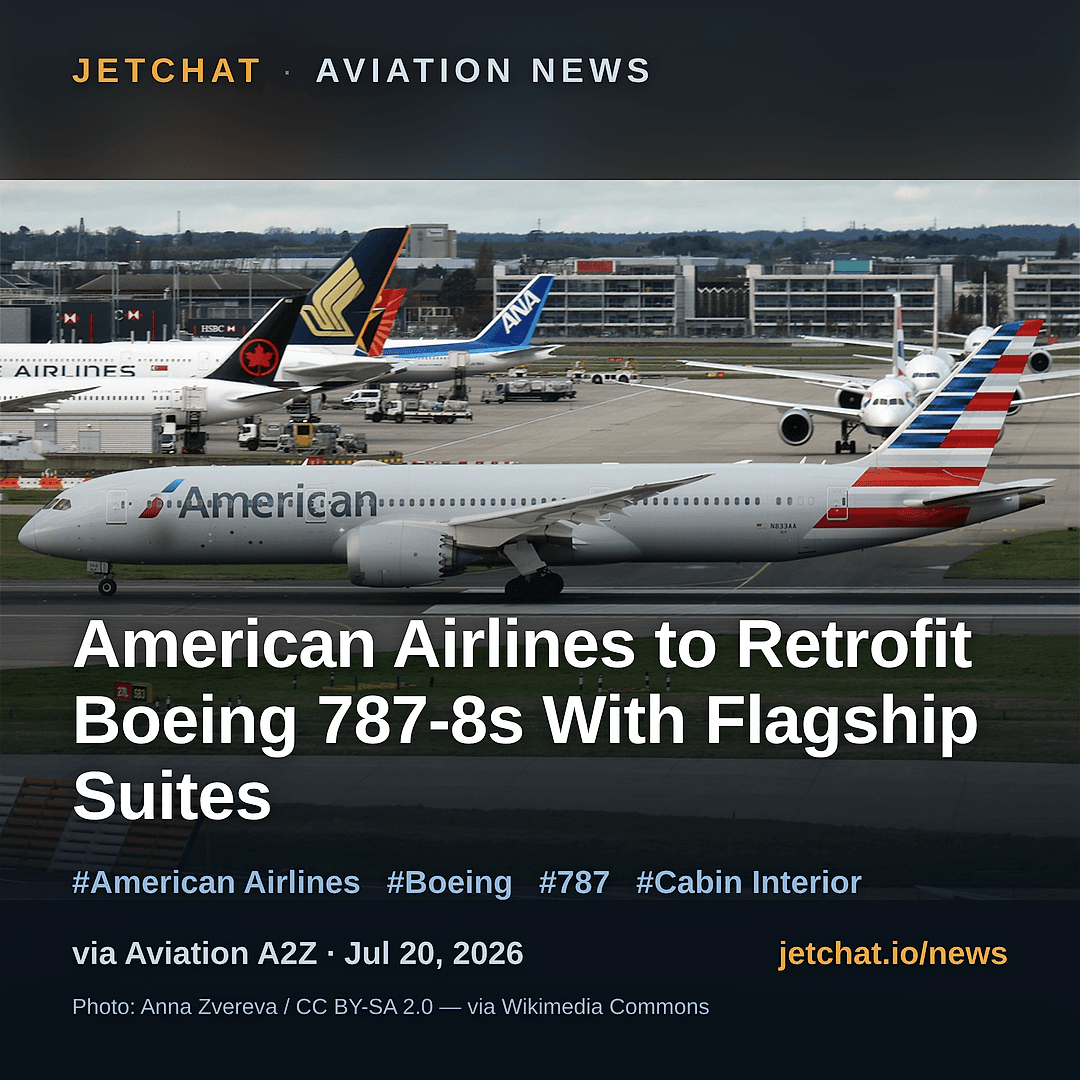
American Airlines to Retrofit Boeing 787-8s With Flagship Suites

American Airlines will overhaul its fleet of 37 Boeing 787-8 Dreamliners by installing its modern Flagship Suites. The retrofit replaces an older 20-seat premium cabin layout that limited revenue potential on high-demand international routes to hubs like London Heathrow. These new suites feature closing doors and fully lie-flat beds, mirroring updates currently rolling out across the carrier's Boeing 777s and newly delivered 787-9s. For career-minded pilots, tracking these cabin investments highlights where major carriers are focusing their long-haul strategies and projecting future route profitability.

industry

New House bill targets Chinese ownership of Cirrus Aircraft

Two Republican lawmakers have introduced a House bill to examine past foreign acquisitions of American aviation manufacturers, specifically targeting China's ownership of Cirrus Aircraft. The proposed legislation would expand the authority of federal regulators to review previous deals and potentially force divestitures if national security risks are identified. It also mandates cybersecurity audits for avionics and flight controls built by foreign-owned entities. This matters to pilots because the outcome could reshape the supply chain and corporate backing of the industry's most popular piston training aircraft.