JetChat Newsjetchat.io ↗

JetChat Aviation News

Short, human-curated aviation briefs for pilots and enthusiasts.

airlines

Frequency Error Triggers NATO Intercept of Cathay Pacific A350

A Cathay Pacific Airbus A350 flying from Hong Kong to London lost communication over Romania after the flight crew accidentally tuned into an incorrect radio frequency. Responding to instructions intended for another aircraft, the pilots missed the error, creating a NORDO situation that prompted Hungarian fighter jets to intercept the widebody. The crew restored communications following a visual warning and landed safely. This event underscores the critical necessity of verifying callsigns during busy frequency changes and maintaining strict radio discipline when crossing international boundaries.


airlines

Delta pivots long-haul expansion to Asia, plans Singapore return

Delta Air Lines is pivoting its long-haul strategy to focus heavily on the Asia-Pacific region, moving away from recent transatlantic expansions. Corporate leadership indicated that robust existing European alliances allow the carrier to redirect its widebody capacity toward key Asian economic centers, including a planned return to Singapore. The carrier intends to leverage its strengthened hubs in Seattle and Los Angeles to operate these transpacific routes directly. For aspiring airline pilots, this strategic shift signals sustained demand for widebody captains and first officers at West Coast crew bases.

airlines

Norse Atlantic Seeks Asian Operators for Six Boeing 787s

Norse Atlantic Airways is actively negotiating to lease up to six of its Boeing 787-9 Dreamliners to a pair of undisclosed Asian carriers. The pivot comes shortly after a previous damp lease arrangement with IndiGo fell through, driven by ongoing airspace restrictions and global geopolitical challenges. For pilots monitoring the international job market, this shift highlights how quickly widebody fleet allocations can change in response to regional route disruptions.

finance

Fuel costs drive Q2 losses for Azul despite record revenue

Brazilian airline Azul generated its highest-ever second-quarter revenue at nearly one billion dollars, but soaring fuel expenses ultimately pushed the carrier into the red. To mitigate the financial damage, leadership slashed international flying by roughly a quarter and paused future earnings forecasts until oil markets stabilize. Strong corporate ticket sales and incoming Airbus widebodies signal a recovery phase as the airline rebuilds following its recent bankruptcy restructuring. For aspiring airline pilots, monitoring South American fleet expansions offers a strong indicator of upcoming international hiring trends.

industry

A350 Production Surges Faster Than Airlines Can Accept Deliveries

Despite surging global demand for widebody jets, Airbus is currently manufacturing its A350 aircraft at a quicker pace than commercial carriers can actually integrate them into their fleets. The primary bottlenecks are a severe lack of open delivery slots and persistent delays in finishing interior cabin installations. For aspiring airline pilots, this unusual production backlog highlights ongoing supply chain complexities that could ultimately dictate the pace of future heavy jet hiring and upgrade timelines at major international carriers.

safety

Medical Emergency Declared on Frontier A321 Following Suspected Fumes

A Frontier Airlines Airbus A321 en route from Cleveland to Fort Lauderdale declared a medical emergency on Thursday after four of the five cabin crew members reported sudden illness, including severe headaches. While the airline has not officially confirmed the cause, the rapid onset of symptoms strongly suggests a cabin fume event. For flight crews, this incident underscores the critical importance of recognizing the early signs of contaminated bleed air and executing rapid checklist responses to protect everyone on board.

safety

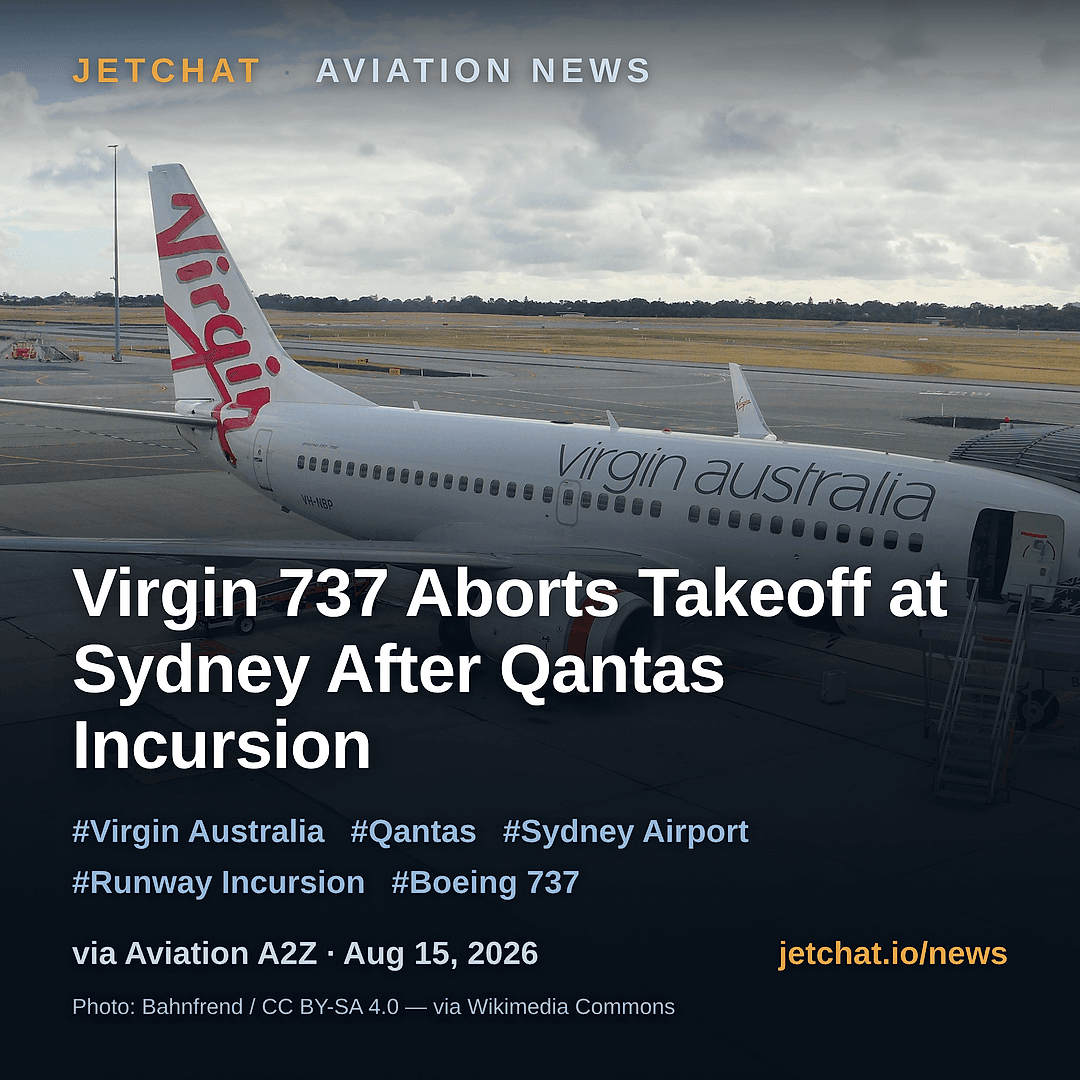
Virgin 737 Aborts Takeoff at Sydney After Qantas Incursion

The Australian Transport Safety Bureau is investigating an August runway incursion at Sydney Airport where a Virgin Australia Boeing 737 had to reject its takeoff after a Qantas 737 crossed the active runway. Air traffic controllers reportedly issued conflicting clearances to both aircraft before canceling the Virgin jet's takeoff roll. The incident highlights ongoing concerns over controller staffing levels and ground safety at the airport. This matters to pilots because it underscores the crucial need for constant situational awareness and runway scanning, even when cleared for departure.

safety

FAA Updates Certification Guidance for Cockpit Touchscreens and Voice Commands

The Federal Aviation Administration is seeking public comments through late September on updated certification guidelines for modern cockpit interfaces, including touchscreens and speech recognition. The proposed draft replaces a decade-old document, introducing strict standards for voice command success rates, manual control overrides, and touchscreen usability during turbulence. For pilots navigating increasingly digital flight decks, these proposed standards ensure that critical avionics remain reliably accessible when workload increases and that everyday cockpit hazards will not disable primary flight displays.

safety

Researchers detail 60-second physical hack targeting Boeing 737 avionics

Security researchers have revealed a proof-of-concept hardware attack capable of manipulating avionics data on Boeing 737 Next Generation and MAX aircraft. By accessing a dormant maintenance port in the forward electronics bay, an infiltrator could theoretically install a malicious device in just one minute to secretly alter critical flight plan and performance calculations. While Boeing maintains that existing operational safeguards severely limit real-world feasibility, this demonstration underscores the growing importance of aviation cybersecurity and the necessity for commercial flight crews to consistently cross-check automation inputs.

finance

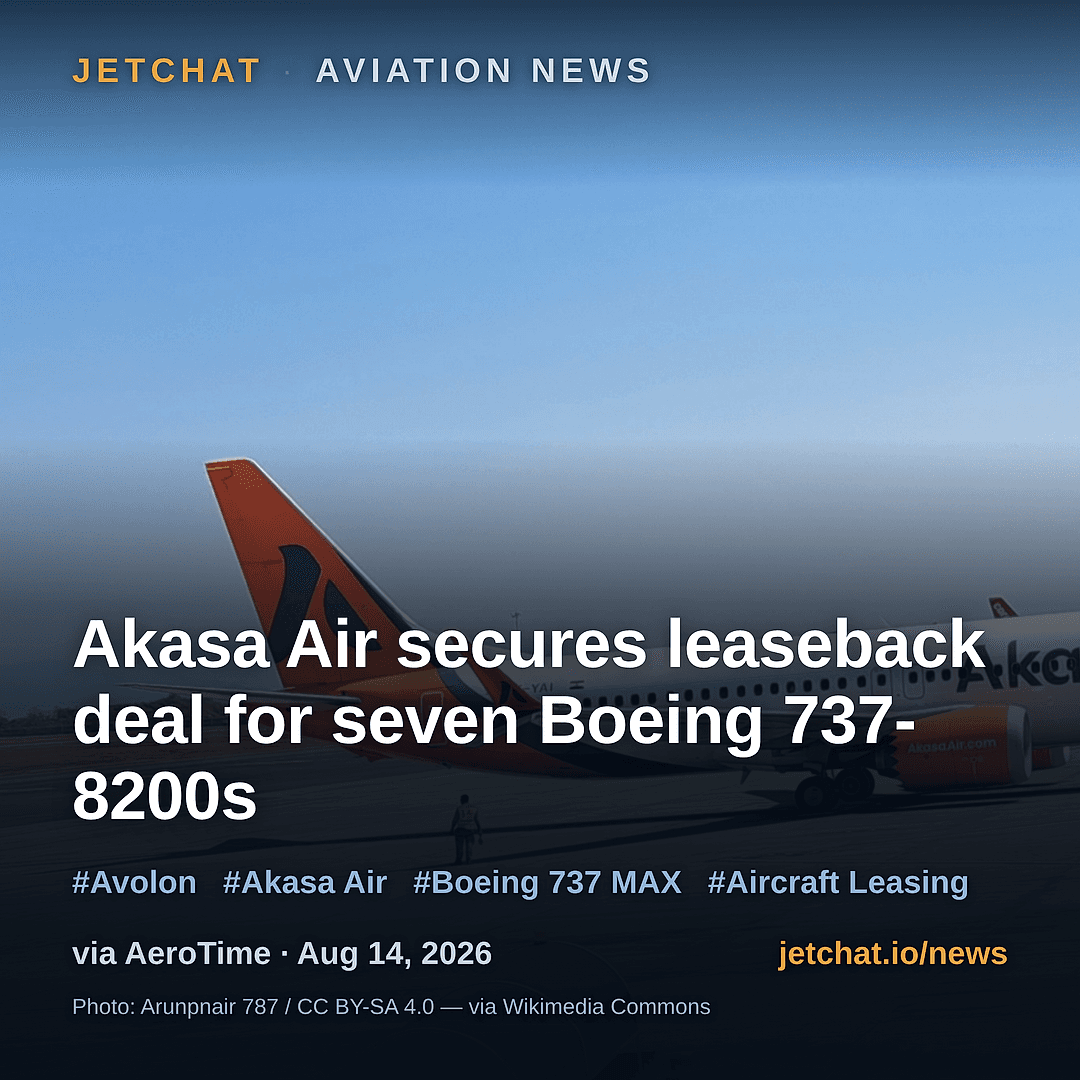
Akasa Air secures leaseback deal for seven Boeing 737-8200s

India's third-largest airline, Akasa Air, has secured a sale and leaseback agreement with leasing firm Avolon for up to seven Boeing 737-8200s. By selling the high-density MAX 8 airframes from its order book and immediately leasing them back, the carrier frees up operational capital without reducing fleet capacity. Akasa configures these aircraft with 197 seats to capitalize on low-cost domestic demand. For commercial aviators eyeing the booming Indian market, this financial strategy highlights the region's aggressive fleet expansion and the ongoing demand for qualified 737 MAX flight crews.

airlines

Emirates Eyes Milan-Lima Route to Launch Fifth-Freedom Expansion

Emirates is reportedly close to securing Italian regulatory approval for a fifth-freedom route connecting Milan to Lima. Because the 8,000-nautical-mile distance between Dubai and Peru severely restricts payloads on nonstop flights, utilizing an intermediate European stop makes the connection economically viable. The carrier is also evaluating Milan-based routes to cities like Los Angeles and São Paulo, signaling a major strategic shift that could drive increased widebody utilization and new global basing opportunities for long-haul crews.

airlines

Delta Resumes Transatlantic Flights From Texas After 30 Years

Delta Air Lines is expanding its presence in Austin with new long-haul flights, marking the carrier's first transatlantic service from Texas in more than thirty years. The move highlights the airline's broader strategy to establish a stronger foothold in the rapidly growing Central Texas market. For aspiring airline pilots, this international expansion signals potential growth in long-haul crew bases and wider route opportunities flying widebody aircraft out of non-traditional hub cities.

industry

First production Yakovlev MC-21 completes long flight to Moscow

Russia successfully relocated the first production-standard Yakovlev MC-21-310 to Moscow following a nearly six-hour, 2,270-nautical-mile transit from Irkutsk. Equipped with domestically manufactured PD-14 powerplants, the twinjet reached altitudes approaching 40,000 feet without experiencing any system anomalies. Engineers will now conduct additional evaluations and apply the launch customer livery for the Aeroflot Group. This milestone highlights ongoing international efforts to develop entirely indigenous commercial airliners amidst shifting global aerospace markets.

safety

Identical Callsigns Place Two American Jets on Same Frequency

On August 13, a scheduling delay resulted in two American Airlines Boeing 737s operating under the exact same callsign on the same Phoenix air traffic control frequency. Flight 2482 is used for both directions of the carrier's Chicago-Phoenix route, and a delayed inbound flight overlapped with an on-time outbound departure. A veteran controller safely managed the conflict by explicitly distinguishing the aircraft as either arriving or departing. This incident highlights why pilots must maintain strict radio discipline and situational awareness when operating common hub routes.

safety

Report: A320neo Flight Controls Briefly Failed Before Sudden Plunge

An internal manufacturer document reveals that the flight control computers on an Air India A320neo went offline for about four seconds before a sudden 300-foot drop at cruise altitude last August. The brief loss of elevator and aileron authority caused an uncommanded pitch-up, and the first officer's nose-down inputs were delayed by a temporary hydraulic loss, injuring 24 people. For line pilots, this incident underscores the critical importance of understanding fly-by-wire reversion modes during transient system failures.

industry

Heart's 25,000-pound X1 electric demonstrator completes maiden flight

Heart Aerospace successfully flew its X1 battery-electric demonstrator from upstate New York’s Plattsburgh International Airport, marking a major milestone for alternative propulsion. The twenty-seven-minute maiden sortie reached an altitude of 1,100 feet, utilizing a megawatt-class electric powertrain that cost a mere five dollars to charge. At over 25,000 pounds with a 106-foot wingspan, the X1 is now the heaviest battery-electric aircraft to take to the skies. For future airline pilots, this successful test brings the thirty-seat hybrid-electric regional airliner concept one step closer to actual line operations.

industry

FAA faces massive funding shortfall for next-generation ATC platform

The Federal Aviation Administration is actively soliciting proposals to combine its terminal and high-altitude air traffic software into a unified interface, yet remains billions of dollars short of the required budget. Several major defense and aerospace firms, including Thales and Collins Aerospace, are pitching custom cloud-based solutions to secure the lucrative development contract. Lawmakers have yet to allocate the estimated ten billion dollars needed just for the software overhaul. For pilots, this matters because a modernized automation platform could drastically reduce controller workload and minimize systemic routing delays.

airlines

Lufthansa Declines Earliest Production Boeing 777-9 Airframes

The German flag carrier has announced it will not accept some of the initial Boeing 777-9 airframes manufactured during the program's lengthy certification delays. Carrier leadership noted during a recent financial briefing that they are currently negotiating with the American aerospace manufacturer to determine which specific early-build jets will be completely declined and which might be updated to current specifications at Boeing's expense. For aspiring airline pilots, this highlights how aircraft certification hurdles can impact fleet integration timelines and future hiring waves at major international operators.

safety

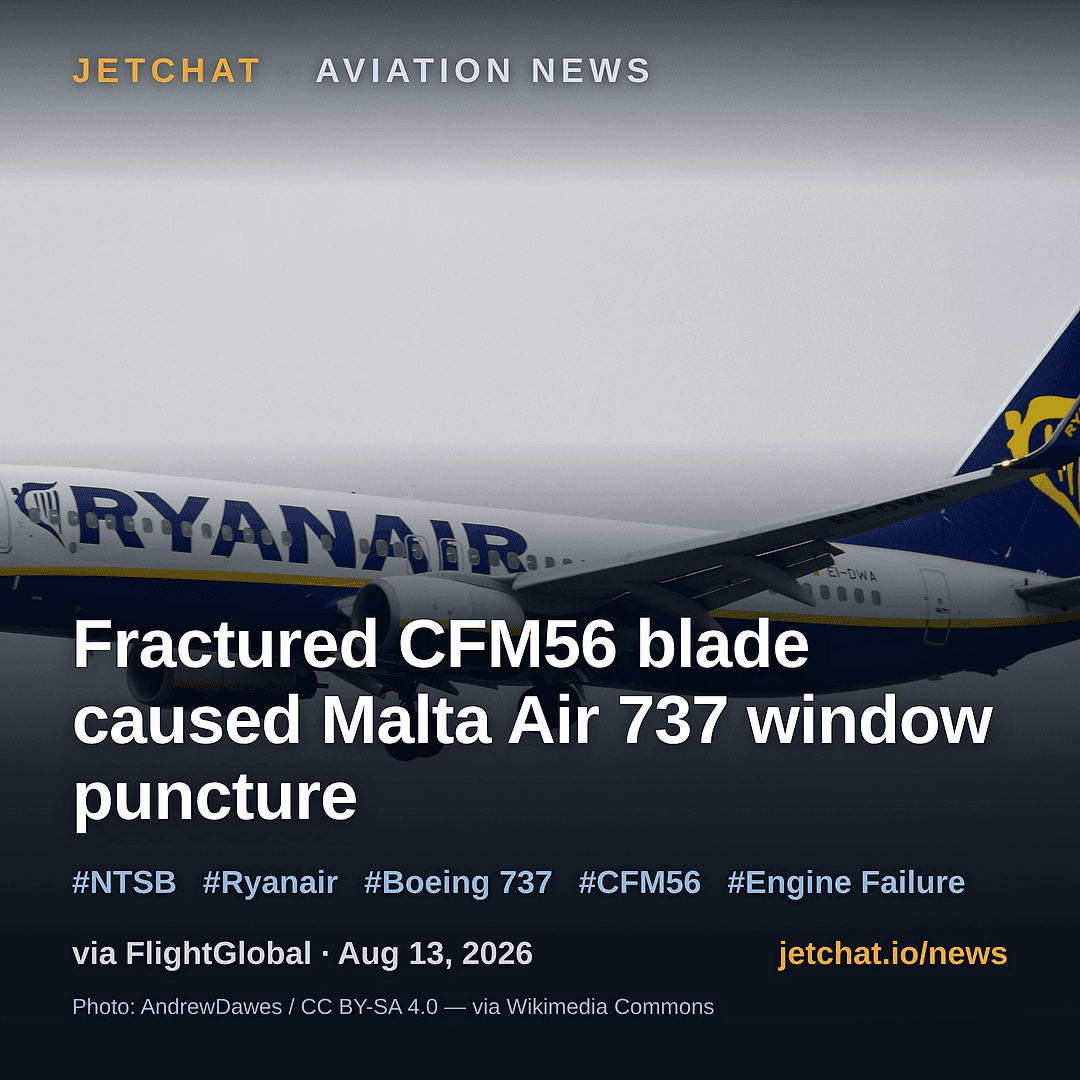
Fractured CFM56 blade caused Malta Air 737 window puncture

US investigators found that a broken CFM56 fan blade punctured the engine inlet cowl of a Malta Air Boeing 737-800 during a July flight, causing debris to shatter a passenger window and trigger a rapid depressurization. The blade snapped at its root due to suspected metal fatigue, though inspectors also discovered bird remains inside the powerplant. This incident matters to airline crews because it highlights how forward-thrown engine debris can bypass fan-case containment shielding and threaten fuselage integrity, even after routine ultrasonic blade inspections.

safety

FAA proposes Boeing 787 cowl fix to prevent dual-engine shutdown

The FAA is proposing a new airworthiness directive for Boeing 787 Dreamliners equipped with Rolls-Royce Trent 1000 engines to address a shielding vulnerability. Boeing discovered that an uncontained failure in the left engine could launch debris into the right engine's oil lines, potentially triggering a catastrophic dual-engine shutdown. The rule would mandate inspections and part modifications for 22 affected US-registered aircraft. For pilots, this underscores the vital importance of system redundancy and the intense engineering scrutiny required to maintain safety in twin-engine operations.